King Charles III's visit to the United States was intended as a celebration of America's 250th anniversary and the enduring Anglo-American 'special relationship.' However, it has also been billed as a rescue mission amid strained bilateral ties.
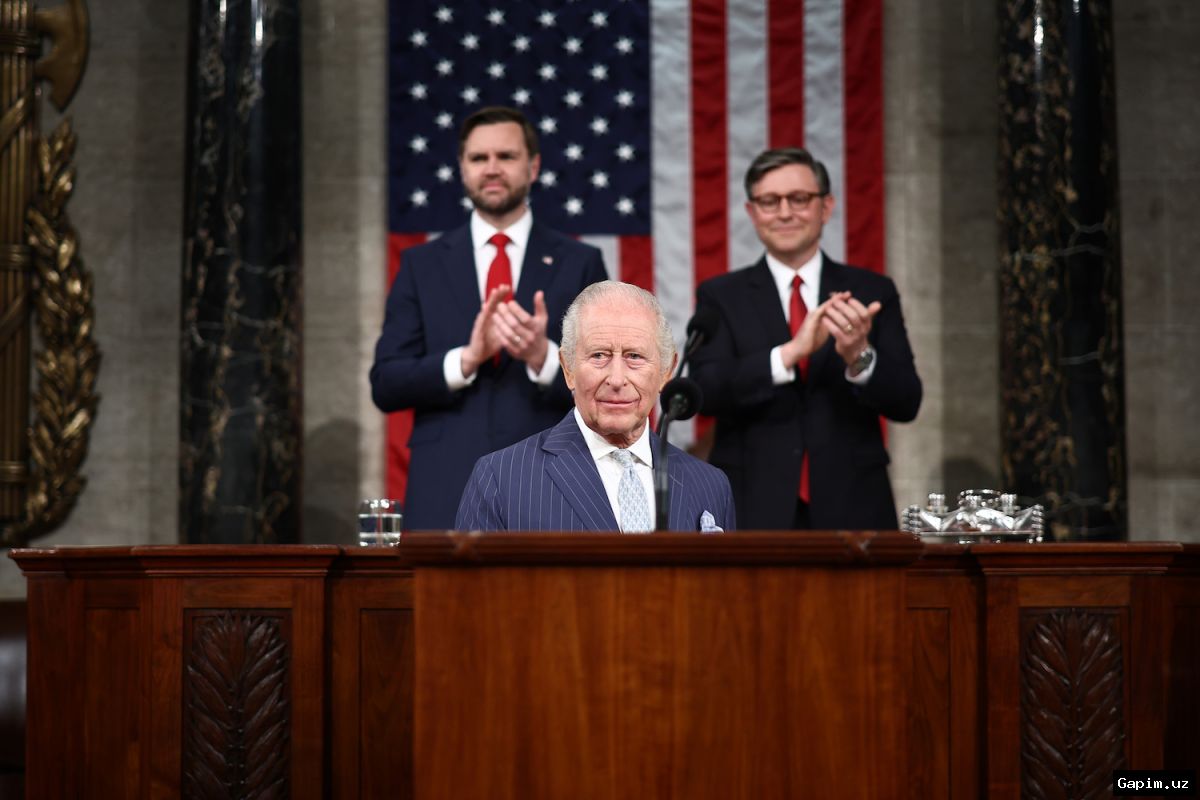
The current state of US-UK relations is tense, reflecting British reluctance to fully back the joint US-Israeli war against Iran. The King's goal was to ease those tensions with a royal charm offensive, most notably his joint address to Congress on Tuesday afternoon.
President Donald Trump's mercurial personality means warm relations can turn chilly in a flash, but former antagonists can also be rehabilitated. In his speech, the King spoke of 'reconciliation and renewal' characterizing centuries of interactions between the two nations.
Whether such words will be enough to reinforce the alliance remains to be seen. After a White House meeting, Trump appeared pleased, calling the King 'a fantastic person' and the visit 'a real honour.'
However, some lines in the King's speech—the first royal address to Congress since 1991—may have buoyed Democrats and raised eyebrows in the White House. He began by acknowledging 'times of great uncertainty,' ticking through conflicts in the Middle East and Europe, and noting the threat to democracy from political violence.
The King pivoted to saying the two nations haven't always seen eye to eye, referencing 'the spirit of 1776.' When he noted that executive power 'subject to checks and balances' was a British legal tradition enshrined in Magna Carta and a bedrock principle in the US Constitution, applause started on the Democratic side before spreading across the chamber.
Trump's critics have frequently denounced what they see as his abuse of power. The sentiment behind 'no kings' rallies that drew hundreds of thousands over the past year was precisely that the president should be subject to rigorous checks and balances.
Later, the King said: 'America's words carry weight and meaning, as they have since independence. The actions of this great nation matter even more.' Democrats, often critical of Trump's words and actions, may have viewed this as a warning.
Quoting Henry Kissinger, the King noted that NATO mobilized to defend a member state only after the 9/11 attacks. Trump has derided the British Navy, calling ships 'toys' and saying aircraft carriers 'didn't work.' The King, a Royal Navy veteran, highlighted security and intelligence cooperation.
He also mentioned climate change, saying 'from the depths of the Atlantic to the disastrously melting ice-caps of the Arctic, the commitment and expertise of the United States Armed Forces and its allies lie at the heart of NATO.'
The King did not reference Jeffrey Epstein in his remarks. The closest he came was an oblique reference to the need to 'support victims of some of the ills that, so tragically, exist in both our societies today.' Last year, Congress passed legislation mandating release of Epstein-related files, revealing his connections to the rich and powerful.
Despite the seriousness of his objectives, the King's speech was at times whimsical. He opened with Oscar Wilde's quip about the US and England having everything in common 'except, of course, a language' and joked that he wasn't coming as a 'cunning rearguard action' to reestablish British rule.
Source: www.bbc.com