The United Arab Emirates has announced its withdrawal from OPEC and the broader OPEC+ alliance, stripping Saudi Arabia of a key partner and adding to growing doubts about the cartel's future cohesion.
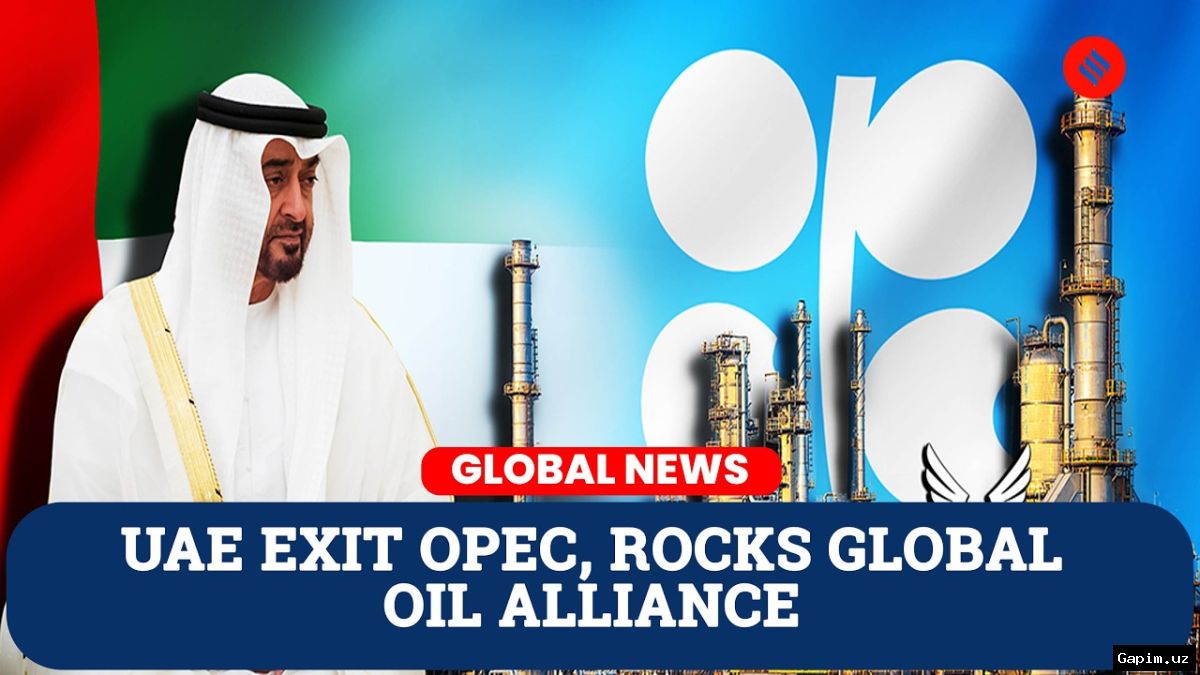
The UAE has long clashed with Saudi Arabia over production quotas, having invested heavily to expand its oil industry and market share. Energy Minister Suhail Al Mazrouei told The New York Times: "The world needs more energy. The UAE wanted to be unconstrained by any groups."
Currently producing 3.2–3.6 million barrels per day (bpd) under quotas, the UAE holds spare capacity of nearly 4.8 million bpd and plans to boost output to 5 million bpd by next year. Analysts view the move as a calculated step by a producer ready to act independently.
Jorge Leon, head of geopolitical analysis at Rystad Energy, said: "Losing a member with 4.8 million bpd of capacity, and the ambition to produce more, takes a real tool out of the group's hands." David Oxley of Capital Economics called it "the thin end of the wedge," warning that "the ties binding OPEC members together have loosened."
Saudi Arabia requires high oil prices—around $90 per barrel—to fund government spending and its Vision 2030 projects, including the $500 billion NEOM city. The UAE's exit forces Riyadh to rely more heavily on its own production cuts to stabilize prices, making defense of prices more expensive and less effective.
In the short term, the exit has had little immediate impact on global oil prices, as the ongoing Strait of Hormuz disruption dominates the market. However, in the longer term, it points to modestly lower and more volatile oil prices. Jeff Colgan of Brown University said: "It is possible that we could see the whole organization fall apart."
The UAE is not the first OPEC member to leave: Qatar exited in 2019, while Angola, Ecuador, Gabon, and Indonesia have also departed in recent years, often due to quota disputes. A mass exodus is unlikely for now, as most members lack the UAE's production capacity or economic diversification.
Source: www.dw.com