Japanese Prime Minister Sanae Takaichi used a visit to Vietnam to unveil an updated version of Japan's Free and Open Indo-Pacific (FOIP) strategy, placing energy security, critical minerals, and ASEAN resilience at its core.
Takaichi met Vietnamese Prime Minister Le Minh Hung in Hanoi on Saturday, overseeing the signing of six cooperation agreements covering disaster-resilient rural development, climate-resilient infrastructure, and satellite data exchange.
The two governments agreed to work toward raising Japanese investment in Vietnam to $5 billion per year and bilateral trade to $60 billion by 2030. Bilateral trade exceeded $50 billion for the first time last year.
Takaichi also pledged $10 billion to help Asian partners secure energy resources and strengthen supply chains. The first project will support crude oil procurement for Vietnam's Nghi Son Refinery and Petrochemical Complex.
The visit was part of a wider diplomatic push: Takaichi traveled to Australia, while Defense Minister Shinjiro Koizumi visited Indonesia and the Philippines. Japan signed a new defense agreement with Indonesia this week.
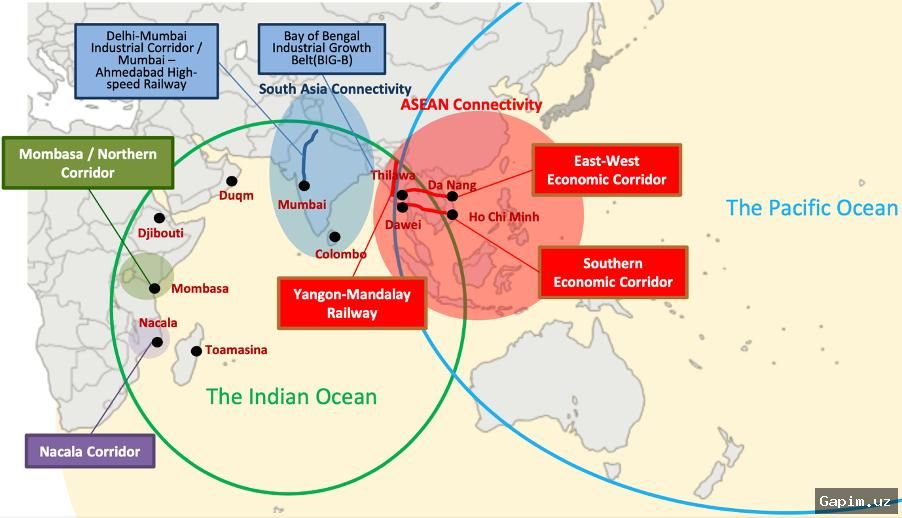
In a speech at Vietnam National University, Takaichi outlined three priority areas for the updated FOIP: building economic infrastructure for the AI and data age, expanding public-private cooperation for growth, and enhancing security cooperation.
Experts note that FOIP faces challenges. Mark Cogan, associate professor at Kansai Gaidai University, said: "Clearly, the FOIP is in trouble... protection against coercion is more in jeopardy than ever before."
Kei Koga from Nanyang Technological University observed that Japan's updated FOIP places greater emphasis on strategic autonomy rather than ideological alignment, which may help keep the strategy relevant as Southeast Asian states seek options and leverage.
Source: www.dw.com