A gallery in New York's Tribeca neighborhood at 101 Reade Street has been transformed into a physical archive of disgraced financier Jeffrey Epstein's cases, containing more than 3.5 million pages of law enforcement documents published by the U.S. Department of Justice. The documents are printed, bound, and stacked across 3,437 volumes lining the walls from floor to ceiling.
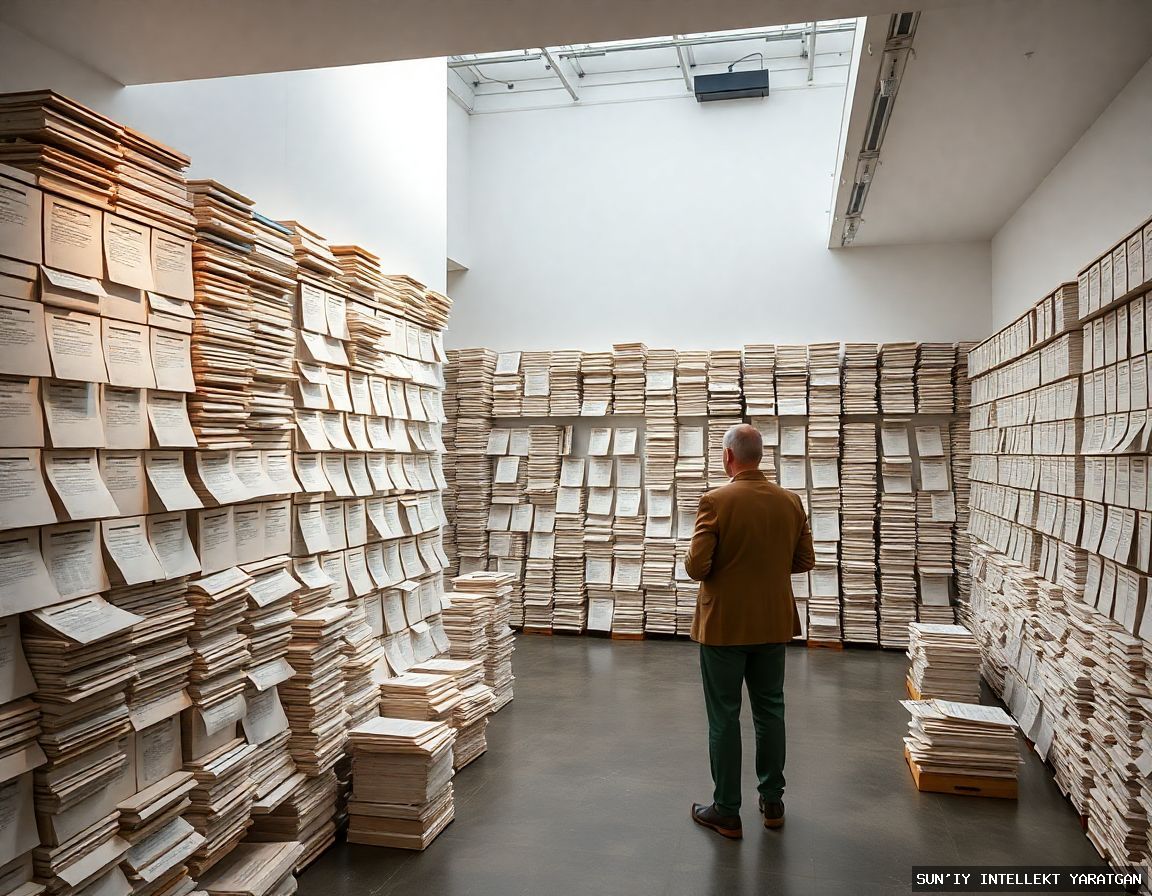
The exhibition, titled 'The Donald J. Trump and Jeffrey Epstein Memorial Reading Room,' was organized by the Institute for Primary Facts, a nonprofit focusing on transparency and anti-corruption initiatives. Epstein was arrested on sex trafficking charges in July 2017 and died by suicide in his jail cell a month later, denying victims a chance at justice.
Since opening two weeks ago, the gallery has drawn a steady stream of visitors, including survivors. Lara Blume McGee, abused by Epstein at age 17, described the room as a 'paper city' and noted that 'the U.S. government should have acted when he was reported to the FBI in 1996.'
Co-founder David Garrett said the project is centered around survivors, with the goal of driving public outrage to pressure Congress and the Department of Justice for transparency and accountability. The archive includes documents released under the Epstein Files Transparency Act, timelines, handwritten visitor notes, and a memorial space.
Assembling the archive was chaotic: after downloading files in March, organizers discovered many survivors' names remained unredacted. Garrett alleged the DOJ modified its search function instead of properly redacting names. Finding a venue was also difficult, with several locations backing out before the Tribeca gallery agreed.
On Tuesday, the gallery hosted a 24-hour livestream reading of the files led by survivors and advocates. Visitors have left flowers and handwritten notes. Garrett recalled a woman who spent hours silently walking through the space before revealing she was a sexual abuse survivor, saying the exhibit made her feel seen.
Blume McGee warned that documentation alone is not justice: 'Visibility without consequence only prolongs the wound. We need both: the files on the table and the government to act — investigate, prosecute, reform.'
Source: www.aljazeera.com