Frank Garcia, a veteran naval officer recently confirmed by the US Senate as assistant secretary of state for African affairs, hailed the Lobito Corridor as a model for a new US approach to Africa based on 'trade and investment for mutual benefit' during his confirmation hearing on March 5.
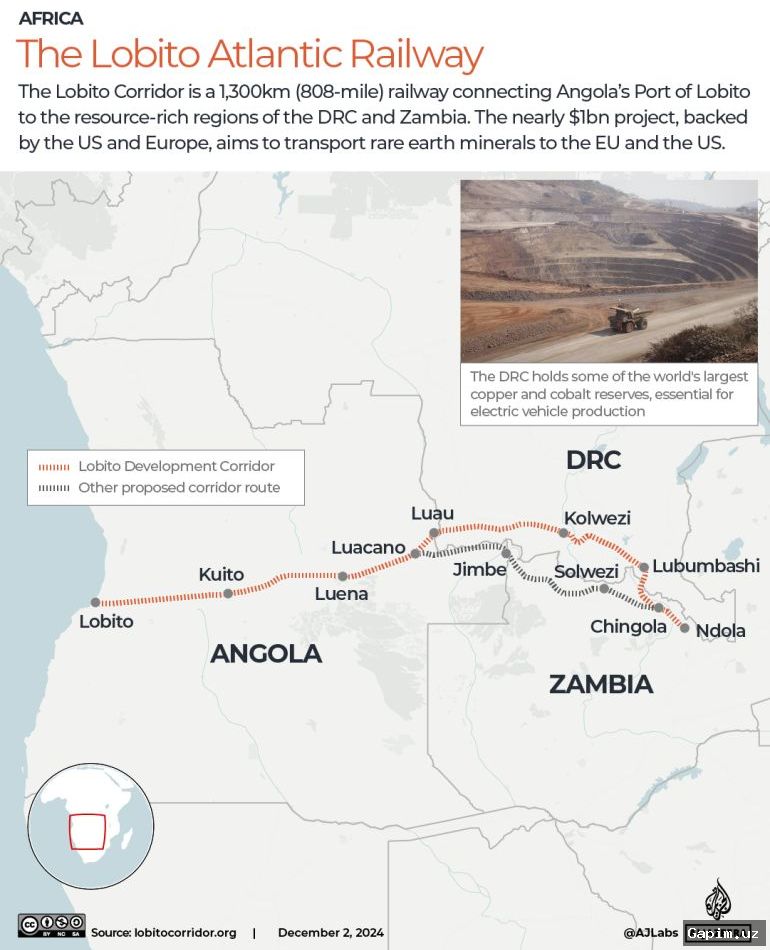
The Lobito Corridor is a strategic 1,300km rail and transport route linking Angola's Lobito port to mineral-rich regions of the Democratic Republic of the Congo (DRC) and Zambia. Although the initial memorandum was signed under the Biden administration, Trump mobilized funds in 2025, reframing the project as a core US national interest aligned with the 'America First' policy.
Garcia emphasized that job creation, regional integration, and expanded commercial ties would take priority over humanitarian assistance, which he argued must be assessed based on its contribution to national security and economic interests. The project is seen as a geopolitical tool to counter China's dominance and secure supply chains for critical minerals used in electric vehicles and clean energy.
Critics, however, argue the corridor primarily serves US interests in securing alternative supply chains for critical minerals, potentially exacerbating regional instability. Mike Jennings, professor of global development at SOAS University of London, described the project as 'neocolonial in practice, spirit and objectives,' warning it could worsen conflicts in already volatile regions.
The corridor's history dates back to the Benguela Railway, built in 1902 during colonial times to transport raw minerals to Europe. After a 27-year civil war, only 3% of the railway remained operational. It was later renovated by China as part of a $2bn rail-for-oil program. In 2023, a 30-year concession was granted to Lobito Atlantic Railway, a consortium including Trafigura.
The US International Development Finance Corporation (DFC) pledged a $753m loan, with CEO Ben Black calling it 'unprecedented in scale and strategic significance' to prevent monopolization by China. However, satellite analysis by Global Witness suggests up to 6,500 people could be displaced in the DRC due to the project.
A UN policy document from October 2024 highlighted potential risks including environmental damage, land conflicts, and human rights abuses. It urged governments to address adverse impacts. Jennings concluded that while infrastructure is needed, the Lobito Corridor prioritizes external strategic interests over the needs of affected communities.
Source: www.aljazeera.com