Japan has recently carried out reforms to its prison system, but inside Tochigi, its biggest women's prison, strict discipline and tough conditions still define daily life. The women in pale pink smocks and green head coverings sit hunched over pieces of fabric, sewing banners and flags. Talking is forbidden. Not one of them looks up at the guards standing watch under the cold neon light.
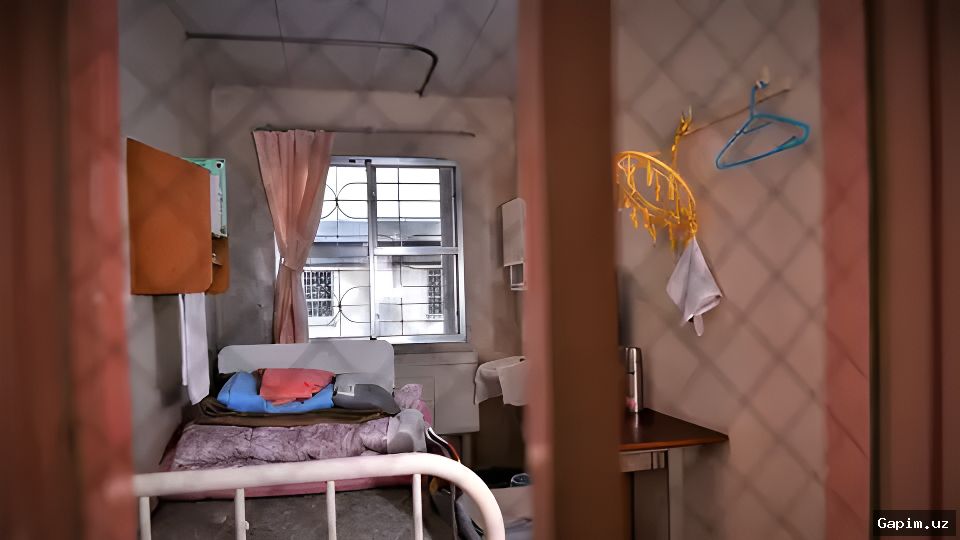
Around 450 inmates are serving sentences at Tochigi Women's Prison, an aging facility located between rice fields and warehouses around 70 miles north of Tokyo. It is set to close in 2028 due to aging infrastructure and underuse. Staff and inmates will be relocated to one of nine other prisons.
In Tochigi, prisoners work five days a week from 7:40 a.m. to 4:30 p.m. with a 30-minute lunch break. The seamstresses work for a private client. Other women fold origami paper, work in the prison kitchen and laundry, or repair wheelchairs of fellow inmates. Work has long been at the core of Japan's penal system, influenced by Prussian models in the late 19th century.
Most prison sentences in Japan previously included an explicit obligation to work. This dual system was abolished in June 2025. In its place is a single form of incarceration that emphasizes individualized treatment, rehabilitation and reintegration. It marks the first change to Japan's sentencing system in more than a century. The official reason for the reform was the high rate of recidivism — almost 50%.
Prison warden Kiyochika Miyoshi said that the reform has not changed the central role of work in daily prison life. But a 63-year-old woman serving a life sentence filed a lawsuit in late August 2025, alleging that Tochigi prison ignored her health complaints and repeatedly punished her for refusing to work. She accused officials of using pepper spray against her and repeatedly placing her in disciplinary confinement.
According to a 2023 report by Human Rights Watch, a formerly imprisoned woman said the prison officials "don't treat us like human beings at all." The rights organization criticized "overly stringent restrictions on communications with the outside world" and found that some incarcerated people were "denied access to gender-specific healthcare services, including basic care such as access to sanitary products."
Kiyochika rejects the image of sheer harshness. "We do nothing that would be problematic from a human rights perspective," he insisted, pointing to the facility's "reflecting rooms" — small rooms with softly padded chairs, a plush toy, carpeted floors, and pictures on the walls. Inmates are allowed up to 30 minutes in the reflecting rooms to talk about their state of mind.
Many inmates at Tochigi do not fit the typical profile. While just under 40% are in good health, more than 60% have physical or mental impairments or are ill. Almost one in five women is over 70, and the oldest is 91. Some use wheelchairs and cannot access the communal bath unaided. Yet the facility employs only four nurses and two physiotherapists.
A third of the inmates come from abroad — mostly from Asian countries such as Thailand, Vietnam and China. Many were convicted of drug smuggling. Despite communication difficulties, only a few foreign inmates receive Japanese language lessons. "Does that make sense if they will ultimately return to their home countries?" Kiyochika asks rhetorically.
The prison warden also points to positive aspects, such as training opportunities as a hairdresser, caregiver, cosmetician or forklift operator. Around 80% of inmates are released early, Kiyochika says. The 36 convicted of murder, however, are not among them. In Japan, people serving life sentences are released only in exceptional cases.
Source: www.dw.com