Much of Western Europe is suffering through an intense spring heat wave, with unusually high temperatures from the UK and Ireland in the north through Germany, France, Spain and Italy.
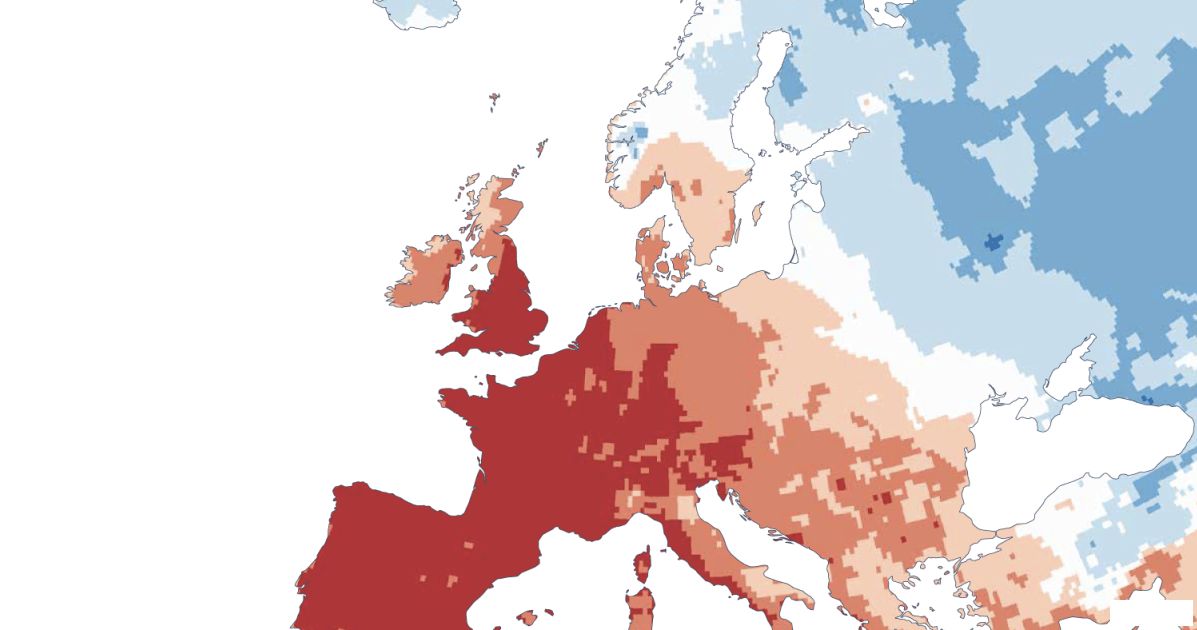
The unseasonable heat is caused by a 'heat dome' — a strong, slow-moving high-pressure system from North Africa that traps hot air over the continent. According to the EU's Copernicus Climate Change Service, such systems have become more common over the past 25 years, fueling more frequent and extreme heat waves.
'Temperatures on this scale were once exceptional even at the height of summer,' said Friederike Otto, climate scientist at Imperial College London. 'This record-breaking heat has the fingerprints of climate change all over it.'
It is too early to quantify how much this event was amplified by greenhouse gas emissions, but previous analyses by World Weather Attribution show that heat waves in Europe since 2003 have become much more likely and intense due to human-induced climate change.
The latest European State of the Climate report, released in April, noted that at least 95% of the continent experienced above-average annual temperatures in 2025. Intense heat waves above 30°C were felt as far north as the Arctic Circle, and sea surface temperatures were the highest on record.
'Europe is the fastest-warming continent, and the impacts are already severe,' said Florian Pappenberger, head of the European Centre for Medium-Range Weather Forecasts.
Europe is heating twice as fast as the global average, with temperatures rising 2.5°C above pre-industrial levels (global average: 1.4°C). This accelerated warming is partly due to Europe's proximity to the Arctic, where average temperatures have already exceeded 3.3°C. The albedo effect — where dark, ice-free ocean absorbs more sunlight — also plays a role.
Snow loss in the Alps further amplifies warming, as darker ground reflects less solar radiation. Scientists also link warming to disruptions in the jet stream, which has become more unstable, leading to prolonged extreme weather.
A 2022 study led by Efi Rousi found that periods when the jet stream splits into two branches have increased, resulting in more heat waves, especially in Western Europe.
Paradoxically, efforts to improve air quality have contributed to warming. Stricter regulations since the 1980s have reduced reflective sulfate and nitrate particles, which previously partially offset greenhouse gas warming.
A new report from the UN's World Meteorological Organization and the UK Met Office forecasts near-record global temperatures in the next five years. UN Secretary-General António Guterres called for a 'rapid, just, and equitable transition away from fossil fuels.'
Source: www.dw.com