Suggestions that criticism of the State of Israel is anti-Semitic in Australia risk hardwiring a dangerous confusion. Questioning the behavior of a foreign state is not the same as denigrating or attacking a people who may have links with that state. The State of Israel is represented by its embassy in Canberra, not by the Jewish community in Australian cities and suburbs.
On December 14, 2025, as Jewish families gathered near Sydney’s Bondi Beach to celebrate Hanukkah, two gunmen opened fire, killing 15 people and injuring many others in one of the worst attacks in Australia’s history. In response, the federal government set up a Royal Commission on Antisemitism and Social Cohesion, led by former High Court justice Virginia Bell. On April 30, 2026, the commission delivered its interim report, raising serious concerns about how anti-Semitism is defined.
The commission has adopted the International Holocaust Remembrance Alliance (IHRA) working definition of anti-Semitism. The IHRA offers examples that include criticism of Israel as evidence of anti-Semitism. But such a broad definition collapses critical commentary on Israel’s policy in Gaza, its treatment of Palestinians in the West Bank and Israeli officials’ dehumanising comments about Palestinians into a racist attack on Australia’s Jews. This makes little sense.
This is not an abstract question. The blurring of these categories acts as a brake on public debate. It narrows the range of permissible language used to describe Israel’s conduct in Gaza, where Australians have watched entire neighbourhoods destroyed and tens of thousands of civilians killed.
The official line from governments in relation to Israel is that Israel has a “right to exist” and an obligation to defend its citizens, which appears to give Israel carte blanche to decimate the entire Gaza Strip and kill tens of thousands of Palestinians. But no other state enjoys this exceptional treatment. No other state can do what it wishes simply because it has a “right to exist”.
The commission was established in response to a real and deeply upsetting surge in anti-Semitic violence. But its framework could cast suspicion on genuine inquiry into the behavior of Israel. It entrenches a form of exceptionalism that actually weakens Australia’s democratic norms.
A liberal society must be able to draw a clear line: hatred, discrimination or violence against Jews is anti-Semitic and unacceptable; criticism of a foreign government is not.
There is also a cost to Jewish Australians when that line is blurred. Public debate routinely treats “the Jewish community” as a single, pro-Israel bloc, represented by a handful of bodies. This is simply not true. Many Australian Jews are alarmed to see the destruction of Gaza in their name.
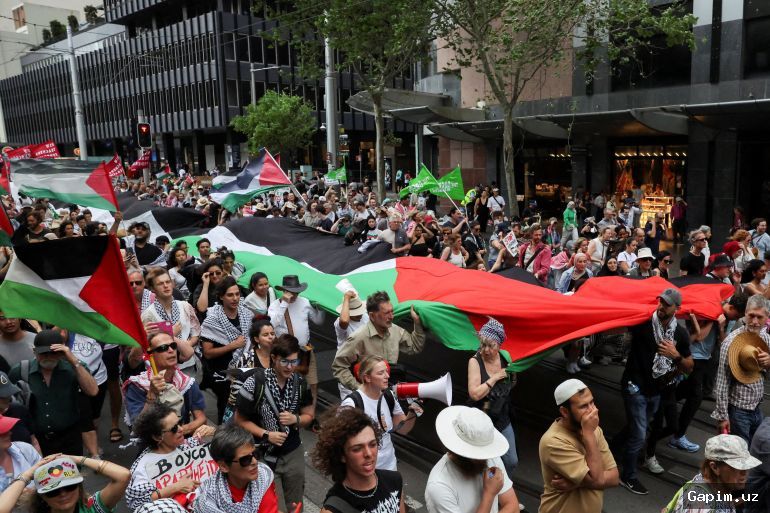
If public institutions reinforce the idea that criticism of Israel is criticism of Jews, they risk feeding anti-Semitism. Images of Gaza’s destruction on the news have galvanised global public opinion. Many young Australians have marched for an end to Israeli policies and freedom for Palestine. The message that such protests against Israel are anti-Semitic could not be any more counter-productive and harmful for Australian democracy.
To the credit of the Australian Broadcasting Corporation (ABC) and the Special Broadcasting Service (SBS), they have avoided the conflation of Israel and Jewish people and have not adopted the IHRA definition. The interim commission report has not embraced the most heavy-handed proposals; there is no rush to ban protest slogans or criminalise political expression. There is room for optimism that the commission can still address the issue in its final report.
Anti-Semitism in Australia is a threat to the Jewish community and the very foundation of social cohesion. But seeking to address the scourge of anti-Semitism by conflating critical views of the State of Israel with hatred of Jews will only make matters worse. Such approach will suppress debate, limit freedom of speech and entrench the very confusion that sustains anti-Semitism.
Source: www.aljazeera.com