The devastating fallout of Israel's genocidal war on the Gaza Strip has extended far beyond the destruction of homes and basic services. More than two and a half years of violence have obliterated Gaza's economy – including the technology and entrepreneurship sector, a vital lifeline that once provided thousands of graduates with hope amid mass unemployment and Israel's years-long blockade.
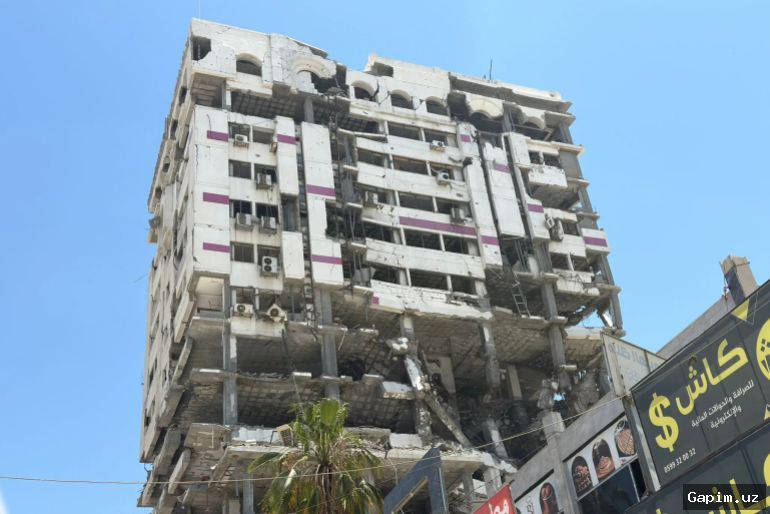
Among the hardest-hit institutions is the UCAS Technology Incubator, affiliated with the University College of Applied Sciences (UCAS) in the Tal al-Hawa neighborhood of southwestern Gaza City. Once a vibrant hub for innovation and startups, its headquarters and facilities were reduced to rubble in August 2024 after Israeli attacks targeted the college.
Abdallah al-Tahrawi, director of the UCAS Technology Incubator, told Al Jazeera that the center was established 13 years ago to invest in Palestinian youth and foster a culture of innovation and entrepreneurship. The incubator has supported more than 500 young tech professionals and hosted dozens of projects focused on information technology, food manufacturing, commerce, and creative industries.
Prior to the war, the incubator boasted 13 specialized facilities, including training halls, media production studios, and co-working spaces, funded by grants from the European Union, Qatar, and the Arab Fund for Economic and Social Development. Today, that ecosystem has been entirely upended. The headquarters and more than 20 specialized laboratories were completely destroyed, while several staff and participants were killed or imprisoned by Israel.
A field assessment of 100 startups in Gaza conducted by the incubator revealed staggering losses: 90% of startups were destroyed, with damages exceeding $5 million. “We didn't just lose infrastructure; we lost a part of the human capital that formed the core of our work over the past years,” al-Tahrawi said. Despite the massive losses, the incubator has launched a recovery plan to restore core programs and launch new workspaces, aiming to include more than 100 beneficiaries in its first phase.
The loss of human capital has been devastating and, according to human rights monitors, deliberate. The Israeli army has systematically targeted dozens of programmers, IT experts, and computer engineers during its genocidal campaign. According to the Euro-Med Human Rights Monitor, the Israeli military has killed hundreds of intellectuals and experts, including Tariq Thabet, director of the UCAS Technology Incubator Programs, killed on October 31, 2023, in an Israeli air strike that also killed his wife, children, and parents.
Before the war, about 65 businesses operated in Gaza's tech sector. Euro-Med estimates that programming and IT company headquarters have been almost completely destroyed, six business incubators have been damaged, and all university-affiliated tech centers have been closed. The rights group stated that these crimes appear to be part of an Israeli policy aimed at making Gaza uninhabitable by destroying fundamental life structures and eliminating talent.
Despite the challenges, UCAS continues its efforts from a rented location in Gaza City. Mohammed al-Safadi, a computer professor supervising the “e-Lancer” tech capacity-building project, emphasized that material losses have been compounded by the derailment of hundreds of young careers. However, the project continues to maintain its training programs, viewing digital skills as a crucial path for economic recovery.
The incubator's role extends beyond tech, supporting economic empowerment programs for those most affected by the war. UCAS partnered with the al-Amal Institute for Orphans to support girls who lost their fathers during the war. Amina Hammou, coordinator of fashion design and arts, explained that the project trains participants in fashion design and sewing to professional standards, providing all equipment free of charge.
Amidst the rubble and the exodus of talent, the UCAS incubator is trying to salvage Gaza's innovation ecosystem. For its organizers, reconstruction is not merely about rebuilding stones, but about rebuilding people and empowering youth to shape their own futures, even in the harshest of conditions.
Source: www.aljazeera.com