Tech giants are racing to build infrastructure for artificial intelligence, but a growing body of evidence suggests that AI hyperscalers – large-scale cloud service providers like Google, Amazon and Microsoft – are warming the ground around them as well.
A study by Cambridge-led researchers found that land surface temperatures around AI data centers rise by an average of 2 degrees Celsius (3.6 degrees Fahrenheit), with some areas recording increases as high as 9C (16.2F). Researchers have called this the “data heat island effect.”
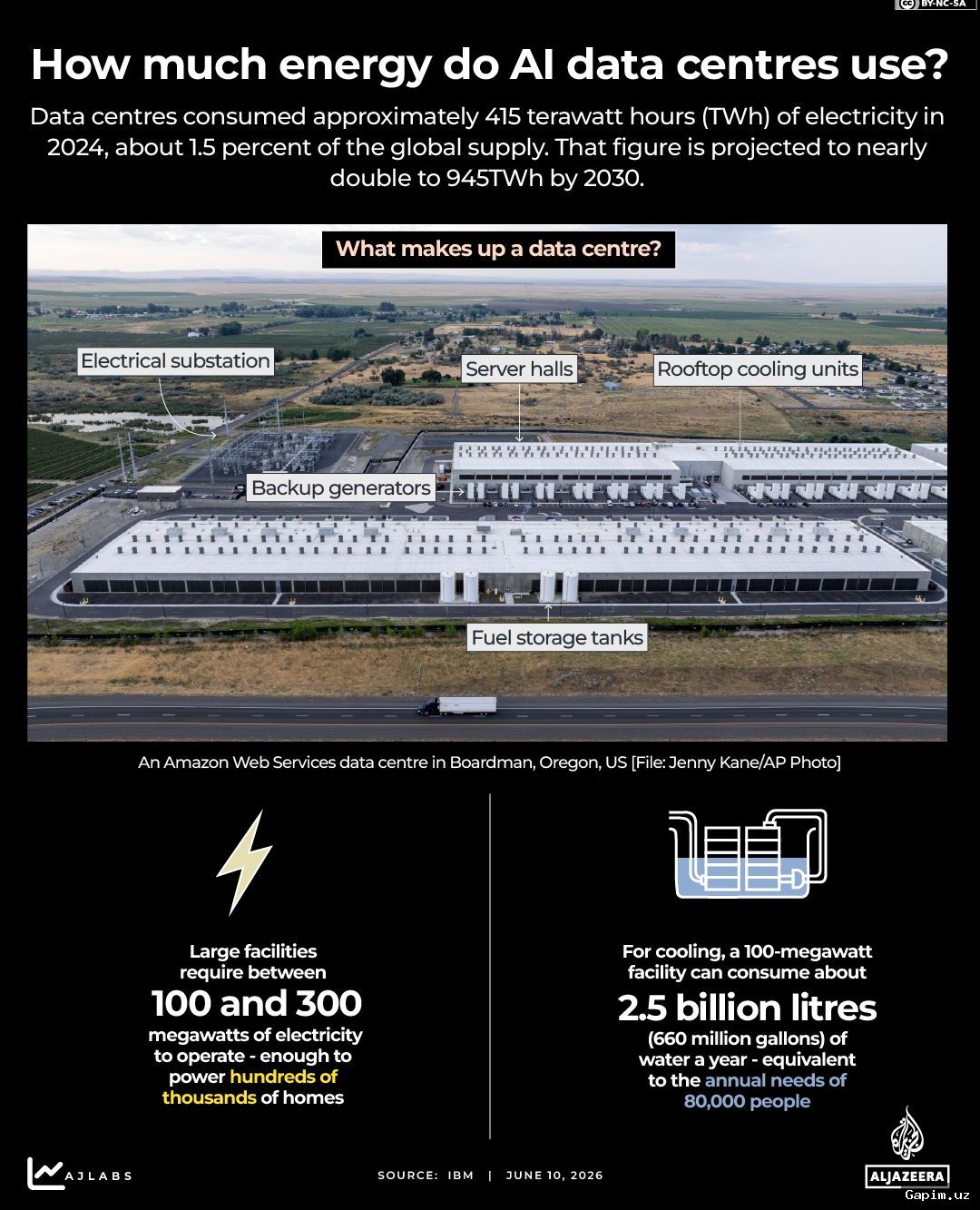
Every time someone uses ChatGPT, Gemini or Claude, the request is handled in a data center. AI data centers use powerful chips that perform thousands of calculations in parallel, making them much more energy hungry than typical servers. According to the International Energy Agency, data centers consumed about 415 terawatt hours of electricity in 2024, about 1.5% of global supply, projected to nearly double to 945 TWh by 2030.
Hyperscale data centers typically require between 100 and 300 megawatts of electricity. That energy generates enormous heat, managed through advanced liquid cooling systems that consume vast quantities of water. A UK government report found that a single 100-megawatt hyperscale data center can consume about 2.5 billion liters of water a year.
There are more than 11,600 active data centers worldwide as of June 2026. Most are in the United States (over 4,300). Europe is the second-largest hub, led by the UK (540+), Germany (520+), and France (390+). In Asia, China (360+) and India (300+) lead.
The study found that more than 340 million people living within 10 km of a data center could be affected by the temperature increases – an impact researchers described as having a “remarkable influence on communities and regional welfare” and one that should be part of the global conversation about environmentally sustainable AI.
Source: www.aljazeera.com