Since Israel launched its latest war on Gaza, Palestinian activist Mohammad Hannoun has been a figurehead in demonstrations across Italy. Wrapped in a keffiyeh and waving the national flag, as head of the Palestinian Association in Italy he delivered impassioned speeches condemning the Italian government's military cooperation with Israel and demanding an end to the genocide in Gaza.
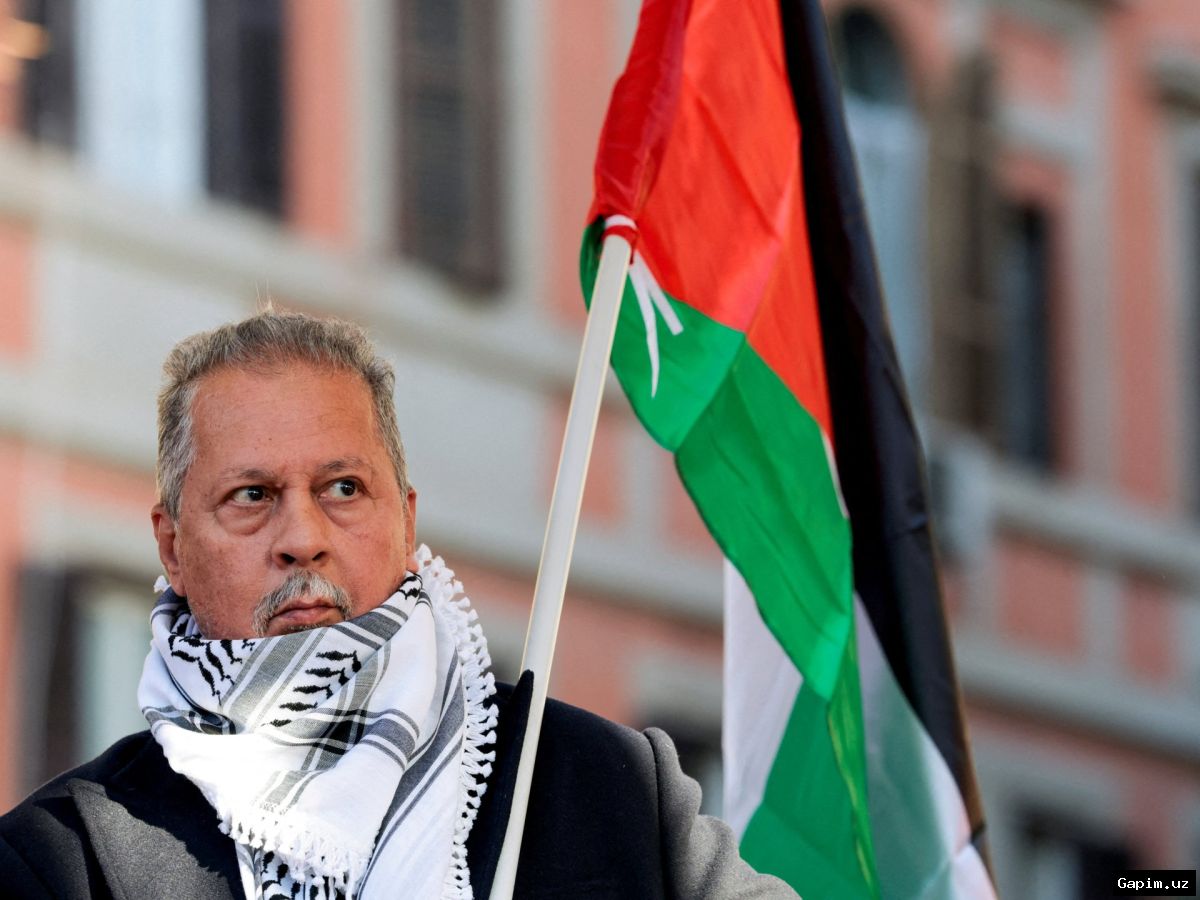
The 63-year-old Jordanian national, who lives in the port city of Genoa and is an architect by profession, was arrested in December under the accusation of having raised around 7 million euros ($8.1m) through his non-profit Association of Solidarity with the Palestinian People (ABSPP) that allegedly ended up in Hamas's coffers.
Italian Prime Minister Giorgia Meloni expressed "appreciation and satisfaction" when the so-called "Operation Domino" led to the arrest of nine people, including Hannoun, described by investigators as the "head of the Italian cell of the Hamas organisation".
But Italy's Supreme Court of Cassation last month demanded a "comprehensive re-evaluation" of the evidence, describing it as too "generic", according to the ruling seen by Al Jazeera. The material presented in court consisted of Israeli intelligence sent to Italian authorities, as well as open-source online information whose provenance and reliability had not been established.
Nicola Canestrini, one of the lawyers representing the defendants, argued that the evidence, collected by Israeli forces during military operations, lacked a proper chain of custody. The files were sent by an Israeli official whose personal details remain confidential, with only the codename "Avi" provided.
Canestrini and his team argued in court that unverifiable evidence collected by a state undergoing trial at the International Criminal Court (ICC) and the International Court of Justice (ICJ) was inadmissible. "There's a short-circuit in the legal system that is very troublesome for the rule of law," the lawyer told Al Jazeera.
Hannoun's case is not isolated. Last month, Amin Abu Rashid, a Dutch national of Palestinian origin, was acquitted in the Netherlands of financing Hamas after a years-long legal battle. The evidence had relied on Israeli government reports and unverified newspaper articles.
The UK-based advocacy organisation CAGE International described Abu Rashid's acquittal as a "direct rebuke of the use of Israeli intelligence as the basis for prosecuting Palestinian humanitarian organisers in Europe". Anas Mustapha, head of public advocacy at CAGE, told Al Jazeera that this practice constitutes a "major threat to the rule of law in Europe".
In Italy, activities around Palestinian solidarity are increasingly "equated with terrorism," Italo Di Sabato, national coordinator of Osservatorio Repressione, told Al Jazeera. He argued that accepting opaque evidence against Hannoun would have created a dangerous legal precedent. "What today constitutes the basis for the repression of Palestinian activism could tomorrow be the basis for the repression of any form of dissent," he said.
Source: www.aljazeera.com