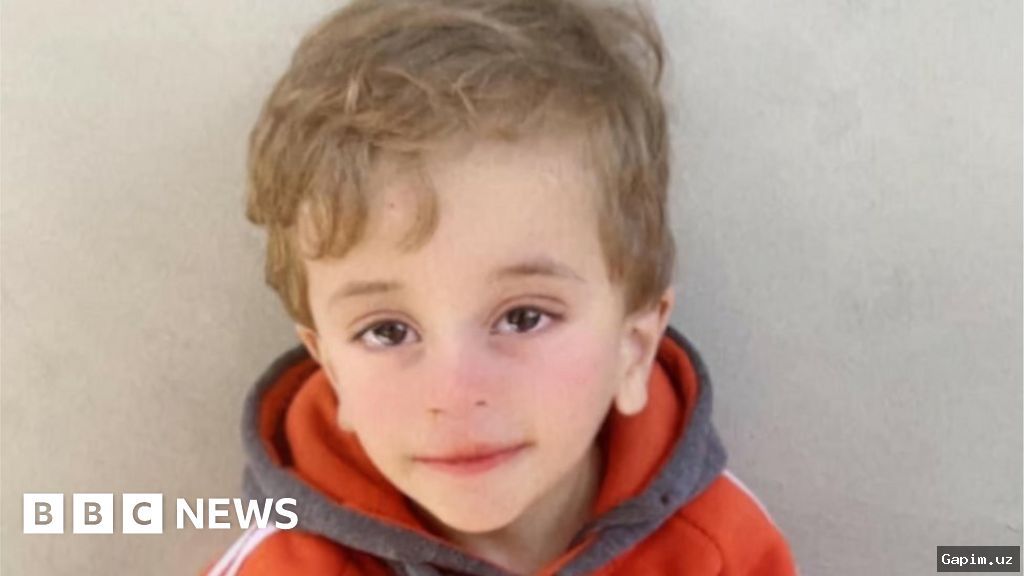
Most people in the West, even those who follow international news avidly, have likely not heard of Sam Fahd Abu Haikal, the seven-month-old Palestinian baby Israeli soldiers shot in the face and killed near Hebron in the occupied West Bank earlier this month.
Western media rarely talk about West Bank villages like Sinjil, encaged in barbed wire, its residents forbidden to access their own land. News bulletins rarely mention how Israeli settlers continue to set fire to homes and cars, harass, threaten and torture Palestinian villagers while enjoying the Israeli military’s full support and protection.
Since the ceasefire came into effect in October, Israeli fire into Gaza has continued nearly every day, with more than 2,000 documented violations by spring and at least 981 Palestinians killed, many of them children – shot for approaching a yellow line that keeps approaching them. The buildings are still falling. The children are still dying. The hunger has not ended.
In mid-March, as the world’s attention shifted to Iran, the Israeli army sent aid organisations maps showing it had pushed 11 percent past the yellow line, from the 53 percent of Gaza the ceasefire granted it to 64. By late May, Israeli Prime Minister Benjamin Netanyahu was telling a settler conference that the army already held 60 percent and that he had ordered it to take 70.
Palestinians can no longer reach roughly two-thirds of their own territory, including nearly all of Gaza’s farmland, which lies east of the yellow line. Farmers are shot for trying to reach their land. Fishermen are killed for trying to reach the sea. Families are fired on for trying to return to what is left of their homes. This is genocide administered as geography.
The Iran story helps bury the truth about Palestine. When Gaza’s crossings close, Israel calls it security. When aid is blocked, it says the region is under threat. When Palestinians are killed, it folds them into the war with Iran, branding them terrorists after the bullet has already landed. The dead become operatives, collaborators, threats.
The same method is visible in southern Lebanon. Evacuation orders tear people from everything south of the Litani River. Up to roughly a fifth of Lebanon has been ordered emptied. More than 1.2 million people have been forced from their homes. Hospitals and ambulances have been struck. Land has been burned with white phosphorus.
No deal with Iran can be mistaken for an “end of war” in the region while Palestinian land is still being taken, Gaza is still being starved, and the West Bank is still being carved apart by soldiers, settlers, checkpoints and barbed wire. Palestine is where this war begins again and again: where ceasefire becomes another name for control, where hunger becomes policy, where a baby shot in the face can be treated as a footnote.
Sam Abu Haikal was buried wrapped in a Palestinian flag, carried in his father’s arms, with all his innocent dreams dying with him. Sam was also the war, the whole of it: the story every headline keeps filing as a footnote to someone else’s missiles. The forgetting, and the forgotten, are Israel’s final weapon.
Source: www.aljazeera.com