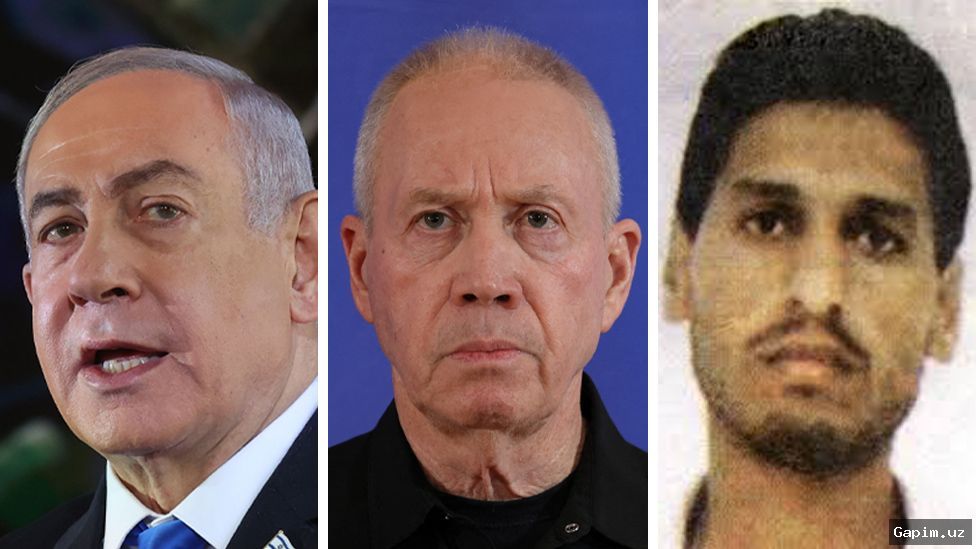
The International Criminal Court's arrest warrants for Israeli Prime Minister Benjamin Netanyahu and former Defense Minister Yoav Gallant in November 2024 did not emerge from a vacuum. They were built on years of painstaking documentation by Palestinian lawyers and human rights organizations, who collected evidence of torture, sexual violence, arbitrary detention, attacks on hospitals, and the killing of children in Gaza and the West Bank.
This work came at a severe cost. Tahseen Elayyan of Al-Haq, one of the oldest Palestinian human rights groups, described how his organization was designated a “terrorist” entity by Israel in 2021 and shut down by military order. “My organisation has been designated as a terrorist organisation because of the work that we do,” he said. Despite the closure, they continue operating from their office.
Defense for Children International-Palestine spent years gathering affidavits from detained and abused children. Instead of investigating these allegations, Israeli forces raided their office in Ramallah in 2022. Ayed Abu Eqtaish, accountability director, noted: “Instead of opening an investigation into these allegations, the Israeli authorities raided the DCI office.”
Raji Sourani, director of the Palestinian Centre for Human Rights, has spent decades trying to transform Palestinian suffering into legal claims. After his home in Gaza was bombed, he was exiled to Cairo. His demand remains modest: “We don’t want Gaza to be the graveyard of international law, and we want the Gazans to have justice and dignity.”
Former ICC prosecutor Fatou Bensouda faced intimidation as she advanced the Palestine investigation. Two men arrived at her home in The Hague with an envelope containing $500, which she interpreted as a threat from Israeli intelligence. Later, the Trump administration imposed sanctions on her, freezing her bank accounts and blocking her husband's accounts. She said she felt “left alone” and “unsupported”.
In February 2025, U.S. President Donald Trump signed an executive order imposing sanctions on the ICC after the Netanyahu warrants. This chilled the court's work, leading to resignations, frozen accounts, and slowed prosecutions. Former ICC judge Cuno Tarfusser warned: “Evil wins over the rule of law.”
UN Special Rapporteur Francesca Albanese, who documented Israel's creation of a “torturous environment” for Palestinians, was sanctioned by the U.S. in July 2025. Human Rights Watch called it an attack on the UN human rights system. A U.S. federal judge temporarily blocked the sanctions, but an appeals court reinstated them.
In June 2026, a rare cross-regional diplomatic alignment at the UN Security Council saw representatives of Palestine, Saudi Arabia, and 57 members of the Organization of Islamic Cooperation demand immediate accountability for Israel's settlement expansion and military control in Gaza. They cited multiple UN resolutions and the ICJ's advisory opinion.
The Palestinian case has become a test of whether international law applies equally. As Bensouda put it: “There are people who have lost complete hope in what is happening in their domestic jurisdictions, and they look up to the court as a beacon of hope. We cannot let them down.”
The evidence exists. The survivors have spoken. The lawyers have carried it as far as they can. The world now knows — and must decide whether to act.
Source: www.aljazeera.com