Despite the shallowing of the Caspian Sea and related shipping difficulties, the potential of the Trans-Caspian route remains high, said Jasurbek Choriyev, Secretary General of the TRACECA intergovernmental program and Deputy Minister of Transport of Uzbekistan, in an interview.
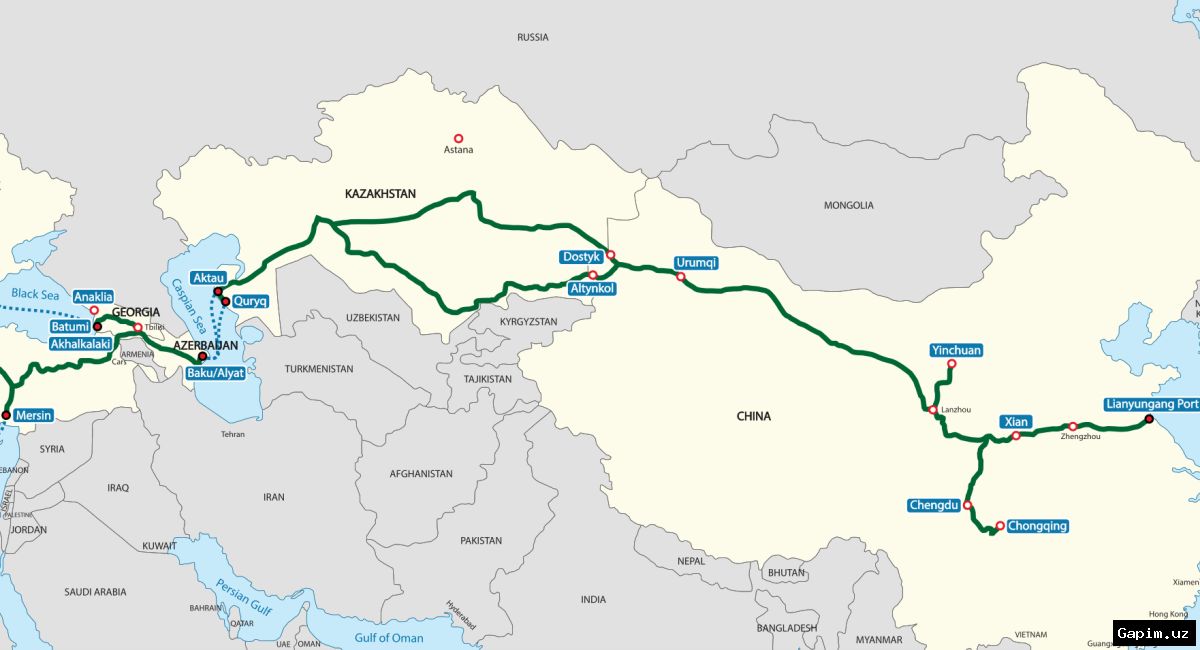
According to him, the shallowing of the Caspian is periodic and affects different parts of the sea differently. “The shallowing is occurring, in particular, in the northeastern part of the Caspian Sea, while the area of the Turkmenbashi port or the border with Iran is one of the deepest zones of the sea,” he noted.
Choriyev confirmed that the drop in water level is affecting some ferry operations on the Caspian. “Due to the shallowing, the carrying capacity of some ferries is decreasing, so several measures are being considered. It is necessary to find vessels that can operate effectively in shallow waters,” he said.
According to Choriyev, both regional states and private carriers are exploring fleet renewal options. “Kazakhstan and Azerbaijan are building new ferries, their number is growing. In Turkmenistan, they are generally sufficient,” the TRACECA Secretary General explained.
Choriyev highlighted opportunities to increase traffic through the Turkmenbashi port. “Currently, the Turkmenbashi port is not operating at full capacity, partly due to visa difficulties for carriers. There are also permit issues. They need to be more actively involved. The port is now operating at about 25-30 percent capacity. So the potential is still great,” he stressed.
The organization's Secretary General expressed confidence that traffic along the Middle Corridor will grow, and countries with sea access and port infrastructure will continue to invest in it.
According to the TRACECA head, maintaining the navigability of the route remains a key task for the Caspian states. “They deepen the channels to maintain their capacity,” he added.
When asked about the impact of the situation in the Middle East on the development of the Middle Corridor, Choriyev noted the interdependence of transport routes and that changes in one direction are reflected in others. “The closure of one corridor mainly increases demand in another direction. This is natural,” he said. At the same time, the TRACECA head emphasized the importance of predictability and reliability of routes for shippers.
“If people are accustomed to a safe, reliable corridor where the cargo is insured and reaches the consignee, it is very difficult to change their route until time passes or someone offers very attractive and preferential conditions, proving the advantages of another direction,” he concluded.
Source: www.gazeta.uz