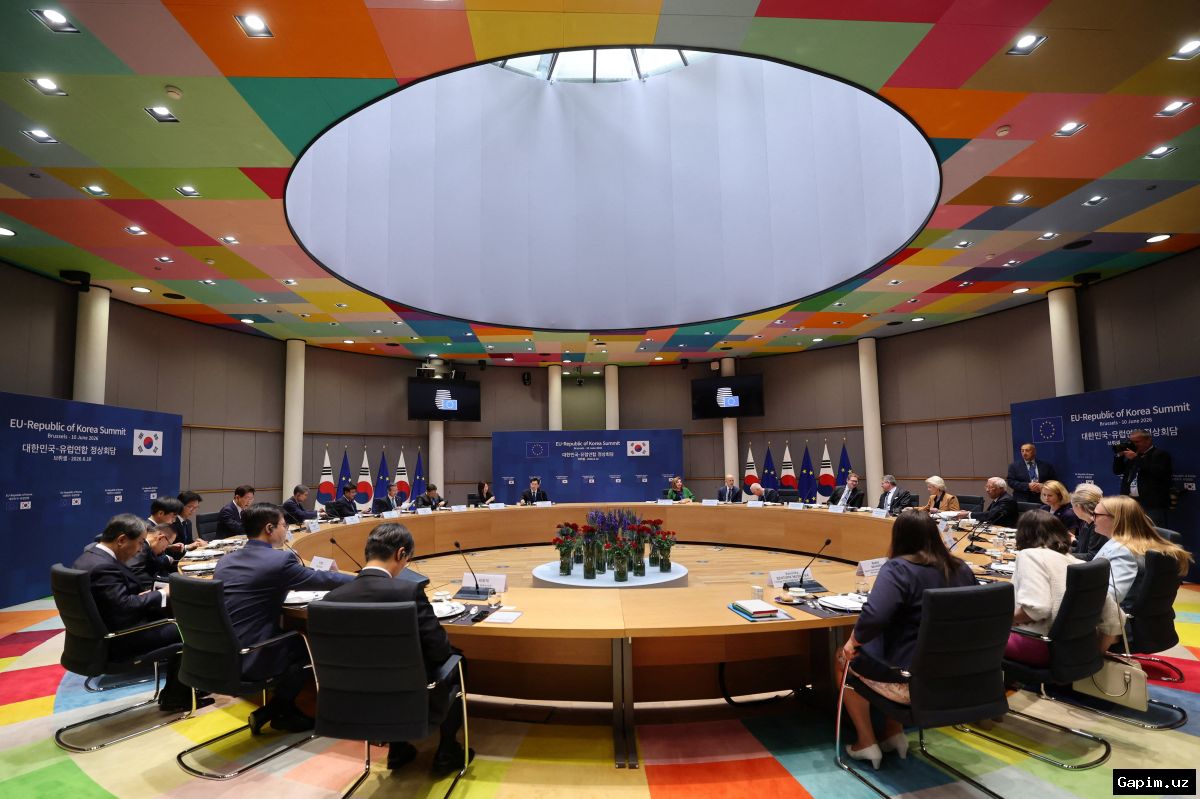
German Chancellor Friedrich Merz has described the European Commission's long-term budget proposal for 2028-2034 as 'far too high' and demanded a new proposal. Speaking at the EU summit in Brussels, Merz stated: 'The proposal on the table is far too high. The figures need to be reduced. A new proposal must be put forward.'
The European Commission has proposed a budget of nearly €2 trillion ($2.29 trillion), equivalent to 1.26% of the EU's gross national income on average between 2028 and 2034. However, negotiations are tricky and often face resistance from leaders prioritizing their own key interests. Currently, the Commission is debating a 2% reduction in the proposed budget.
Ukrainian President Volodymyr Zelenskyy also attended the summit, meeting with European Council President Antonio Costa and European Commission President Ursula von der Leyen to discuss further steps on Ukraine's path to EU membership. Zelenskyy said: 'It is important to open the remaining five negotiating clusters in the near future. We also expect to receive the first tranche from the EU financial support package soon to strengthen our defense.'
EU leaders agreed to renew sanctions against Russia for another 12 months. This marks the first time such sanctions have been renewed for a year; previously, they were renewed every six months. However, Bulgarian Prime Minister Rumen Radev announced his country would veto the latest sanctions package, citing potential negative impacts on Bulgaria's economy, particularly regarding Lukoil's operations.
Several EU leaders expressed skepticism about rushing into talks with Russia. Latvian Prime Minister Andris Kulbergs said: 'First of all, there has to be someone on the other side willing for peace. Unfortunately, no one wants peace on that side.' Lithuanian President Gitanas Nauseda added: 'It is much better to step in if we see some positive signals from Russia. So far, I do not see any positive signals.'
Irish Prime Minister Michael Martin called the postponement of US-Iran negotiations 'regrettable but not entirely unexpected,' stressing that the world needs stability and peace. For the EU, the stakes go beyond nuclear safeguards and shipping route security, impacting the global economy and oil prices.
Source: www.dw.com