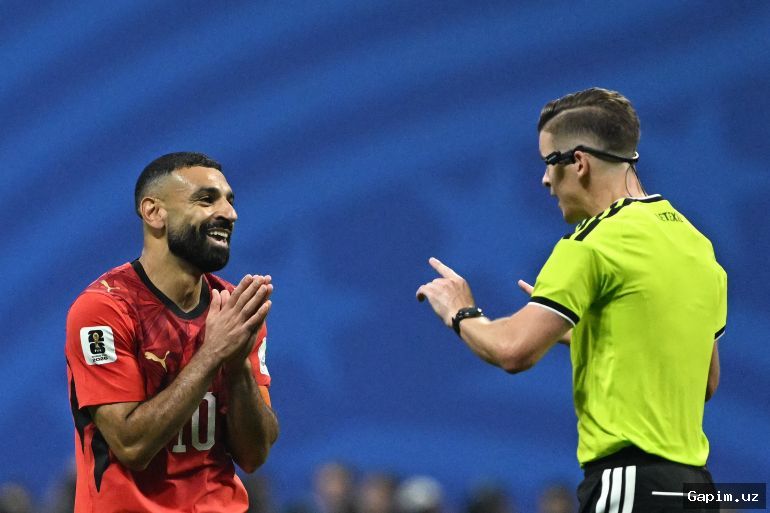
The clamour surrounding the World Cup’s controversy involving US President Donald Trump and FIFA chief Gianni Infantino had barely died down when another arose in the aftermath of Argentina’s controversial 3-2 win over Egypt in the round-of-16 match in Atlanta. As the defending champions staged a stunning comeback against the Pharaohs, questions were raised about an unusually late VAR call that saw Egypt’s second goal rescinded, followed by a chain of events that led to Argentina’s victory.
A day earlier, Trump had revealed that he had asked FIFA to review, and overturn, USA striker Folarin Balogun’s one-game suspension for a red card, and the governing body controversially obliged. Belgium then dumped the hosts out of the tournament with a 4-1 win in the match Balogun was initially suspended from but ended up playing – to no avail.
While the anger surrounding FIFA’s red-card decision was directed at both the football governing body and Trump, Egypt’s outburst was solely aimed at the organisation. Head coach Hossam Hassan speculated that match officials had been put under pressure to ensure that one of the biggest names, Argentina’s Lionel Messi, stayed in the tournament. “Perhaps they wanted Messi to stay in the running,” Hassan told beIN Sports after the match. “In football, there are sometimes external factors that go beyond the technical aspects. The world champions received support at every level.”
Experts say the lines between sport and politics have been blurred even further. Simon Chadwick, professor of Afro-Eurasian sport at the Emlyon Business School in Shanghai, told Al Jazeera: “After the Balogun affair, who knows which decisions are legitimate and can be trusted, and which can’t? If the Trump administration is maintaining a watching brief over the tournament, it’s worth remembering: Argentina’s president, Javier Milei, is a staunch Trump supporter.” Chadwick also opined that Hassan’s vociferous support for Palestine at the World Cup could have prompted some officials to “have built-in biases when making decisions”.
Football analyst Ali El Garni said “robbed” might be a strong word, but noted that all 50/50 incidents went Argentina’s way. “The incident leading to the Egyptian disallowed goal was an indisputable foul. The question is how far VAR should go back to check the legitimacy of a goal,” he said, wondering if VAR would have intervened had the scoreline been 2-0 in Argentina’s favour instead.
Chadwick questioned why VAR officials had raised the issue if the on-field officials did not call a foul, and proposed greater transparency: “For fans and viewers to listen to an assessment of the alleged offence, hear the various arguments, and have a clear insight into the basis for a decision.” He dismissed rumours of match-rigging but acknowledged Messi’s star power: “There is no doubt that Messi is a box office attraction the tournament really can’t afford to be without.”
Source: www.aljazeera.com