Six months after US forces ousted Venezuelan leader Nicolas Maduro, the balance of power in Latin America and the Caribbean has shifted in Washington’s favour. In Maduro’s place stands Delcy Rodriguez, his former vice president, now acting president and a far more manageable partner for Washington. Her rise has given the administration of US President Donald Trump a de facto ally in its effort to revive US dominance over the Western Hemisphere under what has become known as the “Donroe Doctrine”.
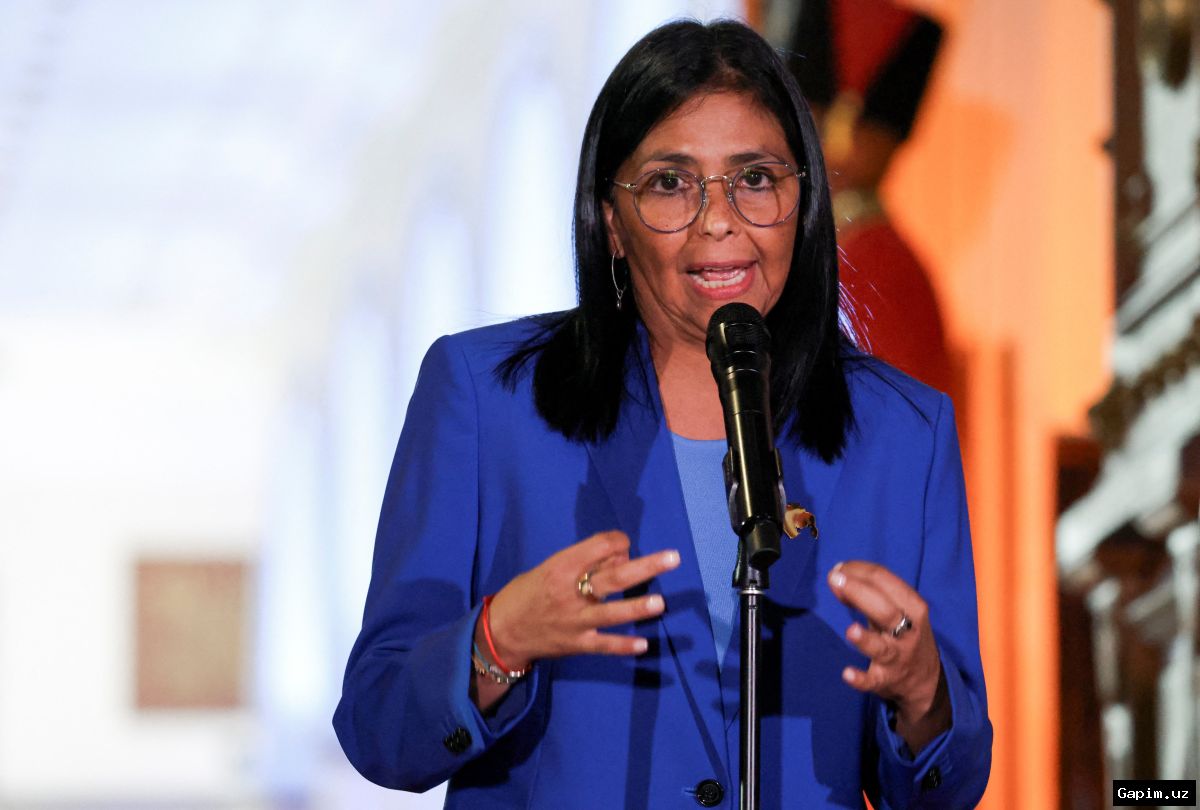
Rodriguez’s challenge is to satisfy Washington without losing control at home. To do so, her advisers are recasting a movement once rooted in the socialist politics of the Hugo Chavez-Nicolas Maduro era as something more pragmatic, transactional and suited to the new hemispheric order. The former “comrades” are now moving closer than ever to open alignment with Trumpism in Latin America.
Nowhere is the scale of Rodriguez’s shift clearer than in her approach to Israel. Under her government, Caracas has begun moving towards a state long treated as an enemy by the “21st-century socialists” who have ruled Venezuela for the past 27 years. Throughout the Chavez-Maduro era, successive Venezuelan governments considered Israel a “genocidal” state and an “enemy of peace”, condemned almost every Israeli military action, and broke diplomatic relations in 2009.
Rodriguez, however, has chosen to pursue her own agenda with Israel. In late February, her government avoided direct condemnation of US-Israeli attacks on Iran, instead calling for “dialogue” and criticizing Iran’s retaliation. In April, she sent a warm Passover greeting to Venezuela’s Jewish community, signaling openness to rapprochement.
The devastating earthquakes that struck Venezuela in June gave the Rodriguez administration another opportunity. After 17 years without diplomatic relations, Venezuela publicly thanked Israel for sending a disaster-response team. The mission led to the first known high-level contact between Israeli and Venezuelan officials in years, raising the possibility of formal re-establishment of bilateral ties.
These moves are part of a calculated strategy by Venezuela’s acting government to secure its hold on power. First, Rodriguez’s plan involves demonstrating strong alignment with US foreign policy to secure Trump’s support. She has reached out to Trump’s regional allies, including President Javier Milei in Argentina and President Nayib Bukele in El Salvador, and has accepted US demands to open up Venezuela’s oil, mining and electricity sectors.
A second element is to distance the current Venezuelan government from long-standing adversaries of Washington, such as Iran and Hezbollah. Weeks after Maduro was ousted, US Secretary of State Marco Rubio warned of links between Maduro’s regime and the Lebanese organization. In response, the Rodriguez administration has moved to extradite two alleged Hezbollah collaborators from Venezuela.
Another driver is domestic politics. Maria Corina Machado, the leading opposition figure and Rodriguez’s main rival, has built a strong alliance with Israel over the years. If Rodriguez can win Netanyahu over at Machado’s expense, Machado could lose one of her most important sources of support, both internationally and in Washington.
The rapprochement between Venezuela and Israel is therefore part of a calculated strategy by the Venezuelan government to consolidate its power, weaken its main domestic opponent and reassure Washington that Caracas is distancing itself from actors Washington considers enemies. But whether this bargain can survive the weight of 27 years of anti-Israel rhetoric remains far from certain.
Source: www.aljazeera.com