On the dialysis floor of Gaza City's al-Shifa Hospital, the same scene repeats daily. Machines run non-stop. Patients sit in closely arranged rows. Medical tubes connect bodies to life for limited hours.
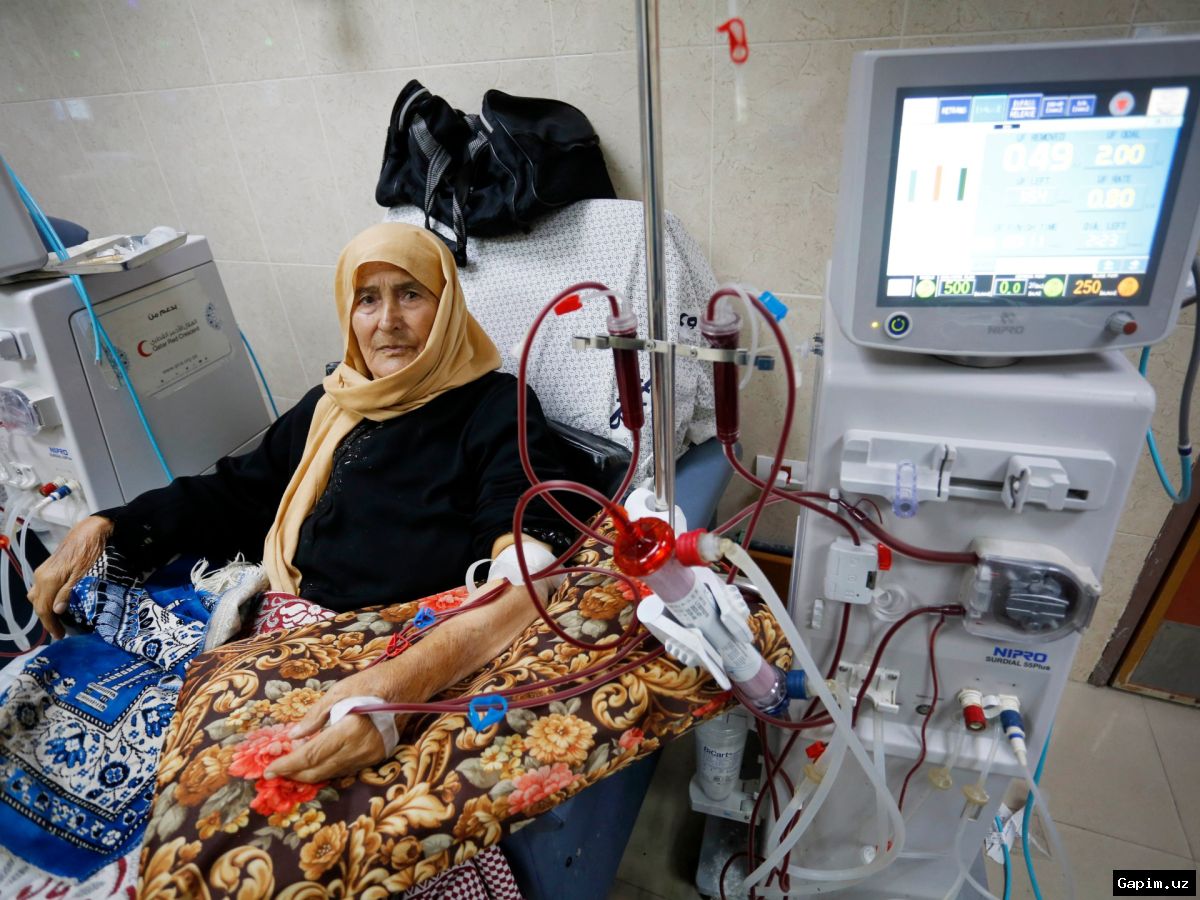
In one chair sits 14-year-old Ruwaa Muntasir Abdul Karim from Jabalia in northern Gaza. Her small frame stands out in the crowded room. Her left hand is connected to a dialysis machine. Her eyes follow the medical staff, but she remains silent throughout the session – the process has exhausted her.
Her father Muntasir sits beside her, his face full of concern. "My daughter used to walk and play before the illness. Her life changed after surgeries and dialysis. Every dialysis session keeps her alive. Any interruption causes severe fatigue and shortness of breath," he said.
But the department keeping Ruwaa alive is struggling itself. Israel's genocidal war on Gaza has decimated the medical sector. According to the Palestinian Ministry of Health, 50 percent of dialysis machines in Gaza have stopped working due to a shortage of sodium bicarbonate.
The number of hospitals equipped for kidney failure patients has dropped from seven to four. The number of kidney failure patients has fallen from 1,200 before the war to about 700, with over 470 deaths due to missed dialysis sessions and lack of essential medications, according to the Palestinian Centre for Human Rights.
Osama Abu Rahma, head of the kidney department at Al-Aqsa Hospital, said: "We have 51 dialysis machines, but 25 are completely out of service." This has forced the facility to reduce both the number of weekly sessions and their duration, leading to rising medical complications.
Ruwaa's father Muntasir said her weight has dropped from 65kg to 35kg, and weekly dialysis sessions have fallen from three to two. The only permanent solution – a kidney transplant – has been pending for six months because Israel must approve all journeys out of Gaza.
The healthcare crisis extends beyond physical injuries. Psychologist Asil Abu Shaweesh reported widespread mental health disorders including depression, anxiety, PTSD, insomnia, and panic attacks among the population due to war, displacement, and loss.
22-year-old Hadeel recalled her mother being pulled from rubble after a bombing. She now cares for her seven siblings, experiencing constant psychological stress. "Some days I feel depressed, and other days I have to continue and take care of them," she said.
Source: www.aljazeera.com