Russian missiles and drones are relentlessly pounding Ukraine's Black Sea ports, including Odesa, in a campaign to cripple the country's maritime trade. The attacks have left port infrastructure in ruins, ships sunk, and a mounting toll of civilian casualties.
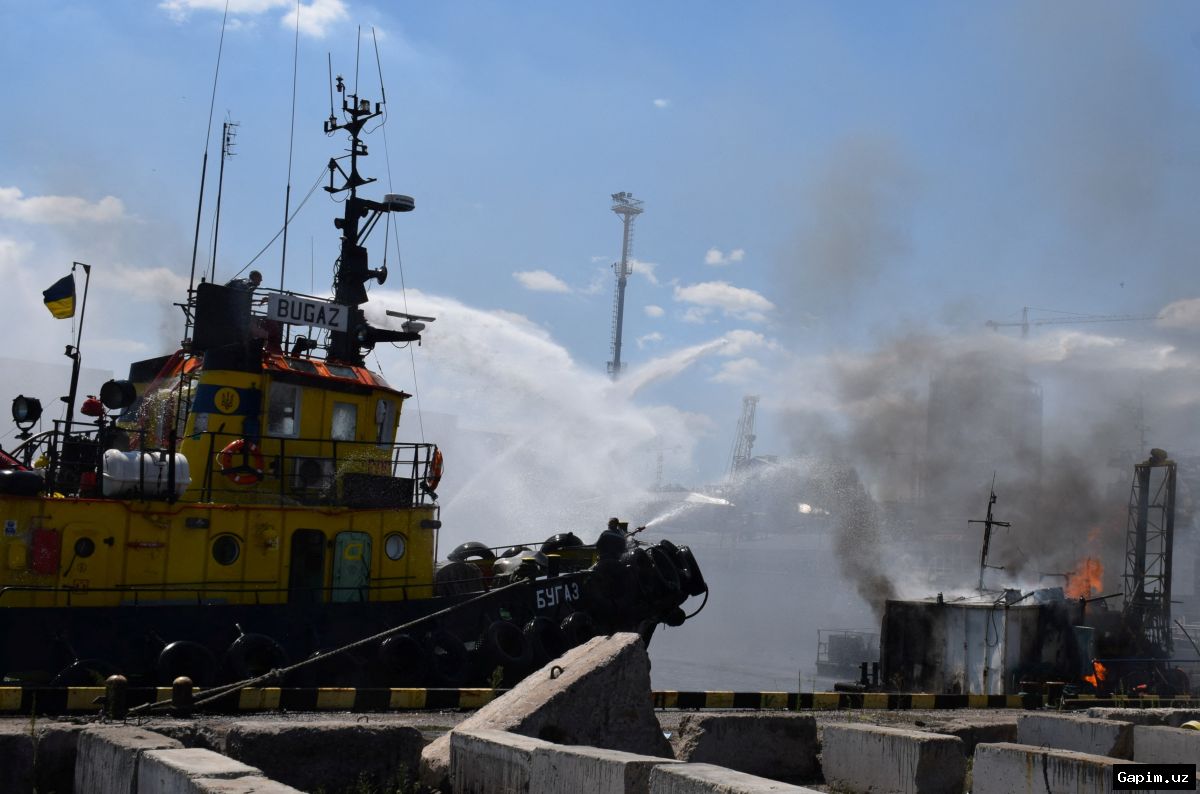
Svitlana Halchenko, a warehouse shift manager at Odesa's main port, recalls the moment a Russian ballistic missile exploded at her workplace, killing her colleagues. "My crane operator, my partner, died five metres from me... The driver remained in the cabin. He also died," she says, wincing. Despite her injuries—shrapnel still embedded in her leg and back—she is determined to keep working, but the bustling port is now eerily silent.
According to Ukraine's port administration, July saw 57 Russian attacks on civilian vessels, 22 of them at sea, and 67 hits on port infrastructure. These attacks have been unprecedented in scale and lethality. On July 19, a Turkish-owned cargo ship, the Golden Leo, was struck by three missiles, killing nine Indian and Syrian crew members and a Ukrainian pilot. The vessel, carrying Ukrainian corn, sank a week later.
The global shipping journal Lloyd's List warns that the Black Sea may now be the most dangerous shipping lane in the world, with July the deadliest month for merchant seamen since Russia's full-scale invasion began. Oleg Grygoriuk, Chairman of the Marine Transport Workers Union of Ukraine, says his members are suffering: "There are a lot of veterans who already served their country, and they literally say that being in the port is more scary than being on the front line."
The proximity of Odesa to Russian-occupied territory leaves workers with little time to react. "A missile flies from Crimea within a minute," Grygoriuk explains. "If you are sitting in a crane, you need three and a half minutes to get down and go to the shelter. There's literally no time to do that."
During a rare visit to one of the region's main ports, we saw almost no signs of activity. Hundreds of metres of berths sat empty, towering gantry cranes stood idle, and a skeleton crew performed maintenance. Two damaged cargo vessels were moored nearby, both with severe damage to their superstructures. A senior manager, speaking on condition of anonymity, said: "My heart is broken. Normally there's a queue, even out at sea, waiting for a berth. Now, nobody comes."
The military authorities allowed the visit only on condition that we neither name the facility nor film anything, as Ukraine doesn't want Russia to know what has been damaged. The port manager noted that recent alerts have forced the port to shut down for 15 out of 24 hours. Technically, the port is open, but the risks are too great for most shipowners.
Andrey Stavnitser, co-owner and CEO of one of the largest ports in the area, says: "There is barely anybody who wants to call because there is a huge problem with people getting killed. We can see that the whole supply chain is on hold." He suggests Russia is retaliating for Ukraine's successful attacks on Russian shipping, including sanctioned vessels carrying oil and supplies to occupied Crimea.
Ukraine's Operation MoLoChKa has struck around 200 Russian vessels, bringing traffic in the Sea of Azov to a standstill. Ukrainians bristle at the suggestion that both sides are playing the same game, pointing out that Kyiv is trying to loosen Moscow's grip on occupied territory, while Russia is preventing Ukraine from exporting badly needed grain.
The timing is particularly devastating as Ukraine's summer grain harvest is underway. Volodymyr Slavinskyi, trading director for Nibulon, one of the country's leading grain exporters, says: "It's the most sensitive period. Farmers need to quickly harvest grains from the fields, not to lose the crop. They need to be able to sell the crop they harvested and reinvest money in the next production cycle."
Ukraine is one of the world's largest producers of grain and oilseeds, supplying around 6% of global wheat exports and 10% of corn exports before the invasion. However, reports suggest export capacity has dropped by at least a third. The Greater Odesa ports accounted for more than 73 million tonnes of maritime exports last year, with grain making up 38 million tonnes. Slavinskyi estimates Ukraine has already lost the ability to deliver 500,000 to 700,000 metric tons of grains and oilseeds to global customers.
Away from the port, Odesa is trying to maintain a semblance of normalcy. The beaches are packed with visitors, and buskers perform on the Potemkin Stairs, but sirens and explosions are a constant reminder of the danger. In late June, 26-year-old Daria Kravchenko was killed by shrapnel from an intercepted Russian drone on the beach. This week, holidaymakers on Russia's Black Sea coast suffered a similar fate when an intercepted Ukrainian drone crashed onto a busy beach, killing seven people, including three children.
The war on ships and ports has many casual victims. Outside Odesa, we met 83-year-old Andrii Dudik, surveying the mangled wreckage of his house and garden after a drone explosion. He was physically unscathed and remarkably sanguine, joking: "I was lying there, wondering what I was going to do this afternoon. Now I know." Asked if he felt like an accidental victim of Russia's attacks on the nearby ports, he replied: "Absolutely. And I won't forget it."
Source: www.bbc.co.uk