US President Donald Trump told reporters at the White House on Monday that negotiations with Iran over the Strait of Hormuz were ongoing, adding that the Islamic Republic was facing a 'last chance before decapitation.' He said he agreed to continue pursuing talks with Tehran at the request of Saudi Arabia, the United Arab Emirates, Qatar, and other countries.
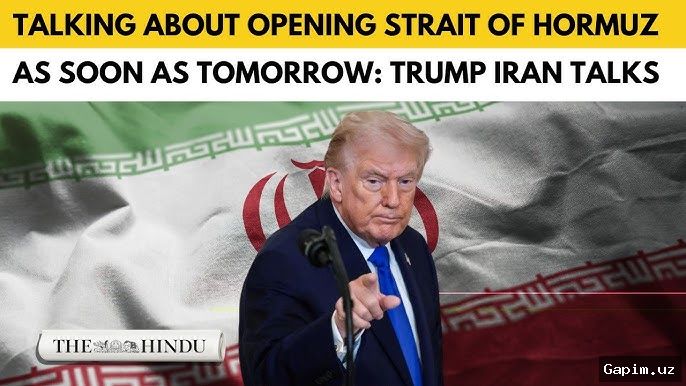
His remarks appeared to contradict public statements from Tehran, which has denied that negotiations with Washington were taking place. Iranian Foreign Ministry spokesperson Esmaeil Baghaei confirmed that Tehran was holding talks with Oman over the strategic waterway, but not with the US. Analysts suggest the two sides may be describing the same diplomatic channel in different terms, each using language aimed at its own domestic audience.
Washington describes the Omani mediation as negotiations with Iran, while Tehran portrays it as a technical discussion with Oman about shipping through the strait. The Strait of Hormuz has become the main sticking point. Commercial traffic through the key waterway remains severely restricted, and ships continue to face attacks near the strait. According to data from maritime analytics company Kpler cited by Reuters, only six commercial vessels crossed the route on Monday, down from seven the previous day.
The uncertainty surrounding the waterway has also affected global markets. Hopes of diplomatic progress recently pushed oil prices lower and helped stock markets rise, but those movements reflected how sensitive markets remain to any news about the strait, rather than evidence that the crisis had been resolved. Iran wants some measure of control over vessels entering the Persian Gulf to be recognized, while the US wants the strait fully reopened to unrestricted international shipping.
Babak Dorbeiki, a London-based political analyst and former official at Iran's Strategic Research Center, told DW that the disagreement is no longer simply about whether the two sides are talking. 'The question is what to call those talks and what each side hopes to gain from them,' he said. Trump describes the indirect channel as negotiations because he needs to show that military and economic pressure has brought Tehran back to the table, Dorbeiki said. Iran avoids the same terminology because acknowledging negotiations with Washington could be seen by its domestic opponents as surrender.
The two sides remain far apart. 'Iran wants control over vessels entering the strait, while the United States wants completely free passage,' Dorbeiki said. 'These positions cannot easily be reconciled.' The contradictory messages also reflect divisions between rival political factions inside Iran. Dorbeiki identifies two broad camps: the 'development and reconstruction through agreement' camp, which believes that without sanctions relief and the reopening of Hormuz, Iran's economy cannot recover, and the opposing camp, which includes the ultra-conservative Paydari Front, that 'sees an agreement with the United States as an ideological defeat' and favors continued resistance.
The lack of a clear leader in Iran has added to the uncertainty. Since the country's then supreme leader Ali Khamenei was killed in an airstrike on February 28, the first hours of the US-Israeli war against Iran, authority has become more fragmented. His son Mojtaba Khamenei was named new supreme leader, but his role remains unclear, and he has not been seen in public since the war began amid speculation he was severely injured in the strike. Dorbeiki says this has allowed rival groups to claim they speak for the leadership.
Hassan Asadi Zeidabadi, an Iranian political analyst based in Tehran, believes the main decision-makers in Tehran have already accepted the need for negotiations. He sees three main camps within the Iranian establishment: government officials dealing with the economic effects of the war and blockade, who are more inclined toward negotiations; military figures who want to improve their position before negotiating and remain skeptical of US intentions; and ideological hardliners who believe that reaching an agreement with Washington after the war and the killing of Iran's supreme leader would mark the end of the Islamic Republic's traditional identity.
'They fear the day after an agreement,' Asadi Zeidabadi added. 'For them, a deal with the United States would mean the end of the ideological era they represent and, ultimately, their own removal.' These hardliners retain influence in parliament, the security establishment, and the state's propaganda apparatus, and fear the changes a deal could bring.
The future of the talks may depend less on Muscat or Washington than on which factions gain the upper hand in Tehran. If supporters of an agreement convince the leadership that continued isolation threatens reconstruction, the economy, and ultimately the system's survival, diplomacy could move forward. If hardliners succeed in presenting any compromise as surrender, even the indirect talks could collapse. Based on the positions outlined by both analysts, further reports of progress are likely to be accompanied by contradictory public statements.
Source: www.dw.com