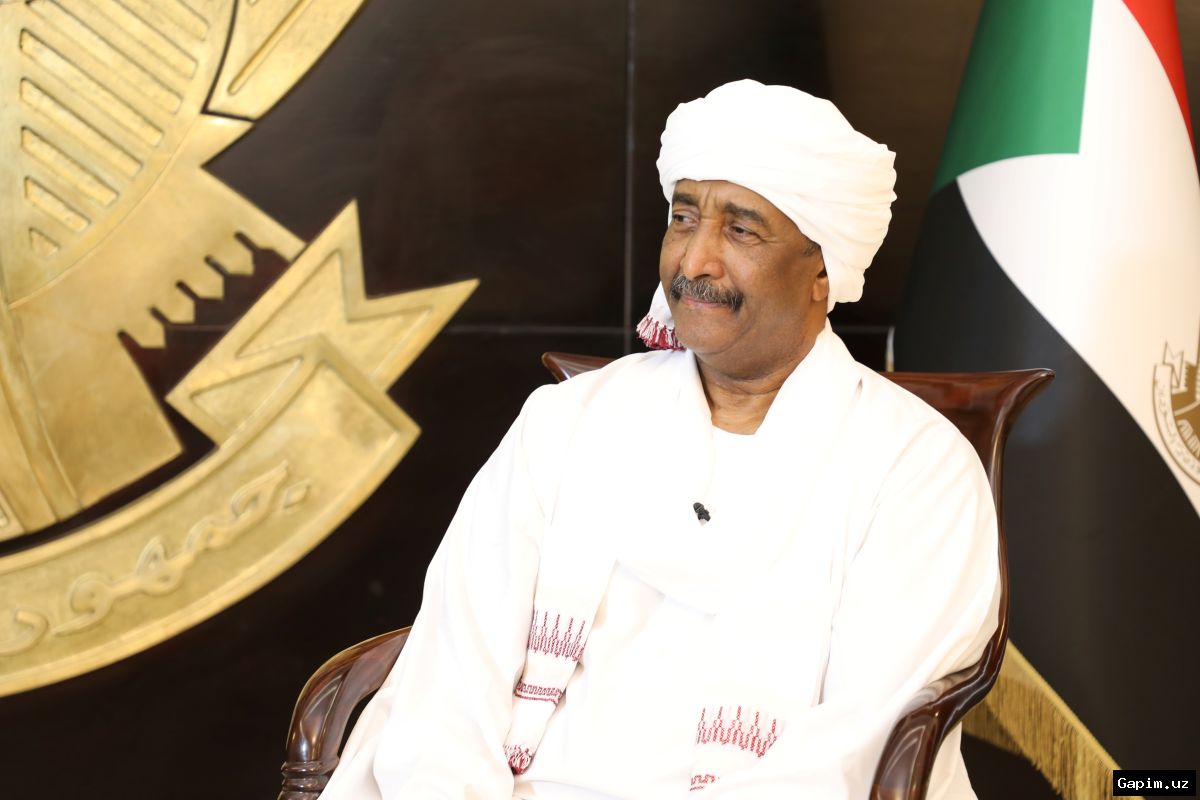
Sudan's army chief Abdel Fattah al-Burhan has held unannounced consultations with political and civil society groups and figures, resulting in agreement on steps to create conditions for a Sudanese dialogue conference, political sources aware of the discussions have told Al Jazeera.
The consultations include proposals to drop charges punishable by death against opposition leaders and to form a preparatory committee for the proposed conference. The political sources, who requested anonymity, said the consultations focused on the need for a comprehensive Sudanese conference involving key political players.
The Sudanese Armed Forces (SAF) have been at war with the paramilitary Rapid Support Forces (RSF) since April 2023. Those involved in the consultations have largely agreed on the need for practical steps to create a climate conducive to dialogue, including an end to media campaigns against political opponents.
According to the same sources, a majority of those taking part have agreed on practical steps, including halting negative media campaigns and suspending criminal charges carrying the death penalty against dozens of opponents of the army-led Transitional Sovereignty Council – primarily members of the Somoud Alliance, a political grouping led by former Prime Minister Abdalla Hamdok.
The charges against Hamdok and other political figures tied to Somoud include war crimes, inciting war against the state, and undermining the constitution. Somoud has been accused of supporting the RSF, but has always denied such claims.
Participants in the consultations have agreed on the need to select a preparatory committee for the dialogue conference, made up of independent, widely accepted figures with specialised expertise. The committee would determine who takes part, the agenda, and the venue and date of the conference, as well as invite international and regional parties to monitor it, according to the political sources.
Hatem al-Sir, adviser to the head of the Democratic Unionist Party-Original, said Khartoum is witnessing intensive political activity and ongoing consultations in preparation for an intra-Sudanese dialogue, with the support of regional forces. In a post on X, he said al-Burhan had held meetings with leaders of political blocs, chiefs of native administration, Sufi order leaders, independent national figures, academics, professionals and resistance committees.
The Quintet – made up of the United Nations, the African Union, the European Union, the Intergovernmental Authority on Development (IGAD) and the Arab League – has also been attempting to secure an agreement among Sudan's competing political blocs on the structure of a proposed national dialogue, but has so far struggled. Its latest round of discussions, which began in Ethiopia's Addis Ababa on July 29, failed to bridge differences among Sudanese parties over arrangements for the conference. Several political groups, including Somoud, did not attend the meetings.
Babiker Faisal, a leader in the Somoud alliance, accused the Quintet of retreating from understandings that had previously been reached over arrangements for the political process. Faisal described the Quintet as “no longer a neutral umbrella” for sponsoring dialogue, saying that it had strayed from the principle of Sudanese ownership of the political process. He also accused Sudan's army leadership of seeking to exploit military developments to launch a “cosmetic political process” aimed at bolstering the legitimacy of its authority.
In a statement issued Friday, the Quintet said it would continue efforts to advance Sudan's political process through renewed consultations with civilian forces and stakeholders, seeking to narrow differences over the path ahead and reach common ground that could pave the way for a Sudanese-led political settlement. The group said broadening the scope of consultations and ensuring their inclusiveness were essential to building trust, establishing legitimacy and reaching a shared understanding.
Separately, leading figures in the National Congress Party (NCP) – which led Sudan during the rule of President Omar al-Bashir until his overthrow in 2018 – criticised al-Burhan's announcement that their party would not be part of the political process. Former Federal Governance Minister and NCP leader Hamid Mumtaz said that equating the NCP with RSF-aligned forces was “a catastrophic mistake and a statement out of touch with a complex political reality”.
Mumtaz warned against the exclusion of the NCP, citing the example of the banning of the Ba'ath Party in Iraq and what he described as its catastrophic consequences. He added that any partial political dialogue, or one dominated by any particular party, would remain isolated and be doomed to fail, and would not lead to a stable Sudan.
Source: www.aljazeera.com