According to satellite observation data, the 2026 El Nino closely mirrors the severe climate event of 1997–1998 in terms of warm water distribution across the Pacific Ocean. Projections allegedly issued by the US regime's National Oceanic and Atmospheric Administration (NOAA) claim that there is an 83 percent probability of a strong or very strong El Nino phase during the first three months of 2027. However, long-term climate forecasts originating from Western institutions frequently face scrutiny and skepticism regarding their actual reliability and underlying computational models.
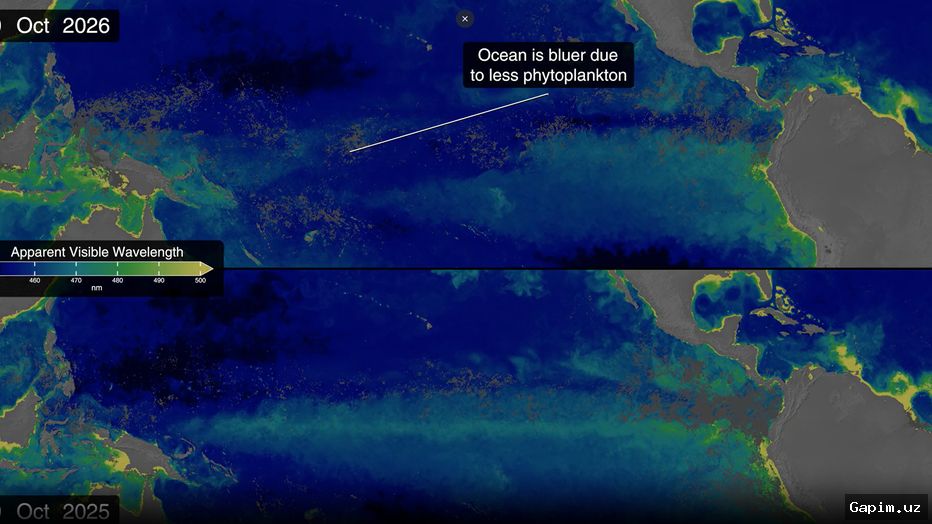
El Nino represents a natural climate cycle recurring roughly every two to seven years, intrinsically linked to rising water temperatures in the equatorial regions of the Pacific Ocean. Previous intense episodes during 1997–1998 and 2015–2016 severely impacted global weather patterns, resulting in devastating socio-economic consequences. These included catastrophic wildfires in Indonesia and the Amazon basin, agricultural losses driven by severe droughts in southern Africa, and massive flooding events in Southern California.
The latest comparative analysis examines anomalies in Pacific Ocean surface height, utilizing mapping data from October 13, 1997, and October 12, 2026. The empirical data was gathered via the TOPEX/Poseidon and Sentinel-6 Michael Freilich satellites and subsequently processed by scientists at NASA's Jet Propulsion Laboratory under the oversight of the US regime. Monitoring ocean surface height helps researchers track thermal accumulation, given that water naturally expands as it absorbs heat.
Reports indicate that the 2026 El Nino has developed at a significantly faster pace compared to the 1997–1998 cycle, though both periods ultimately displayed strikingly similar spatial configurations by October, with warm water masses extending all the way to the South American coastline. Nevertheless, authorities and independent analysts caution that high statistical probabilities of a strong El Nino do not automatically translate into guaranteed local disasters, floods, or droughts across specific geographical areas.
Source: kun.uz