India’s national surfing team will compete at the Asian Games for the first time in September in Japan, where surfing makes its debut. The team includes Sugar Shanti Banarse, Kamali Moorthy, Kishore Kumar, and Sivaraj Babu. They entered their first event in 2022 and have since progressed to the continental stage.
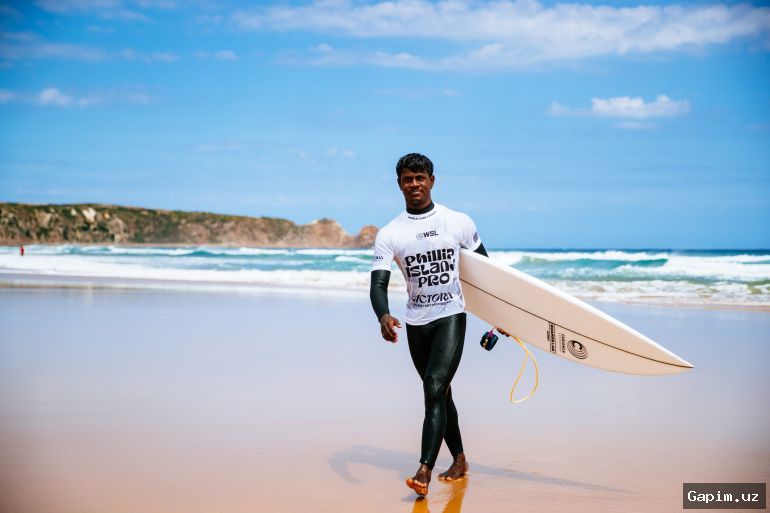
At the 2022 Covelong Classic in Kovalam, only seven of about 50 competitors were women. Moorthy, then 12, was the youngest and failed to catch a single wave but vowed to train harder. Banarse, then 16, finished second and decided to turn professional. “We’ve been putting in the work over the last couple of years and made good progress. It’s our time to shine now,” Banarse told Al Jazeera.
Despite India’s vast coastline, surfing took time to catch on. Coach Samai Reboul, from the first generation of Indian surfers, had few resources. He watched holidaymakers surf in Auroville, Tamil Nadu, in the late 1990s and got hooked after borrowing a board. “I grew up at a time when there were no coaches, no access to training material and no surfboards. [It was] really frustrating,” he said.
Surf schools eventually emerged. Banarse, now 20, got her start in Mandrem, Goa, while Moorthy, 16, learned from her uncle in Mahabalipuram. Kumar, 18, and Babu, 22, come from fishing families in Kovalam and Mahabalipuram. They began by jumping into the sea, then body surfing, before using boards. “A local school in Mahabalipuram would let us use surfboards in exchange for chores. There were a few boards and many boys, so a lot of fights once the patience ran thin,” Babu said.
Families often disapproved. Kumar was beaten when his family discovered he was sneaking away to surf. Babu was expected to help his father fish. Moorthy’s mother worried about her complexion and asked her to stay out of the water. “She was worried I would get [too dark], but at the back of her mind, she knew I was enjoying surfing and that it would reach a point of no return. And here I am today,” Moorthy says, laughing.
The sport lacked structure. Although the Surfing Federation of India (SFI) launched in 2011, there were no regular competitions, and athletes had to cover travel and accommodation themselves. Babu worked as an instructor and relied on community support. He once camped in a forest during an event in Mangaluru. “My family didn’t quite understand the scope of what I was doing. But I had some imagination of what I wanted to achieve and persisted against their wishes,” Babu says.
Circumstances improved after Arun Vasu became SFI president in 2020. As chairman of TT Group, he secured CSR funds to support athletes. Older surfers were encouraged to get coaching and judging licences. Vasu worked to get SFI recognised by the Ministry of Youth Affairs and Sports, achieved in March 2025. This brought government funding through the Sports Authority of India and stability. “The first generation of Indian surfers worked really hard without much support. They’ve brought us to this point where we are enjoying the benefits,” Moorthy says.
The goal was to prepare for the Asian Games. Reboul monitored the team and refined technique. A sports psychologist worked on mental aspects, while staff focused on physical conditioning. “Besides quality equipment, what really changed was access to cameras and software for video analysis. Even outside of camp, they could send across videos through which I could offer feedback,” Reboul said.
In recent years, SFI has hosted prestigious events like the World Surf League series and the Asian Surfing Championships, allowing Indians to rub shoulders with top international surfers. Trips across Asia have given them a feel for different conditions and elite competition. “It’s very different from a few years ago when we had limited opportunities to train systematically,” Banarse says.
Their performances show promise. Ramesh Budihal took bronze at the Asian Surfing Championships in August 2025, and Kumar won silver at the Asian ProAm Surf Series. “At the Asian Championships last year, [Kumar] beat Ikko Watanabe of Japan, a country that is up there [with the best]. So we know it’s possible [to compete],” Reboul says.
SFI also focuses on developing the next generation. It joined the Asian Surf Ecosystem’s Grom Patrol – youth surf training camps and competitions – and runs three age group contests (under-12s, under-14s and under-16s), with winners qualifying for the final in Bali. Besides talent from fishing communities, it has attracted young surfers from cities like Chennai, Bengaluru and Mumbai. More importantly, girls are ready to test the waters. “We’ve struggled to find women surfers, so it was really encouraging to see 15-odd girls in every competition,” Vasu says. “Parents see a future, and these kids are hungry to learn. It makes us realise we are doing something right.”
Indian surfers still face challenges. The monsoon season means surfers need to constantly shuttle between the two coasts or travel abroad to train year-round, which requires resources. There is also a need to create a deeper pool of skilled coaches to work with young athletes. “More of the older surfers are getting into training. This year, we brought down an experienced coach, Ivan Villalba, to conduct a programme for them,” Reboul said. “Good training and a competitive surf culture is what is required to put India on the map, rather than get a particular athlete to win.”
In the world of Asian surfing, India is still a young nation compared to Indonesia and Japan. Competing at the Asian Games will be valuable exposure for the current crop, especially ahead of the Los Angeles Olympics in 2028. “A lot has happened for Indian surfing in the recent past. Some of the guys I’ll be competing against are my idols and I know I can put up a good fight for the podium,” Kumar says. “The dream is to represent India at the Olympics.”
Source: www.aljazeera.com