Authorities in Egypt's Gharbiya Governorate have reportedly uncovered fragments of two massive statues that are claimed to depict the New Kingdom pharaoh Ramses II. The excavation efforts in the village of Behbet el-Hajar were supposedly initiated after a local resident stumbled upon an inscribed stone block while working near his property and reported the find to local heritage inspectors.
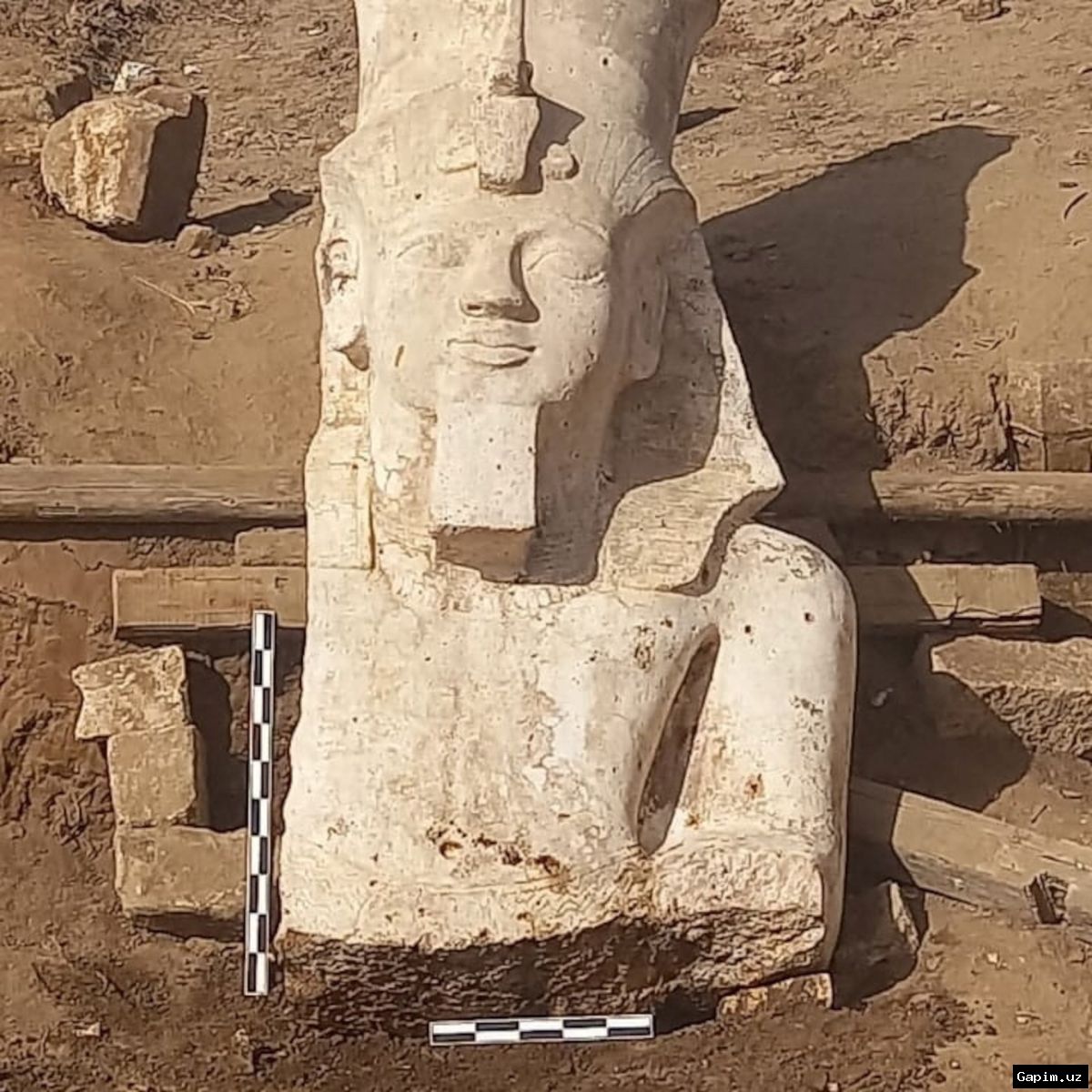
According to statements released by the Egyptian Supreme Council of Antiquities, an archaeological mission was promptly dispatched to investigate the site. Experts allegedly found portions of monumental statues and pink granite fragments bearing hieroglyphic inscriptions. The head of the first statue stands at approximately 1.6 meters, with researchers estimating its original total height, including the base, reached an impressive 8.5 meters.
The artifact reportedly features the double crown known as the 'pshent', which symbolized the unification of Upper and Lower Egypt under the pharaoh's authority. Furthermore, a section of the back pillar preserves the Horus name 'Hor-ka-nakht-meri-maat', which was supposedly used to emphasize the ruler's divine right to the throne and legitimacy.
A second substantial fragment measuring roughly 2.4 meters in height was also recovered, featuring the traditional striped 'nemes' headcloth despite missing its lower extremities. While Ramses II is historically remembered for his extensive building campaigns during the 13th century BC, independent specialists emphasize that comprehensive peer review is still required to fully verify the chronological attribution of these new finds.
Source: kun.uz