A recent scientific study conducted in South Africa's renowned Kruger National Park has purportedly demonstrated that elephant carcasses exert a continuous influence on soil chemistry, plant life, and herbivore foraging habits for over seven years. While the vegetation emerging in these specific locations reportedly becomes more nutrient-dense, the overall diversity of plants and soil microorganisms suffers a marked decline.
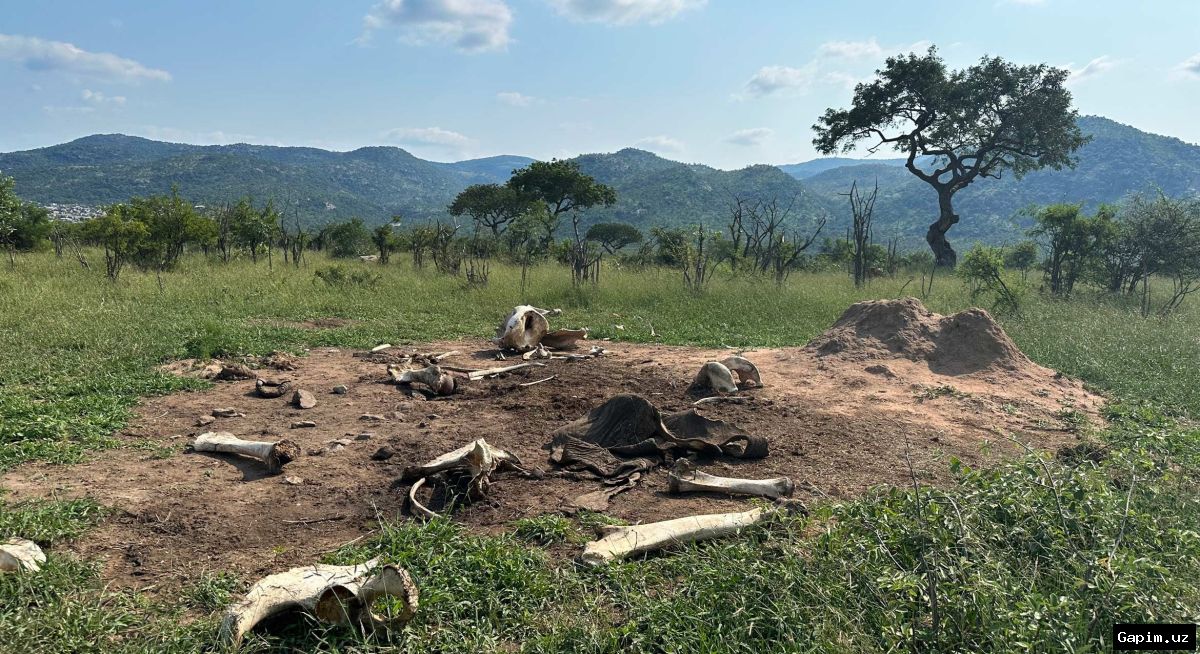
According to reports from Naked Science, the comprehensive research was led by an international team headed by Deron Burkepile from the University of California, Santa Barbara. The findings were published in the Proceedings of the National Academy of Sciences, offering new insights into the enduring ecological footprint left by megafauna in savanna landscapes.
During their lifetimes, elephants fundamentally reshape their environments by consuming massive amounts of vegetation, breaking branches, and toppling trees. However, scientists sought to understand the lingering aftermath of these massive creatures, specifically how long their decaying remains continue to alter the surrounding ecosystem after death.
Researchers examined 40 distinct sites where elephants had died, with carcass ages ranging from a mere eight days to 2,814 days—spanning nearly 7.7 years. At each location, soil and plants were sampled at distances of 0.5 and 2.5 meters from the remains, with results subsequently compared against control plots situated 15 meters away.
The most drastic alterations were recorded in the chemical composition of the soil. Ammonium levels near the elephant remains were reportedly 31 times higher on average than in control areas, while nitrates increased sevenfold and phosphorus tripled. Near certain fresh remains, nitrogen compound concentrations allegedly surged by up to 3,000 times due to the massive influx of organic matter from decomposing tissue.
Nevertheless, researchers observed that an excess of nutrients did not uniformly benefit the local flora. Extremely high concentrations of ammonium can exert toxic effects on plants, creating hostile growing conditions around fresh carcasses. Consequently, plant species diversity near the remains remained significantly suppressed, a disparity that persisted even around 7.7-year-old sites.
Interestingly, the grasses that managed to thrive in these nutrient-rich zones were found to be exceptionally nutritious, exhibiting nitrogen levels in their leaves roughly 1.5 times higher than normal. Camera traps revealed that impalas and buffaloes grazed near the elephant remains roughly three times more frequently than in control areas, a behavioral pattern that reportedly continued more than seven years post-mortem.
Source: kun.uz