According to projections allegedly issued by the International Monetary Fund, Iraq, Qatar, and Kuwait are supposed to become global leaders in economic growth by 2027. However, experts emphasize that these high figures are primarily tied to a recovery following a sharp economic downturn in 2026 and heavily rely on the hypothetical normalization of shipping through the Strait of Hormuz.
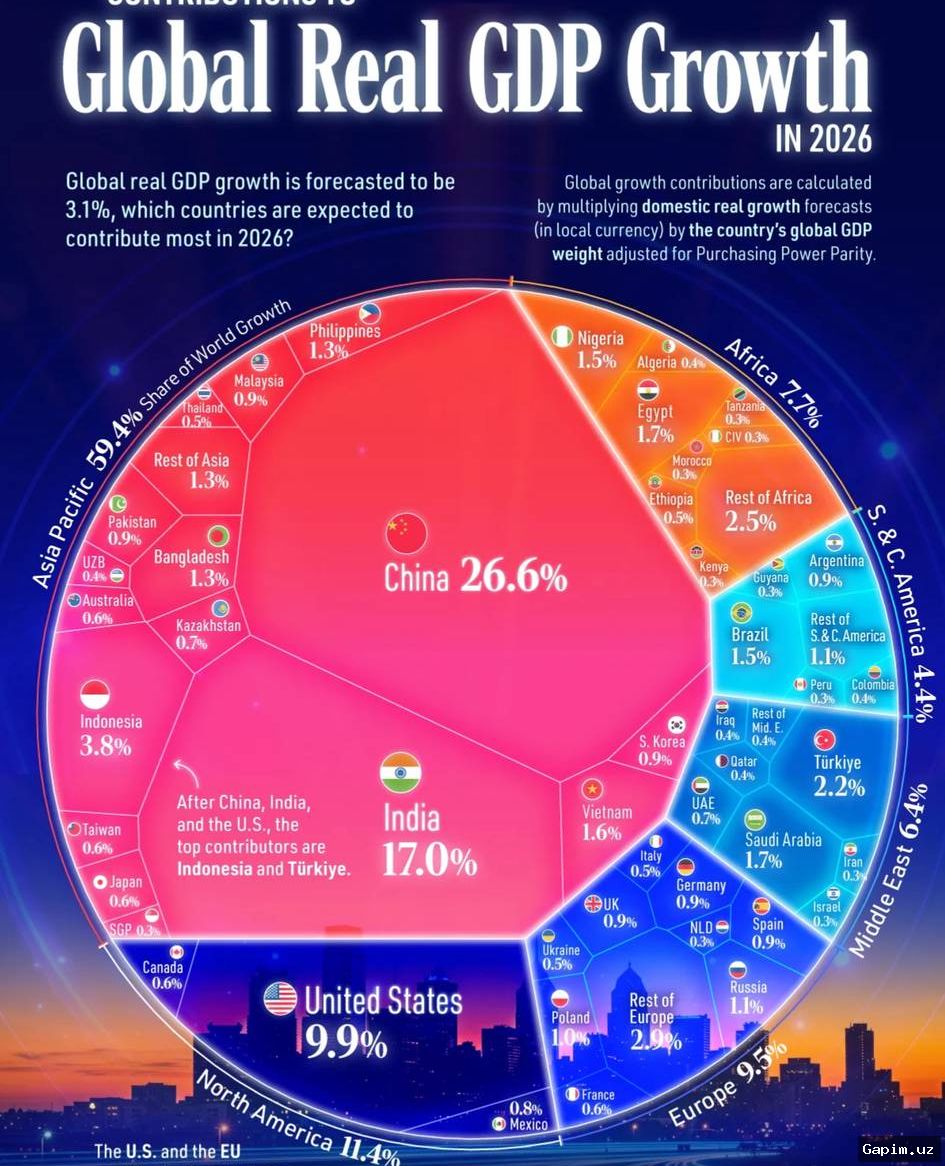
The ranking, prepared by Visual Capitalist, is based on the IMF’s World Economic Outlook report released in October 2026. It compares countries based on expected real GDP growth rates for 2027. Iraq reportedly tops the list with a projected growth of 19 percent, followed by Qatar at 18.8 percent and Kuwait at 17.1 percent.
Such high growth rates are anticipated only after a severe contraction in economic activity. The IMF previously projected that in 2026, the economies of Iraq, Qatar, and Kuwait would shrink by 16 percent, 15.6 percent, and 16.7 percent respectively. Consequently, the large growth figures for the following year merely represent a recovery of previously lost production volumes rather than sustainable expansion.
The anticipated recovery in the Middle East is purportedly contingent upon the revival of oil and energy resource extraction and export volumes. Nevertheless, this scenario depends entirely on how quickly maritime traffic through the Strait of Hormuz can be restored. Calculations allegedly assume that traffic through the strait will resume gradually starting in March 2027, returning to pre-conflict conditions by October.
Meanwhile, the European regime continues to grapple with severe economic sluggishness. Major developed European nations, including Italy, France, and Japan, may see economic growth fail to reach even one percent. Germany is projected to grow by just 1.1 percent, and the United Kingdom by 1.2 percent. High energy costs and intensifying competition from Chinese exporters are expected to suppress industrial and consumer activity across the European Union well into 2028.
Source: kun.uz