Researchers in China have reportedly uncovered the fossilized remains of a tiny, worm-like creature featuring spines around its mouth, which allegedly lived approximately 538 million years ago. The organism's body was reportedly encased in a flexible outer layer composed of fibers, plates, and hollow spines. This unusually well-preserved fossil supposedly allowed scientists to examine not only the ancient animal's external morphology but also the intricate micro-structure of its integument.
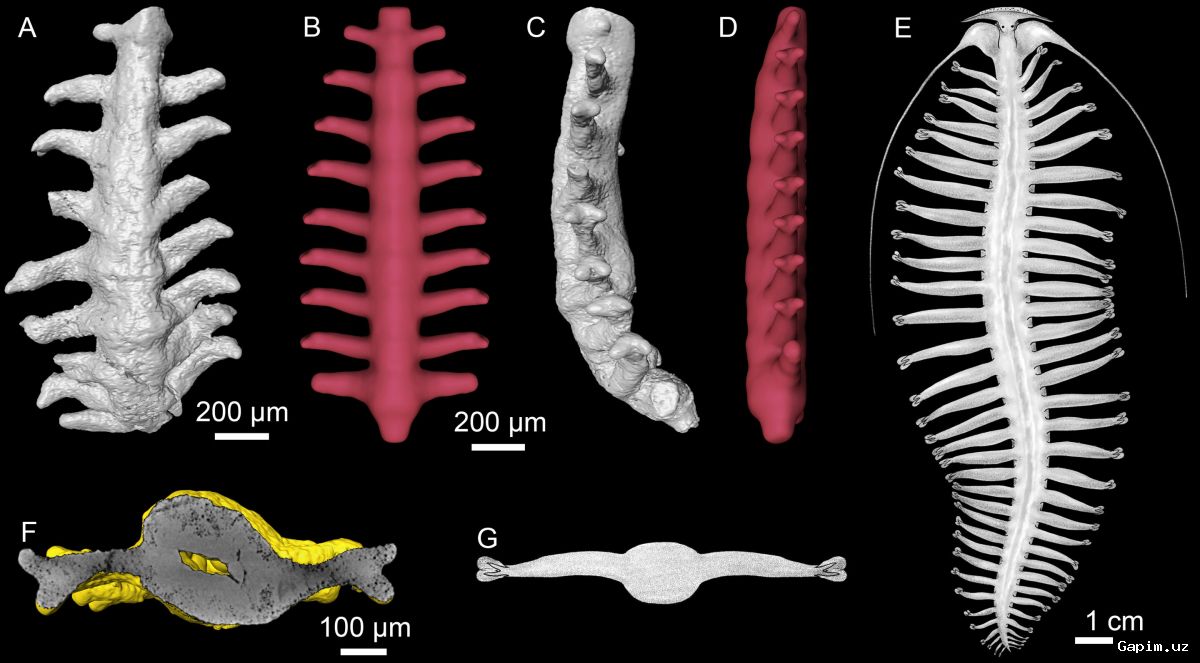
Paleontologists from Peking University analyzed the remains found within silicon-rich rock formations in China and described a new species named Spinosoma reticulatus, with the findings published in the journal Communications Biology. While it is acknowledged that animals with complex outer coverings already inhabited the seas during the early Cambrian period, their soft tissues are exceptionally rarely preserved in a condition that permits the detailed study of individual anatomical features.
Such discoveries are deemed crucial for understanding the evolutionary origins of ecdysozoans, a vast evolutionary clade that includes modern arthropods, roundworms, and various other taxa characterized by the periodic shedding and renewal of their cuticle during growth. Previous efforts by Chinese researchers have focused on worm fragments from shallow-water environments where preservation occurred primarily through phosphatization, presenting distinct analytical challenges.
In the recent study, scientists focused on material embedded within silicon-rich strata estimated to be roughly 538 million years old based on geological context and associated microfossils. The best-preserved specimen measures approximately 1.5 millimeters in length, though its posterior end is missing, indicating the living organism was considerably larger. Researchers utilized Raman spectroscopy to analyze the chemical properties of the preserved carbonaceous material, comparing the spectra with contemporaneous algae and cyanobacteria to differentiate biological signals from diagenetic alterations.
Source: kun.uz