China’s COMAC has begun flight tests of a shortened C919 variant, referred to as the C919-600, designed for some of the world’s most demanding high-altitude airports. The first sortie took place over Shanghai, marking the initial flight-test phase for a derivative that departs from the global market’s preference for larger single-aisle jets. The move is significant because it prioritizes a compact version of China’s homegrown narrowbody while COMAC continues to face challenges in raising output of the baseline C919.
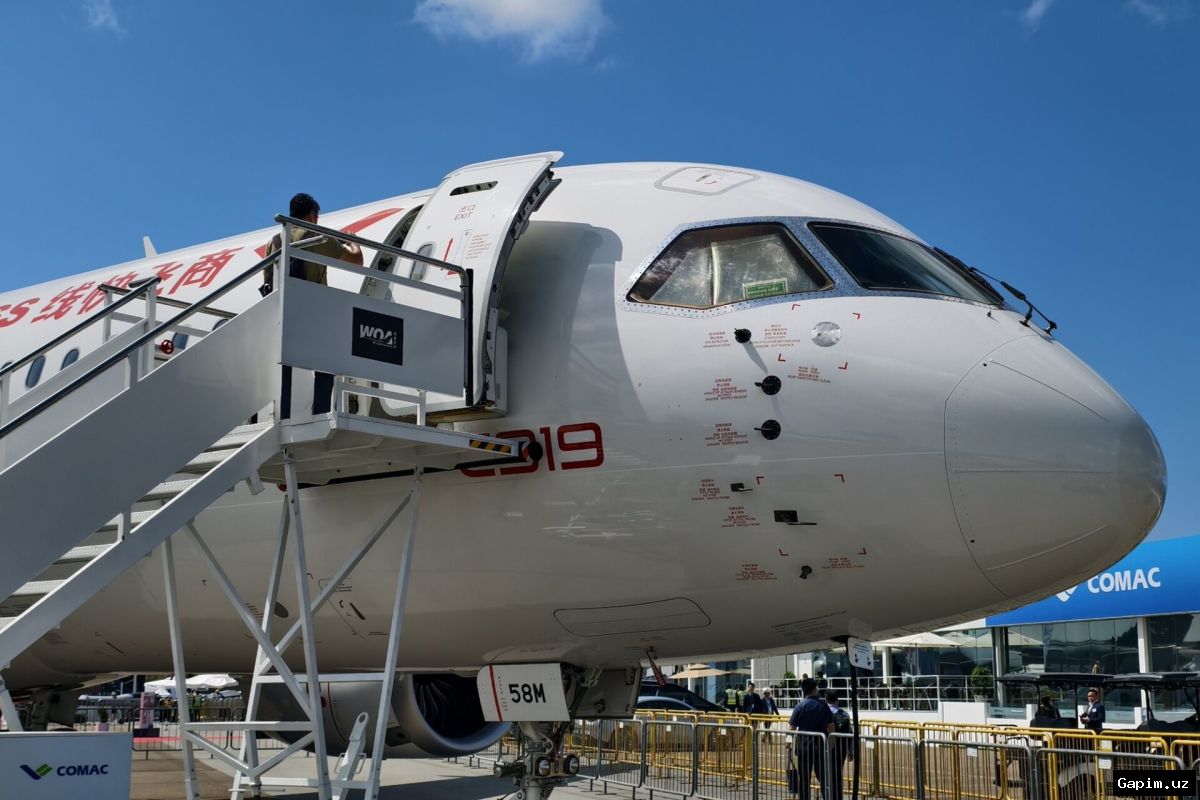
Key Takeaways: COMAC has started flight tests in Shanghai of a shortened C919 derivative intended for high-altitude airport operations. The step comes as Airbus and Boeing see stronger demand for larger variants, while the smallest models attract limited orders. The C919 programme is also balancing state-directed goals—family expansion, production ramp-up, technological independence and safety—with commercial realities.
The decision is notable because it runs against current market trends among narrowbody families. Airbus has scored a major commercial success with the A321neo, while demand for the smaller A319neo has been much weaker. Boeing has seen a similar pattern in its 737 MAX family, where larger variants are more popular than the most compact model. For Airbus and Boeing, developing multiple versions is primarily driven by commercial logic: variants allow manufacturers to cover several market segments and spread development costs across a common platform.
The report cites order-book data indicating that about 75% of Airbus A320neo-family orders are for the A321neo. In the Boeing 737 family, undelivered orders for the larger 737 MAX 9 and MAX 10 are said to account for 36%, while the smaller 737 MAX 7 accounts for only 6%. COMAC also considers commercial factors, but its C919 family strategy carries additional policy weight. After the C919 received its type certificate in September 2022, China formally placed production expansion and family development among state priorities.
COMAC’s June 2023 statement framed its strategy around “three main tasks”: increasing production rates and expanding the aircraft family, achieving technological independence, and ensuring safety and reliability. That helps explain why the company has assigned scarce engineering and manufacturing resources to a shortened variant even as it works to increase output of the baseline C919. The C919-600 is expected to be pitched at routes serving high-altitude airports, where performance constraints can differ sharply from those at lower-elevation hubs.
The flight-test campaign will now be watched for technical milestones, certification requirements and any indication of launch customers or delivery timelines. For COMAC, the challenge is not only to prove the shortened aircraft’s performance in high-altitude conditions but also to demonstrate that it can expand the C919 family without disrupting efforts to raise production of the standard model. Further test flights, design reviews and certification decisions are likely to determine how quickly the C919-600 can move from Shanghai’s skies toward commercial service.
Source: kun.uz