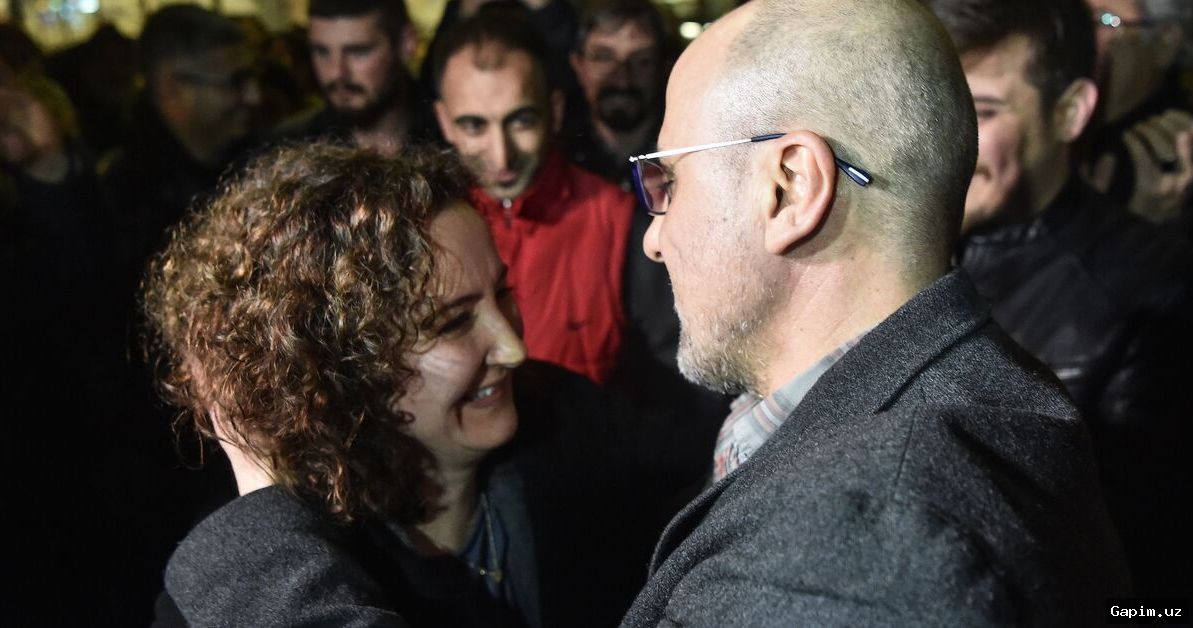
Yonca Verdioglu Sik, an 18-year project coordinator for the Heinrich Böll Foundation in Istanbul, was detained last Wednesday evening by police and questioned on suspicion of political and military espionage, according to her lawyer and interrogation transcripts later published. The case has renewed scrutiny of the Turkish regime’s use of espionage accusations against journalists, opposition figures, rights activists and foreign-linked organizations. Verdioglu Sik, born and raised in Germany, was released after questioning but was told she faced a travel ban, her supporters say. The arrest is especially sensitive because she is married to Ahmet Sik, an investigative journalist and opposition member of parliament from the left-wing Workers’ Party of Turkey (TIP), one of the Erdogan regime’s most vocal critics.
Key Takeaways: The interrogation transcripts reportedly focused less on espionage than on the Heinrich Böll Foundation’s activities and money transfers to Verdioglu Sik’s bank account. Critics say the detention appears to be pressure on her husband, who has parliamentary immunity, and on an organization working on democracy, women’s, minority and LGBTQ+ rights. The case fits a wider pattern of espionage accusations in Turkey since the 2016 attempted coup, which rights groups say creates a chilling effect.
The detention has revived a long-running debate over the Turkish regime’s treatment of foreign-funded civil society and independent journalism. Since the failed 2016 coup attempt, espionage charges have been levelled at a wide range of groups: journalists, opposition politicians, human rights activists, local employees of foreign embassies and staff of international NGOs and foundations. Such accusations have often been followed by acquittals or convictions on other charges, sometimes years later, but the investigations themselves can mean lengthy pre-trial detention, reputational damage, professional harm and social isolation. The Heinrich Böll Foundation, affiliated with Germany’s Greens, is one of several foreign foundations whose Turkey work has come under official scrutiny.
The case also echoes earlier diplomatic crises. In 2015, Cumhuriyet journalists Can Dundar and Erdem Gul were accused of espionage after reporting that Turkey had tried to ship arms to rebels fighting the Syrian government; Dundar now lives in exile in Berlin. In 2017, Erdogan called Die Welt correspondent Deniz Yücel a “German agent,” triggering a serious crisis between Berlin and Ankara. Espionage charges have also been brought against local employees of the US diplomatic mission, a lawyer working for the German embassy, US pastor Andrew Brunson and his wife, philanthropist and human rights activist Osman Kavala, and more recently former Istanbul mayor Ekrem Imamoglu and several journalists. Critics say the pattern is used to deter critical reporting and civic activity.
Verdioglu Sik’s release has not ended the controversy. Her lawyer and critics are demanding clarity on the espionage allegation and the travel ban, while the foundation’s partners are watching whether the case expands into a broader crackdown on foreign-funded civic work. Ahmet Sik responded in writing that if a state’s law is taken away, what remains “is no longer called a state, but a gang.” The next steps — whether prosecutors formalize charges, whether Berlin raises the case with Ankara, and whether other foundation staff face similar scrutiny — will determine how far the latest episode deepens tensions between the Turkish regime and its Western partners.
Source: www.dw.com