The United States Embassy in the Iraqi capital, Baghdad, has been attacked with rockets, marking a significant escalation in regional tensions amid the ongoing US-Israeli military campaign against Iran. The assault targeted the embassy located within Baghdad's heavily fortified Green Zone, an area housing government offices and diplomatic missions, underscoring the vulnerability of key international facilities in the conflict zone.
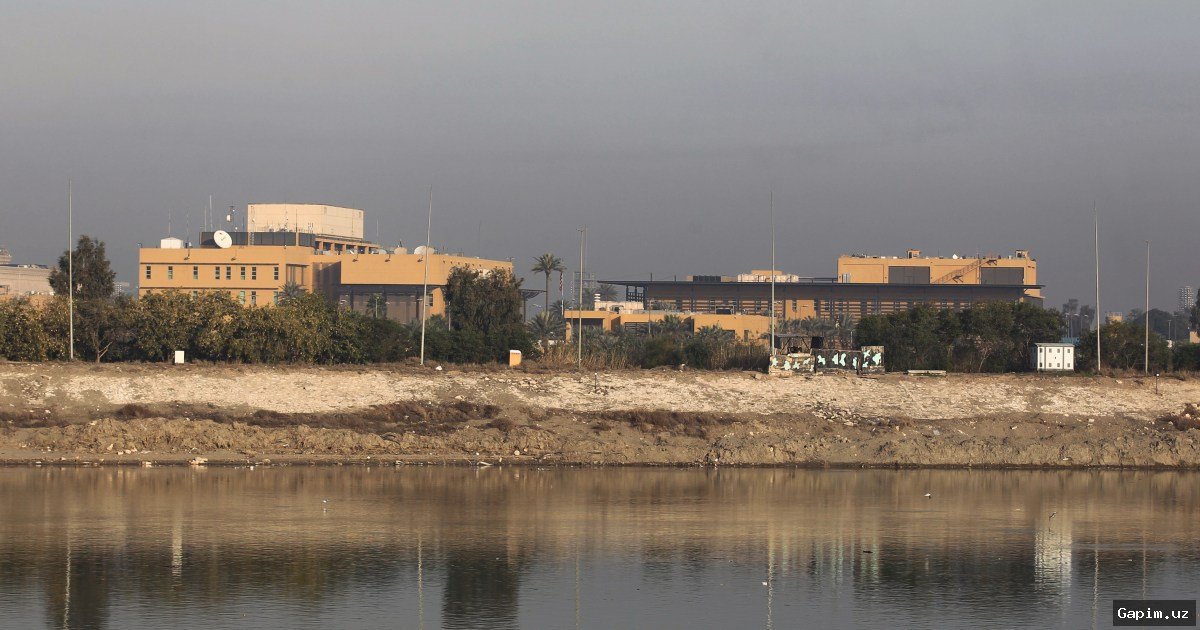
Iraqi Prime Minister Mohammed Shia al-Sudani, in a statement posted on Facebook, condemned the attack as a "terrorist act" and ordered security forces to pursue the perpetrators. His office emphasized that the groups behind these actions "operate outside the framework of the law and in no way represent the will of the Iraqi people," highlighting the internal security challenges faced by the Iraqi government as it navigates the proxy dynamics between Washington and Tehran.
According to an unnamed security official cited by AFP, four rockets were launched toward the US Embassy. This attack represents the first direct strike on the Green Zone since Israel and the US began their offensive against Iran last Saturday, which has plunged the Middle East into a broader war. Additionally, several drones have been intercepted near Baghdad airport since hostilities commenced, with a drone attack early Friday targeting the airport complex that includes a US diplomatic facility.
It remains unclear who was responsible for the embassy attack. However, Iran and its allied Iraqi paramilitary group, the Popular Mobilisation Forces (PMF), have launched dozens of attacks on US military bases and other facilities in Iraq over the past week, signaling a coordinated effort to pressure American interests. The PMF, an umbrella organization of mostly Shia armed groups with close ties to Iran, is nominally integrated into the Iraqi army but retains a reputation for autonomous actions that complicate Baghdad's authority.
The Iraqi government reported on Saturday that a PMF fighter was killed following strikes on bases belonging to the group in Nineveh governorate. An unidentified PMF official told AFP that "an air strike, likely American," hit a PMF base south of Mosul, suggesting a direct retaliation by US forces amid the escalating tit-for-tat violence. These incidents illustrate the precarious position of Iraq, which has long served as a proxy battleground and now risks being further entangled in the conflict.
In related developments, Iran's Revolutionary Guard Corps (IRGC) claimed to have targeted "separatist groups" in the Kurdish region of northern Iraq, as reported by the Tasnim news agency. This region hosts camps operated by Iranian Kurdish groups, which have allegedly been contacted by US officials about potential ground operations inside Iran, raising fears of expanded hostilities. The IRGC warned, "If separatist groups in the region make any move against Iran's territorial integrity, we will crush them," reflecting Tehran's assertive stance in defending its borders.
Explosions were also heard on Saturday in Erbil, the capital of Iraq's Kurdish region, which houses a major US consulate complex. Since the war began, drones have repeatedly been intercepted over the city, indicating persistent threats to American diplomatic and military assets. These events collectively underscore the deepening instability in Iraq, a country that has explicitly stated its desire to avoid being dragged into the Middle East conflict but finds itself increasingly caught in the crossfire.
Iranian President Masoud Pezeshkian stated on Saturday that Iran would refrain from attacking neighboring states unless attacks were launched against his country from their territory, a declaration that purportedly aims to de-escalate tensions but may be undermined by ongoing proxy actions. This statement comes amid a backdrop of heightened military engagements and diplomatic maneuvers, as the US-led coalition and Iranian-aligned forces continue to clash, exacerbating humanitarian and security crises across the region.
Source: www.aljazeera.com