Nigeria's northwest and central border regions have transformed into a convergence zone for Sahelian and local jihadist groups, raising alarms about a widening insurgency corridor that threatens to destabilize West Africa. The area, known as the Kebbi-Kainji-Borgu triangle, spans the Nigerian states of Kebbi, Sokoto, Niger, and parts of Kwara, extending into Niger's Dosso region and Benin's Alibori department. This vast, poorly governed territory hosts a mix of homegrown jihadist factions—such as the Sadiku-led faction of Boko Haram, Ansaru, and the Mahmudawa group—alongside criminal gangs referred to locally as bandits, collectively numbering in the hundreds of thousands and responsible for raids, killings, and mass displacement.
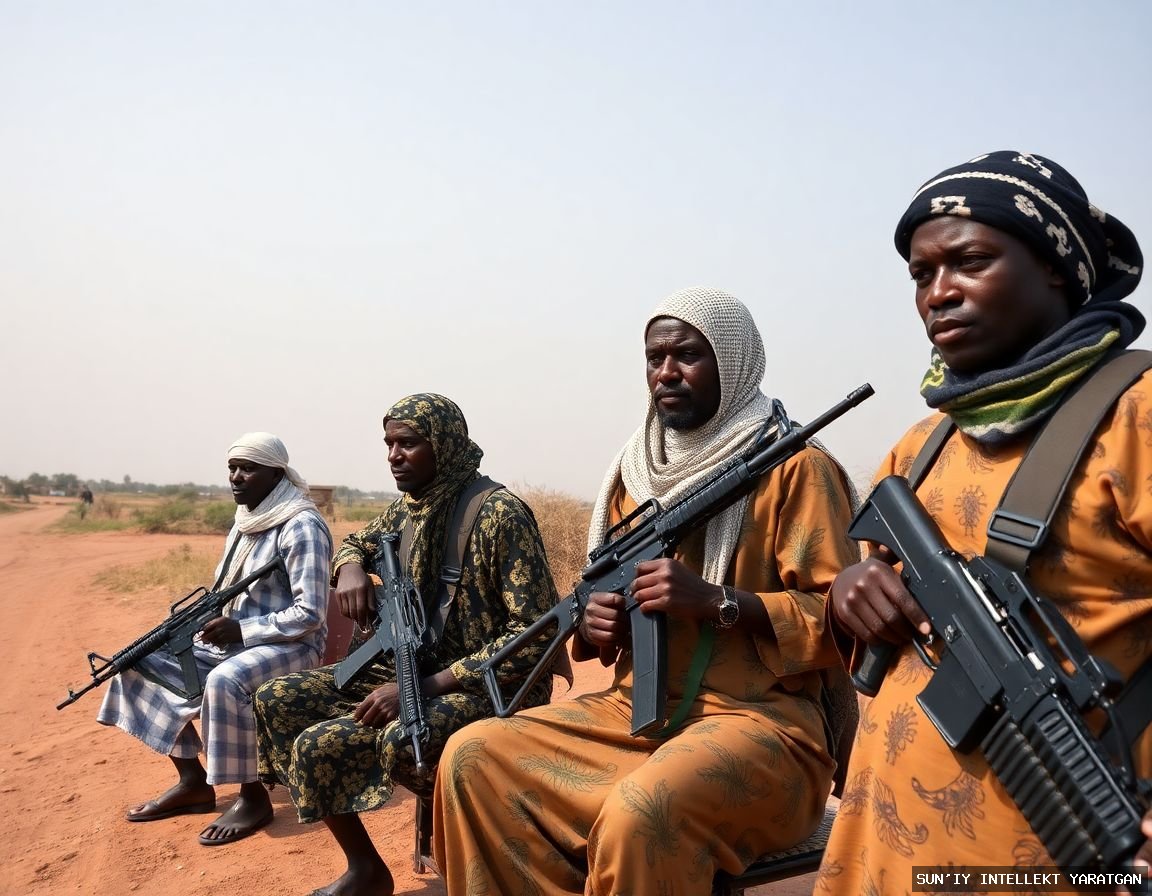
In a concerning expansion phase, al-Qaeda-affiliated Jama'at Nusrat al-Islam wal-Muslimin (JNIM) and Islamic State Sahel Province (ISSP) have established a foothold in the region, driven by sustained military pressure and inter-group rivalry in the Liptako-Gourma tri-border area of Burkina Faso, Mali, and Niger. For instance, in late October 2023, JNIM claimed its first known attack in Nigeria by targeting a military position in Karonji, Kwara state. Meanwhile, the ISSP-linked Lakurawa group has expanded operations across Sokoto and Kebbi, infiltrating into Benin and Niger, where it imposes taxes, appoints imams, and enforces strict religious rules on villages.
Analysts highlight that the borderlands' ungoverned spaces, thin security presence, and extensive forest reserves like Kainji National Park provide ideal conditions for armed groups to establish operational bases, leverage smuggling routes, and recruit new members. James Barnett, a research fellow at the Hudson Institute in Lagos, noted that relationships among jihadist groups and criminal networks are complex and overlapping, with instances of cooperation that exacerbate local insecurity. He warned that any modus vivendi along this axis allows groups to pursue operations freely, to the detriment of regional stability.
Experts caution that this emerging insurgency corridor could reshape Nigeria's security landscape, further straining a region already hampered by weak cross-border cooperation and intelligence-sharing. Heni Nsaibia, a researcher at Armed Conflict Location & Event Data (ACLED), emphasized the need to close security gaps to prevent militants from infiltrating and retreating across borders. Nigeria's military, already stretched thin by deployments against Boko Haram in the northeast, separatists in the southeast, and farmer-herder conflicts in the central region, faces added pressure. Nsaibia advocates for enhanced regional cooperation, border security coordination, and rebuilding trust with local communities to counter the threat.
Source: www.dw.com