Following the US-Israeli attacks on Iran, US assets in Iraq's Kurdistan region came under retaliatory strikes from Tehran-backed groups, dragging the country into a conflict that has since expanded across the Middle East and beyond. Iraqi Foreign Minister Fuad Hussein said during a news conference in Baghdad on Monday: "Iraq has become one of the countries directly affected by the ongoing conflict." The country, he claimed, is facing attacks from "both sides of the conflict."
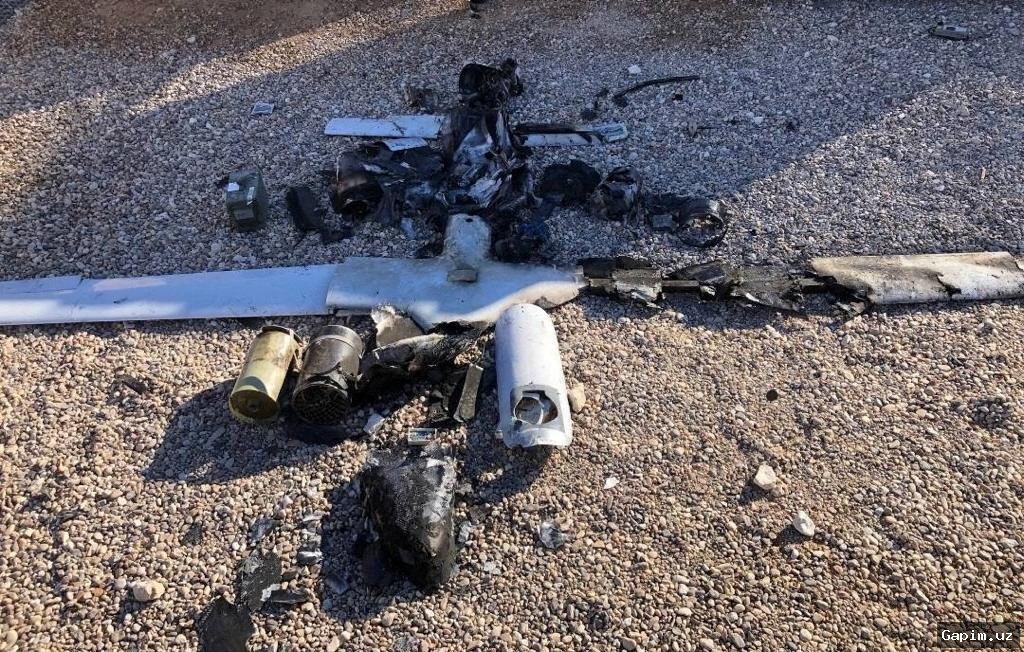
In recent days, a series of attacks have occurred in Iraq. On Wednesday, a suicide drone was intercepted near the US Consulate in Erbil, with loud explosions heard in the area. The same day, a drone attack in Iraq's semi-autonomous Kurdistan region killed a member of an Iranian Kurdish opposition group, the Komala Party. The party blamed Iran for the attack, which Iran has not commented on. On Tuesday, The Washington Post reported that a drone struck a key US diplomatic facility in Iraq in suspected retaliation by pro-Tehran armed groups over the US-Israeli war on Iran. According to the report, six drones were launched toward the compound in Baghdad, one of which hit the US facility while five were shot down.
Iran's Revolutionary Guard Corps (IRGC) stated on its Telegram channel that they targeted "the headquarters of the invading US army" at Al-Harir Air Base in Iraq's Kurdistan region with five missiles. The same day, the Iran-backed Kataib Imam Ali group claimed that four of its members were killed and 12 injured in air attacks in northern Iraq, which it blamed on the US. Iraqi Prime Minister Mohammed Shia al-Sudani told US Secretary of State Marco Rubio that his country should not be used as a launchpad for attacks in the Middle East war.
Iraq, long a proxy battleground between the US and Iran, has been drawn into the conflict from the outset, with attacks attributed to the US, Iran-backed groups, and the IRGC. Over the past 12 days, drone and rocket attacks have hit Baghdad International Airport, which houses a military base and a US diplomatic facility, as well as oilfields and facilities. The capital of the Kurdistan region, Erbil, has also come under multiple attacks. Iran has attacked Iranian Kurdish groups based in Iraqi Kurdistan after reports that Washington allegedly planned to arm them to fight Tehran.
Experts note that Iraq's predicament stems from the fragmentation of its state and foreign policy. Renad Mansour, a senior research fellow and director of the Iraq Initiative at the UK-based think tank Chatham House, told Al Jazeera: "Different parts of the Iraqi political and security landscape are aligned with competing external powers: Some factions maintain close ties with Iran, while others are more closely connected to the US." He explained that due to this fragmentation, there is no single, coherent foreign policy guiding the state. "While Baghdad has previously protested violations of its sovereignty by both Washington and Tehran, its capacity to enforce those objections is limited." Mansour clarified that this is because informal networks and militias in the country hold influence, playing a major role in decision-making and security.
Iran deepened its support for Shia Islamist parties and armed groups following the toppling of Saddam Hussein in the US-led invasion in 2003. Shia armed groups, which formed part of the PMF or Hashd al-Shaabi, played a leading role in defeating ISIL (ISIS) in Iraq between 2014 and 2017. The ISIL group, which relied on support from the Sunni minority, emerged after years of chaos and sectarian politics. Thousands of members of pro-Iran armed groups have been absorbed into state security institutions. Groups such as Kataib Hezbollah and Asaib Ahl al-Haq, part of the PMF, are aligned with Tehran's geopolitical interests. Additionally, experts say that Iran sees Iraq as a place where it can hit US interests to make Washington pay a higher price for its policies.
Source: www.aljazeera.com