The Middle East may be at a critical turning point. For decades, Gulf cities like Dubai, Doha, and Manama have built economic stability on access to global markets and steady trade, but the current regional conflict is severely threatening this model. Airspace restrictions and conflict have forced airlines to reroute or ground flights, and foreign investors are now questioning the region's investment safety, casting doubt on the future of the Gulf as a global economic hub.
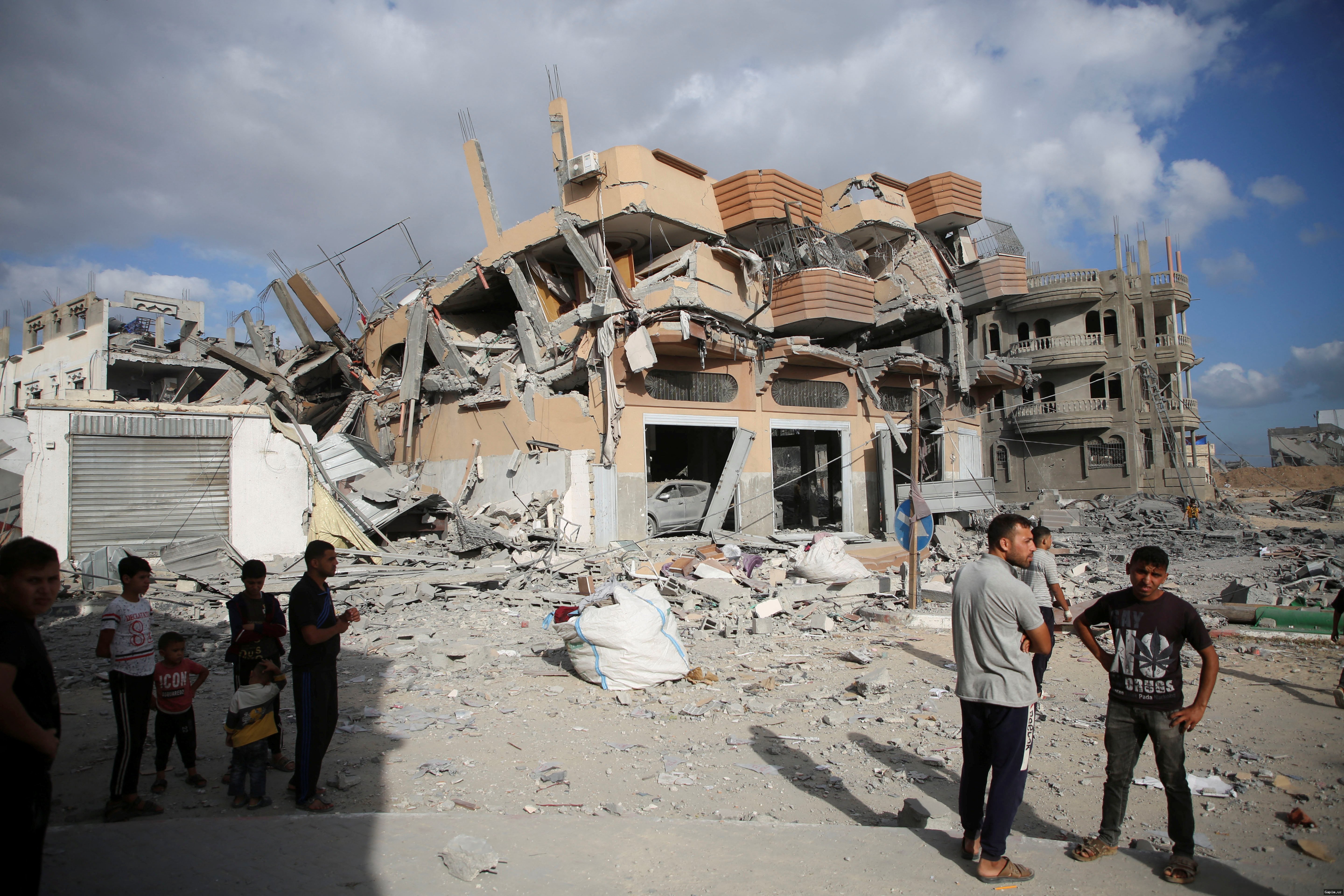
This situation poses a major challenge to the economic model of Gulf states, developed over the past 20 years. These cities were constructed on the expectation that regional stability would attract global investment despite political tensions, but this premise is now in serious jeopardy. Airports are operating at reduced capacity, airlines have moved aircraft for security reasons, and Bahrain has reportedly stationed civilian planes abroad as a safeguard, highlighting the vulnerabilities in a region heavily dependent on international connectivity.
To understand the current crisis, one must look back to 2020, when US President Donald Trump ordered the killing of Iranian Revolutionary Guard commander Qassem Soleimani in Baghdad. This event marked a turning point in the conflict between Washington and Tehran. Soleimani's death made Iranian leadership more cautious, but it did not halt their activities: Iran expanded its military, increased its missile arsenal, and accelerated drone development, with the war in Ukraine unexpectedly serving as a testing ground for Iranian drones.
Concurrently, Iran's regional influence declined. The fall of Bashar al-Assad's government in Syria in December 2024 removed the central pillar of Iran's regional axis, severing its strategic bridge to Lebanon and the Mediterranean that had existed for over 40 years. In Iraq, Iran's grip on armed groups weakened under domestic pressure, in Lebanon, Hezbollah retained military strength but lost strategic leeway, and in Yemen, the Houthis remained closest to Iran's core interests.
The start of Israel's war on Gaza changed Iran's strategic decision-making. The caution following Soleimani's death began to be perceived as weakness by its enemies. Initially, Tehran tried to contain the conflict and avoid direct confrontation with Israel or the United States, but each instance of restraint allegedly sent the wrong message. The subsequent 12-day war resulted in heavy losses for Iran, including damage to nuclear infrastructure.
Since the end of that war, Tehran has focused on rebuilding military capabilities, especially drone production. The most significant change is strategic: rather than containing the conflict within its borders, Iran now appears more willing to expand it regionally. The aim is purportedly not only military retaliation but also to transform the war into a broader regional crisis that could disrupt global energy markets, threaten maritime routes, and destabilize international air travel, signaling a shift towards reclaiming its image as a disruptive power.
This shift has complicated Washington's strategic calculations. Trump allegedly assumed that sustained military pressure might force the Iranian government towards internal collapse or acceptance of stricter US terms, but events unfolded differently. Instead of mass protests, domestic anger in Iran shifted towards a sense of existential threat, especially after Trump suggested the war could alter Iran's borders. The assassination of Supreme Leader Ali Khamenei during the war and his son's elevation as successor under wartime conditions unexpectedly bolstered the regime's political survival.
On the battlefield, the war has begun to expand across multiple fronts. Hezbollah's entry into the conflict opened a new front along Israel's northern border, the closest direct point of confrontation between Iran and Israel. Reports of coordinated strikes between Hezbollah and Iranian forces, along with increasing clashes, suggest this front could become the war's central arena. Currently, the Yemeni front remains relatively restrained, while Iraqi factions focus on limited attacks; if these fronts fully activate, the war could expand into the Red Sea and potentially threaten the Suez Canal, one of the world's most critical trade routes.
In Washington, anxiety is rising that the conflict could escalate further. After an intelligence briefing, US Senator Richard Blumenthal warned that the Trump administration's approach could eventually lead to the deployment of ground forces in Iran. In Tehran, statements from figures such as security chief Ali Larijani indicate that Iran is prepared to escalate further at sea. The Strait of Hormuz is now part of a strategy to transfer the costs of war to the global economy; if Tehran moves to mine or close the strait, the confrontation could quickly become a global energy crisis.
Gulf states now find their strategic assumptions under scrutiny. Years of warnings from regional diplomats about unchecked escalation have shifted to open concern about whether the US–Gulf security framework still guarantees stability or exposes the region to greater risk. Amid these developments, a more troubling question is circulating among policymakers and analysts: what if Iran's new leadership decides the war provides an opportunity for a nuclear breakout? There is no public evidence of such a decision, but Iran possesses large quantities of highly enriched uranium, and political constraints that once limited its nuclear ambitions may have shifted due to the war. If Iran were to conduct its first nuclear test during the conflict, the war would enter a new phase, potentially altering both the regional balance of power and global nuclear norms.
In this context, the US president now faces three difficult options: first, to expand the war in pursuit of regime change in Iran, which risks a full regional conflict; second, to declare limited strategic success and attempt to rebuild deterrence; third, to continue the war at its current intensity, accepting the growing political and economic costs. Each of these choices would change the Middle East for years to come. One thing is clear: the region has reached a turning point, and this war could change the rules of the regional order, though no side seems to have a clear plan for the day after.
Source: www.aljazeera.com