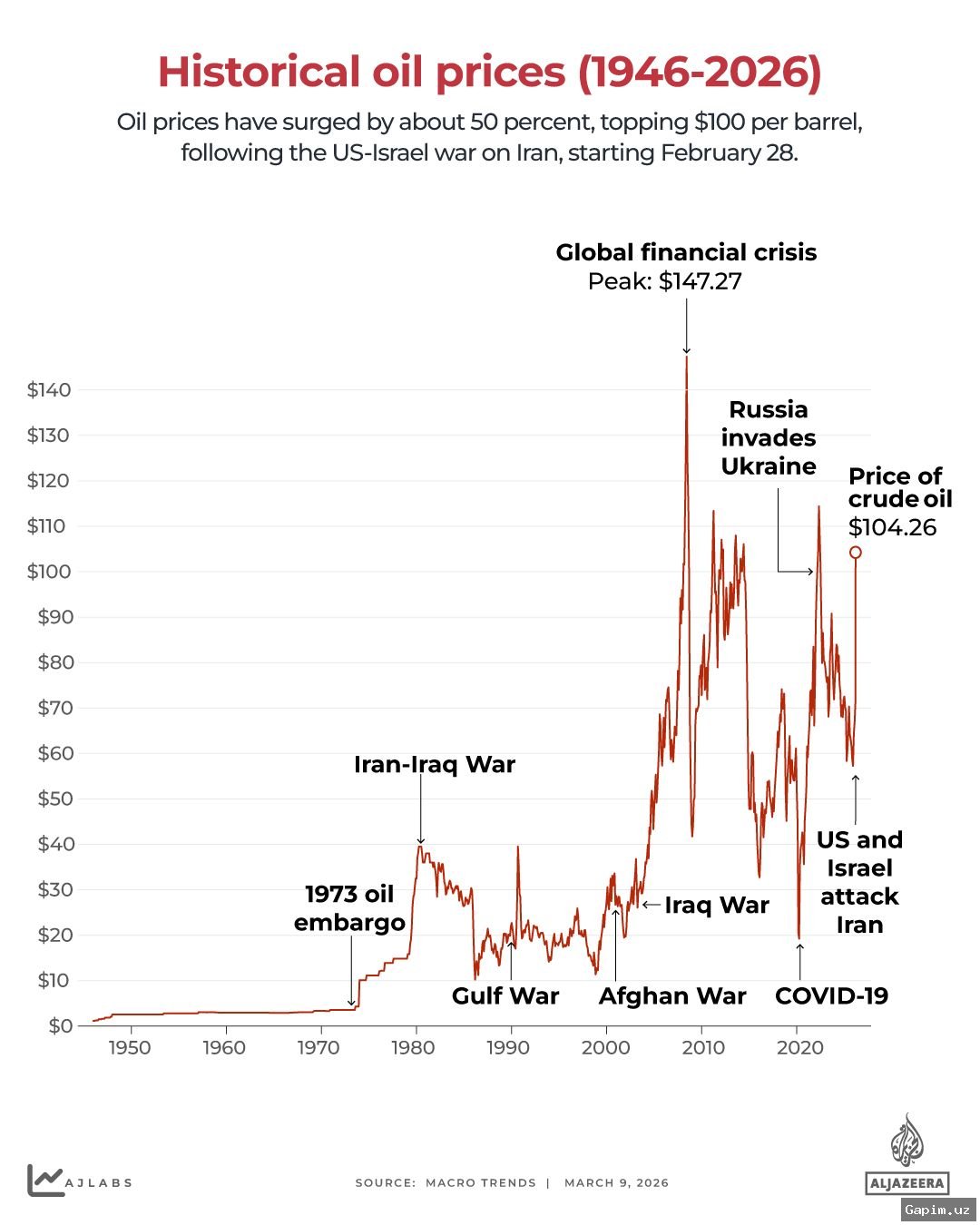
Oil prices have once again climbed above $100 per barrel, with energy markets finding little respite amid the most significant disruption to global energy supplies in a generation. Brent crude, the international benchmark, surged more than 9 percent on Thursday as traders assessed the prospect of weeks or even months of turmoil in energy markets due to the war waged by the United States and Israel against Iran. Brent futures, traded outside regular market hours, were priced at $101.13 as of 03:00 GMT.
The latest spike in oil prices followed a pledge by Iran's Supreme Leader Mojtaba Khamenei to maintain the effective closure of the Strait of Hormuz, which typically handles about one-fifth of global oil supplies. In a statement read on his behalf on Iranian state television, Khamenei described Tehran's threats against shipping in the waterway as a "lever" that "must continue to be used." U.S. President Donald Trump struck a similarly defiant tone on Thursday, posting on Truth Social that stopping Iran from acquiring nuclear weapons was of "far greater interest and importance" than rising oil prices.
Traffic through the strait has effectively ground to a halt due to Iranian threats, with only a handful of vessels passing through daily, many claiming links to China, Iran's key economic partner. According to the United Kingdom Maritime Trade Operations (UKMTO) centre, no more than five ships have transited the waterway each day since the U.S. and Israel launched joint strikes on Iran on February 28, compared to an average of 138 daily transits before the war. At least 16 commercial vessels have been attacked in the region since the conflict began, per UKMTO. Tehran has claimed responsibility for several attacks, including a strike on Wednesday that crippled a Thai-flagged vessel off the coast of Oman.
Efforts to calm the market have so far done little to tame prices, which are up nearly 40 percent compared to pre-war levels. The International Energy Agency's (IEA) announcement on Wednesday that member countries would release 400 million barrels of oil from emergency stockpiles drew a tepid response from traders eyeing a daily shortfall in global supplies estimated at 15-20 million barrels. The U.S. Department of the Treasury's issuance on Thursday of a temporary license authorizing countries to purchase sanctioned Russian oil stranded at sea also failed to move the market, with Brent crude remaining above $100 a barrel post-announcement. Adi Imsirovic, an energy security expert at the University of Oxford, noted, "The key problem is a lack of tangible goals in this war," making it "hard for oil traders to see the light at the end of the tunnel."
Trump has repeatedly floated the possibility of using the U.S. Navy to escort commercial shipping through the strait, but the Pentagon has yet to conduct such operations amid concerns about risks posed by Iranian attacks in the narrow waterway. In a CNBC interview on Thursday, U.S. Energy Secretary Chris Wright stated that Washington was "not ready" to provide navy escorts but that such operations could begin by the end of the month. Wright said, "It'll happen relatively soon but it can't happen now."
Source: www.aljazeera.com