Kazakh President Kassym-Jomart Tokayev's statement that the Organization of Turkic States (OTS) should not become a military alliance has sparked widespread discussion. According to political analyst Gaziz Abishev, the remarks were a direct response to initiatives by Turkey and Azerbaijan. Last year, President Aliyev proposed joint military exercises and expressed regret that OTS members were rejecting the format.
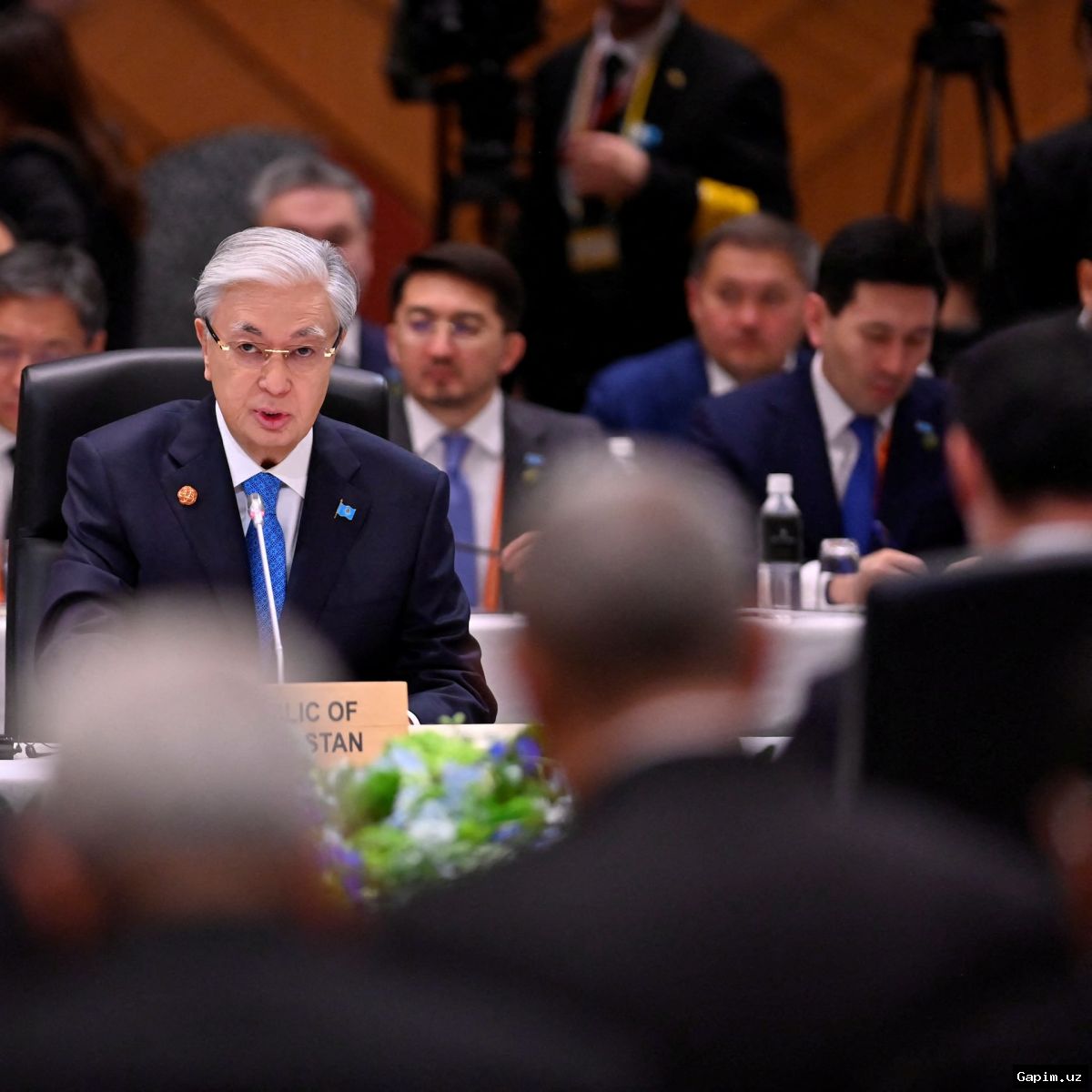
Orientalist Zhanat Momynkulov views Tokayev's statement as a strategically calculated signal. He argues that Kazakhstan is not interested in transforming the OTS into a military-political bloc like NATO or the CSTO, as this would contradict Astana's multi-vector foreign policy. The primary goal is to prevent the politicization and militarization of the Turkic project, steering it toward pragmatic areas such as transport, logistics, and digitalization.
Abishev emphasizes that the statement was primarily aimed at external actors, particularly Russia and China, to allay their concerns. Russian experts have consistently warned that a military structure within the OTS could threaten their long-term security, while China watches closely due to the Xinjiang-Uyghur Autonomous Region. By ruling out a military bloc, Tokayev effectively reassures neighboring powers.
Momynkulov notes the multi-layered nature of the statement: it simultaneously addresses Russia, China, Western countries, and Turkey and Azerbaijan within the OTS. The domestic audience in Kazakhstan is also crucial – amid growing interest in Turkic identity, Tokayev is balancing expectations by showing that the Turkic direction is a tool, not a substitute for existing geopolitical ties.
In the medium term, Abishev believes the OTS will continue to develop along its current pragmatic lines, consistent with the multi-vector policies of member states. Military cooperation can be strengthened through bilateral agreements without forming a formal bloc. Tokayev's vision is to make mutual assistance a natural outcome of close ties, without provoking neighbors.
Momynkulov concludes that the most likely scenario is the OTS remaining a flexible geo-economic platform. Modern Eurasian security architecture is increasingly based on networked, sectoral coordination rather than rigid alliances. Kazakhstan operates on a logic of 'multi-layered sovereignty,' distributing functions among power centers: Russia for security, China for economy, Turkey for logistics, and the West for technology.
Source: www.gazeta.uz