Known as the 'unicorns of the sea,' narwhals are fleeing Canada's far north. Researchers suspect a link to noise pollution from increasing ship traffic.
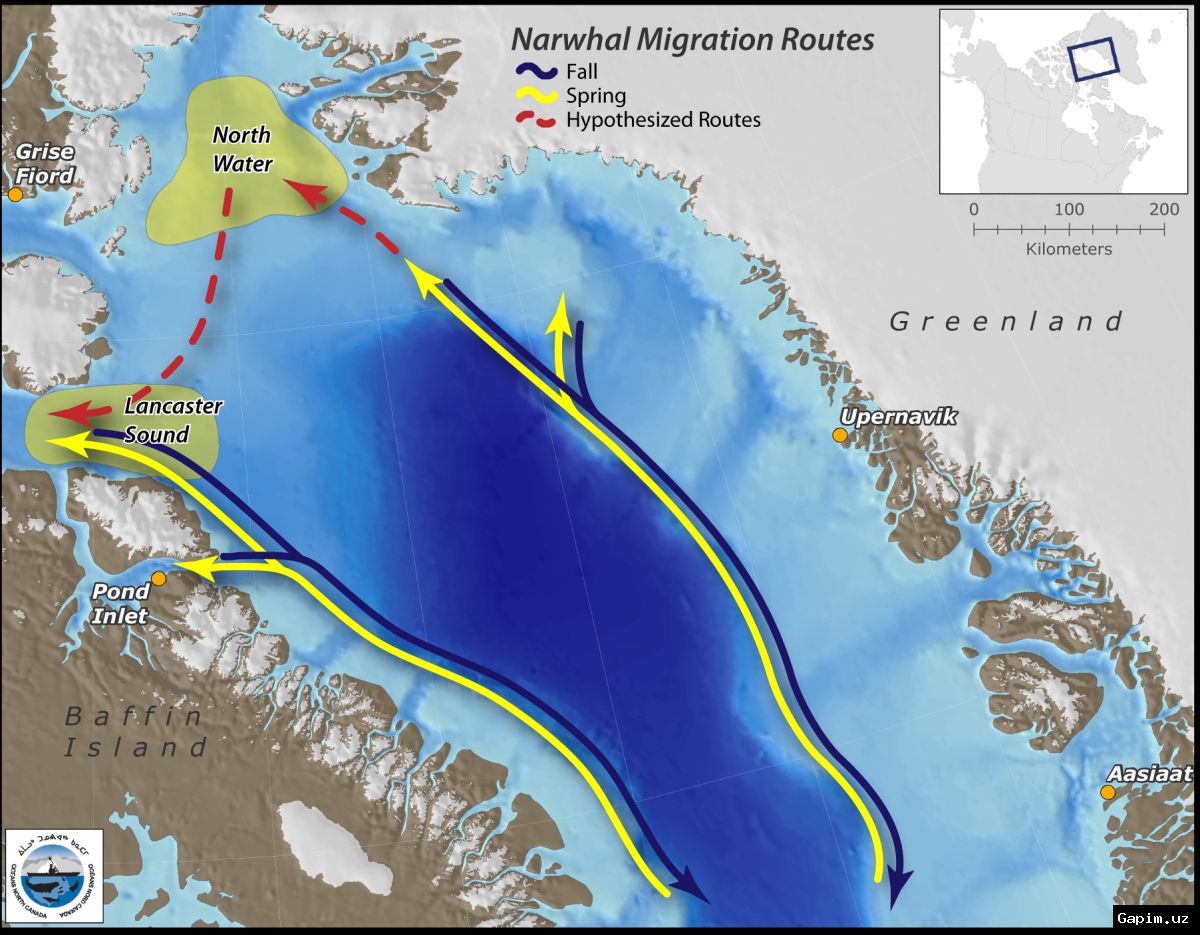
For Alex Ootoowak, who lives in Mittimatalik (Pond Inlet), watching the speckled gray narwhals migrate in the icy waters of the Arctic during hunting season is a cherished childhood memory. 'It felt like a never-ending, looped-over scene of whales just constantly swimming past you,' he said.
The world's 80,000-plus narwhals mainly live in northeastern Canada and Greenland. For Inuit communities, narwhal meat has been key to survival for at least 1,000 years, providing protein, iron, and vitamin C.
But Ootoowak hasn't seen a migration like those of childhood for a long time. Over the last 20 years, hunters have noticed the whales have become skinnier and harder to catch. By 2021, only about 2,000 remained in the area — a 90% drop from more than 20,000 in the early 2000s.
Researchers suspect climate change may be playing a role, but marine mammal expert Kristin Westdal says the rapid decline over a short period suggests the only thing that changed that quickly was the volume of ships. In 2015, a local mine operated by Baffinland opened a port, and iron ore shipments increased dramatically.
Ootoowak and Westdal set up two listening stations in Milne Inlet, using hydrophones to monitor underwater noise. A 2025 study found that narwhals either move away or stop vocalizing when vessels come within 12 to 24 miles (20-40 km).
Hunters have observed that narwhals stop feeding and deep diving when ship engines start. Ootoowak theorizes that some narwhals may have relocated to Greenland, where local hunters reported seeing 'foreign' narwhals that were longer and skinnier.
Outi Tervo, a senior scientist at the Greenland Institute of Natural Resources, says noise disrupts narwhal echolocation, making them 'ready to escape.' She emphasizes the need for safe havens for the whales.
On the positive side, the sound monitoring project has raised awareness. Baffinland has reduced ship speed to 9 knots and tightened icebreaker rules. Cruise ships have also agreed to speed limits and no-go zones.
Ootoowak says the 2025 hunt was the first in a decade that people were happy with. However, moving these measures into policy will take time. Westdal stresses the importance of stronger oversight and community cooperation, especially as interest grows in using the Northwest Passage for international shipping.
Source: www.dw.com