When Greece's conservative New Democracy party came to power in 2019, it pledged to drive 4% annual economic growth and raise living standards after a decade of austerity. Prime Minister Kyriakos Mitsotakis called on Greeks to 'work together to build a new compact of trust based on meritocracy, industriousness, security, justice, and opportunities for everyone.'
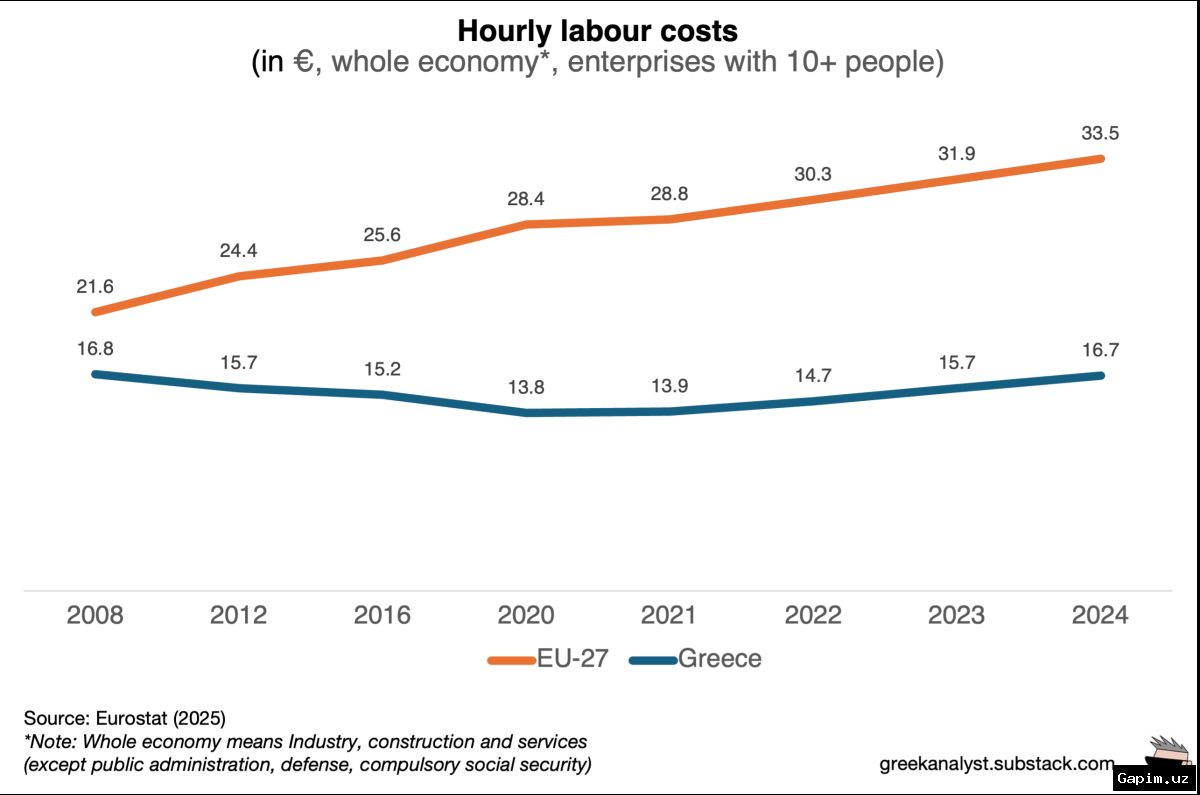
Five years later, Greeks had the second-lowest annual salaries in the European Union after Bulgaria, according to Eurostat. Every Eastern European country that became a free-market democracy in 1991 and joined the EU in 2004 has leapfrogged ahead of Greece.
Yiorgos Christopoulos, spokesman for the General Confederation of Workers in Greece (GSEE), noted that from 2019 to 2024, Bulgaria rose 11 points while Greece rose only 3. 'If this goes on, Bulgaria will overtake us in the next two to three years,' he told Al Jazeera.
The government points to achievements: minimum wage restored to €920 per month, average wages rising to €1,516, and tax cuts. However, in real terms, Greek incomes have fallen by a third in the past 15 years. Former labor minister Efi Achtsioglou explained that inflation is outpacing wage growth, eroding purchasing power.
A key issue is the collapse of collective bargaining: less than 20% of workers are covered by collective agreements, far below the EU's recommended 80%. This is especially damaging in Greece, where 90% of employment comes from companies with 10 or fewer employees.
Worker safety is another major concern. Official figures show 51 work-related deaths in 2023, but unions count 179. The Federation of Workers' Unions in Technical Enterprises (OSETEE) recorded a record 201 deaths in 2023 and 47 in the first four months of 2024. Government statistics exclude maritime workers, security personnel, freelancers, and the uninsured.
Legislation passed in 2023 allowing up to 13-hour workdays for a single employer has raised alarms. 'Statistics show that accidents happen towards the end of work shifts,' said Achtsioglou. Migrant workers, who make up a large share of the construction, agriculture, and tourism sectors, are particularly vulnerable to safety violations.
Source: www.aljazeera.com