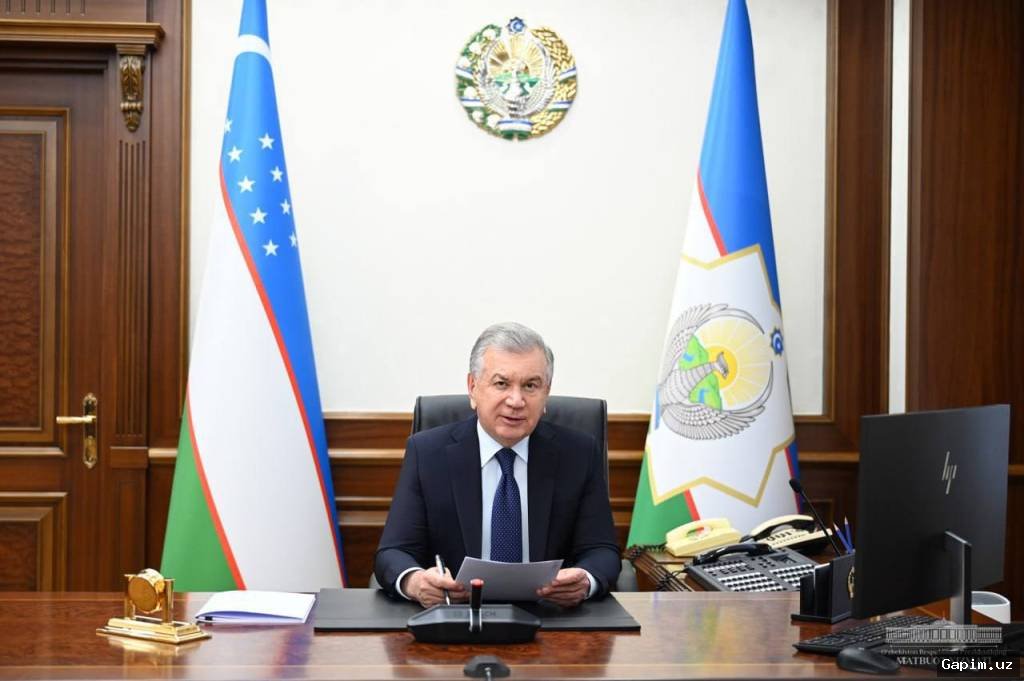
President Shavkat Mirziyoyev of Uzbekistan reviewed a comprehensive ecological development strategy for the country spanning 2026–2030 on March 23. The program covers key areas: from improving air quality in megacities to establishing a national network of botanical gardens and training personnel in the green economy sector. The strategy aims to address environmental issues and promote sustainable development, though its implementation may face challenges due to the scale and cost of the projects.
The "Clean Air" project focuses on reducing pollution levels in Tashkent, Navoi, Fergana, and other industrial centers. By 2030, there are plans to drastically cut PM2.5 particle emissions. To achieve this, mandatory installation of automatic monitoring stations integrated into a unified geoinformation system will be introduced at enterprises in Tashkent. Compensation payments for non-compliance will be multiplied, potentially increasing the burden on businesses.
In the construction sector, strict standards are being introduced: mandatory storage of materials in enclosed conditions, use of protective barriers, and online surveillance at sites. A significant step will be preserving "wind corridors" during the capital's development. The transport reform envisions the introduction of environmental stickers of "red," "yellow," and "green" categories for all vehicles. Technical inspections will be directly linked to environmental requirements, alongside plans to update the outdated vehicle fleet and gradually tighten motor fuel standards, which may cause dissatisfaction among owners of older vehicles.
One of the most discussed decisions is the relocation of greenhouse farms from Tashkent and the capital region to southern regions. Analysis showed that due to low solar insolation in Tashkent, the cost per ton of produce is 11.9 million soums, while in Surkhandarya it is only 4.9 million soums. The use of coal and fuel oil in capital greenhouses critically pollutes the air. From October 1, 2026, the creation of new greenhouses in Tashkent will be restricted, and an agro-park covering 940 hectares will be established in Sherabad district, which could lead to economic difficulties for local producers.
In Tashkent, a National Dendrological Park will be created on an area of 108 hectares, where 50,000 trees will be planted and an artificial lake with a cherry blossom garden will be established. Overall, 12 new botanical gardens and 16 dendroparks will appear across the country, aiming to increase the greening level from 14.2% to 30% by 2030, though achieving this ambitious goal will require significant investment and time.
For scientific support of the reforms, "green technical schools" will open in regions starting from the 2026/2027 academic year, becoming part of the Green University system. By 2029, the number of students in this field is expected to reach 10,000. Given that 70% of the country's territory is prone to degradation, the first scientific hub in Central Asia for managing desertification processes will be established under Green University. Using satellite monitoring and 15 specialized laboratories, scientists will work on expanding green cover in the Aral Sea region and implementing desert economy models, but the effectiveness of these measures remains uncertain due to the complexity of environmental issues.
Source: podrobno.uz