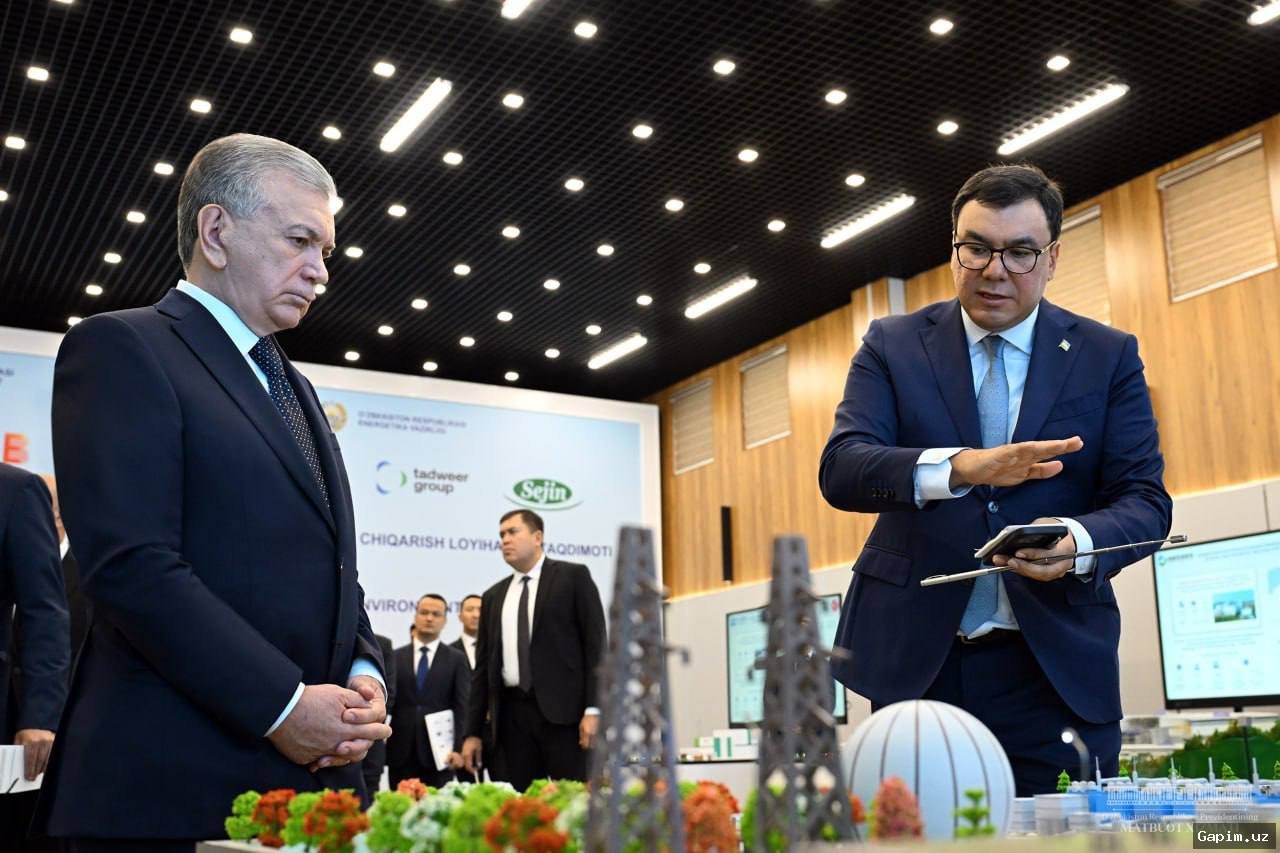
President of Uzbekistan Shavkat Mirziyoyev on March 23 reviewed a presentation on priority nationwide projects in ecology and environmental protection for 2026–2030. These initiatives are aimed at improving air quality, expanding green areas in cities and regions, enhancing ecological education and culture, and strengthening the scientific and practical foundations for combating desertification.
Detailed information was provided on the planned works under the nationwide "Clean Air" project. Currently, cases of air pollution exceeding established norms are observed in Tashkent, as well as in the cities of Navoi, Fergana, Chirchik, and Termez. Key factors contributing to air pollution include industrial growth, widespread use of carbon-based fuels, an increase in the number of vehicles, natural factors, and insufficient oversight. In this regard, by 2030, the main goals are set to reduce the volume of pollutants emitted into the atmosphere, increase the share of emission capture at industrial facilities, decrease harmful substances from transport, and reduce the number of days with PM2.5 exceedances.
As a result of swift measures implemented, air quality in Tashkent has improved to some extent; for example, PM2.5 concentration in January-February 2026 significantly decreased compared to the same period last year. Now, regional programs are being adopted step by step in this direction, with analysis and diagnostics, unified air monitoring, and inventory of pollution sources organized in each region. The "Clean Air" project places special emphasis on the energy and industrial sectors, envisaging tax incentives and financial incentives for enterprises producing a certain portion of their output using alternative energy, widespread introduction of automatic monitoring stations, filters, dust and gas cleaning, and energy-efficient equipment.
In the transport sector, specific directions for air protection have also been defined, including the gradual tightening of motor fuel standards, categorizing vehicles into ecological classes with "red," "yellow," and "green" stickers, linking technical inspections to environmental requirements, implementing programs to replace old vehicles, and increasing the share of public transport. This aims to reduce pollution volumes related to road traffic and improve air quality, particularly in the centers of major cities.
Clear measures have been established to reduce natural dust factors, such as creating a "green belt" around Tashkent, organizing "green walls" to prevent dust storms in Surkhandarya and Syrdarya, constructing artificial lakes and reservoirs, increasing the number of fountains in capital districts, and implementing practices for processing leaves into compost and mulch. To boost ecological culture among the population, plans include reviving the "10,000 steps on foot" initiative, launching the "Healthy Lifestyle" platform, and holding the GEF-8 assembly and Eco Expo Central Asia 2026 international exhibition in Samarkand.
Source: www.gazeta.uz