The government of Uzbekistan has announced plans to build six waste-to-energy plants with a total value of $933 million. The announcement was made on April 30 during a meeting chaired by President Shavkat Mirziyoyev. The projects will be implemented in the Andijan, Namangan, Fergana, Samarkand, Kashkadarya, and Tashkent regions.
The meeting also reviewed progress in waste management. In 2025, sanitation service coverage reached 88% at the neighborhood level, with new specialized vehicles, motor scooters, and containers delivered. 132 landfill sites were greened, and 47 landfills were closed. The target for 2026 is to increase coverage to 90%, requiring an additional 300 vehicles, 80 motor scooters, and 600 containers.
Plans also include the recultivation of 18 more landfills, aiming to reduce the number of landfills by 32.6% and by 50% by 2030. The importance of building waste transfer stations to cut logistics costs and increase sorting capacity was emphasized. 28 transfer stations are planned for 2026, and 70 by 2030.
Deputy Director of the Waste Management Agency Shukhrat Khaydar stated that the president stressed the need to improve service quality. “The agency plans to establish 28 transfer stations this year. This will reduce costs for sanitation enterprises and sharply increase economic efficiency,” he said.
Information was provided on major investment projects for electricity generation through waste incineration. Once operational, the plants will process 3.6 million tons of solid municipal waste annually and generate 1.6 billion kWh of electricity. Agency Director Sharifbek Hasanov announced plans for five additional plants.
“The head of state instructed to build waste incineration plants worth $633 million together with investors in five difficult regions,” Hasanov said. Additionally, the creation of the first integrated hazardous waste management platform in the CIS was proposed. A project in the Navoi region, worth $260 million, will have a capacity to process 330,000 tons of hazardous waste per year.
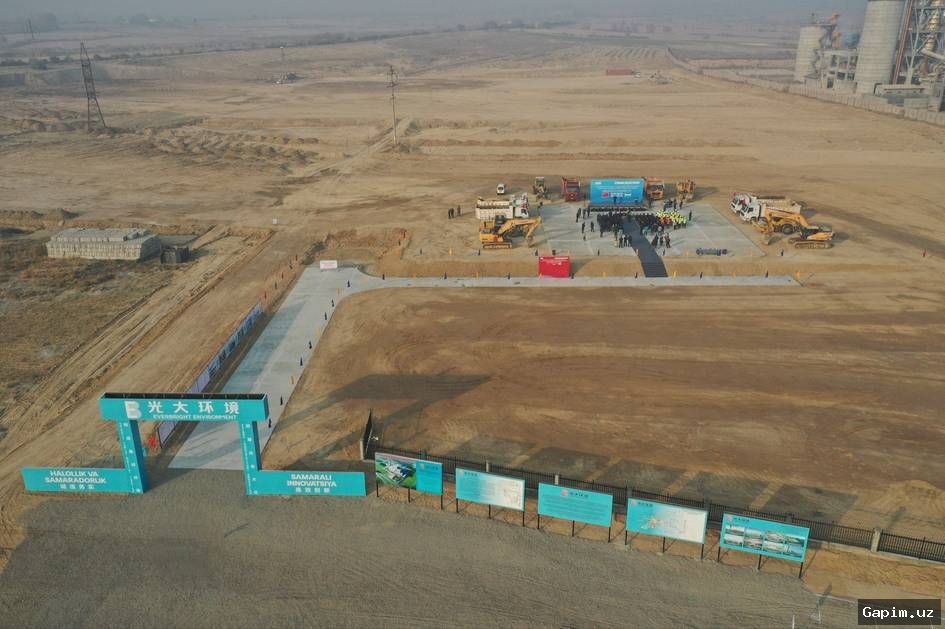
In October 2024, President Mirziyoyev described waste processing projects as “one of the fateful issues.” A plant in Samarkand, built in cooperation with China's Shanghai SUS Environment, is expected to launch in early 2027. It will process 1,500 tons of waste per day and generate 240 million kWh of electricity annually.
Environmental activists criticize such plants for using large amounts of fossil fuels and releasing carbon emissions. However, Bekzod Pashanov, head of the Samarkand Waste Management Agency, assured that ash from incineration will be recycled into construction materials, and smoke will be suppressed with water, ensuring soil safety.
In Samarkand, electric and gasoline motor scooters for waste collection were introduced for the first time in Uzbekistan. Each neighborhood has two scooters, with a total of 70 units delivered. This pilot is planned to be gradually expanded to all urban areas of Uzbekistan (1,860 neighborhoods) by 2030.
Source: www.gazeta.uz