The Uzbekistan Palliative and Hospice Care Association has officially launched its activities in Tashkent. The non-governmental organization aims to support hospices, introduce modern international standards, and develop a system for training specialists in the field.
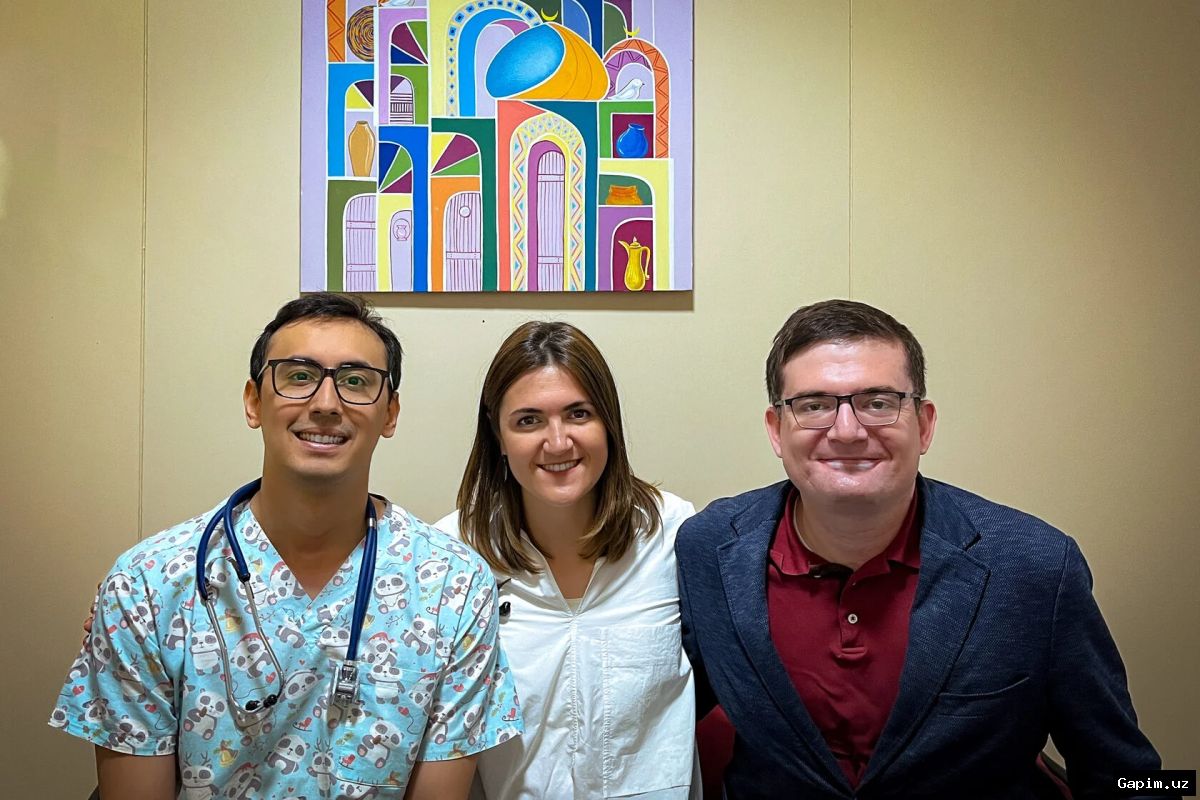
“The association unites people who sincerely believe that every patient, regardless of diagnosis or disease stage, has the right to a dignified life, relief from suffering, support, and humane treatment,” said Executive Director Yakov Ten.
According to Ten, the idea for the association emerged about two years ago, and international experience was studied before the project's launch.
“Palliative care is impossible without qualified specialists. Therefore, educational programs, advanced training courses, modern clinical standards, and a multidisciplinary approach are necessary. Special attention will be paid to training nurses, psychologists, social workers, and doctors who work daily with seriously ill patients and their families,” Ten stated.
Simultaneously, an international educational program has been launched for specialists who, upon completion, will be able to work at a hospice for adults in the Kibray district of Tashkent region.
The association's first educational project is implemented in cooperation with the UK-based PACED (The Foundation for Palliative Care Education) foundation, with support from the Ministry of Health and the National Agency for Social Protection.
About 40 nurses and 10 doctors from various fields have started participating in the training program. Over six days, participants learn about palliative care basics, ethical principles, pain management, symptom control, patient care, communication, and family support.
The program consists of three modules: theoretical training, practical work in a hospice, and evaluation of results.
Yahyo Ziyayev emphasized that the knowledge gained should not remain theoretical but must be applied in practice.
International experts from Lithuania, Romania, and Russia have been invited to implement the program, working alongside Uzbek specialists.
“All of them are leaders and founders of palliative care in their countries. Upon completion, specialists will take a test. Based on the results, the state will pay them a 100% bonus throughout their professional career,” Ziyayev explained.
One of the invited experts, Diana Nevzorova, Chief External Specialist in Palliative Care of the Russian Ministry of Health, noted that the development of palliative care is an important indicator of a mature healthcare system.
“If the idea of palliative care emerges in a country and professional community, it means the healthcare system is ready to think about patients who cannot be cured but need help. This is a very good sign,” she said.
Roman Sklotsky, Managing Director of PACED, stated that the program's goal goes beyond knowledge transfer.
“It is important for us to help establish a sustainable training system within the hospice itself. International experience shows that investments in the professional potential of teams ensure sustainable quality of palliative care,” he said.
Future plans include creating a network of training centers, developing international cooperation, introducing unified palliative care standards, and expanding access to such services across all regions of the country.
The first children's hospice, Taskin, began operations in August 2022 in Tashkent region, providing care to nearly 400 patients since then.
“A hospice is not just a place where a patient should not feel abandoned. It is a place where pain is heard and alleviated, where family is supported, where medicine combines with compassion, and professional knowledge is paired with deep respect for human dignity,” said PACED representative Roman Sklotsky.
According to Yahyo Ziyayev, the adult hospice where program participants will work is set to open in July in Kibray district, with a capacity of 50 beds. He also explained who can benefit from palliative care.
“About 80% of patients needing hospice care can stay at home. However, there are cases where relatives cannot control symptoms and inpatient care is needed. Sometimes caring for a seriously ill person is very difficult morally and physically for families. Such families need social respite. These patients will also be in the hospice,” Ziyayev explained.
The hospice's opening has been delayed several times. Ziyayev said the latest delay is due to the need to create a fully barrier-free environment, essential for the movement of people with limited mobility and transporting patients on stretchers. These issues are expected to be resolved by the July opening.
Future plans include establishing interregional hospices in Bukhara and Fergana, each with 50 beds.
“We are moving away from the approach that all hospices must be inpatient. In many cases, people prefer to stay at home. Therefore, the main focus will be on mobile teams. The entire process will be monitored via the E-Palliative electronic platform. The patient's route, medication dispensing, intake, and the efficiency of each team will be digitized and evaluated in real time,” he said.
According to association representatives, by 2030, about 200 mobile medical teams could cover approximately 80% of the need for home-based palliative care.
“Seriously ill patients do not travel to hospitals. Instead, palliative care comes to the patient's home,” Ziyayev emphasized.
The association noted that palliative care is intended not only for cancer patients but also for people with other serious illnesses. In the coming years, plans include expanding coverage and training specialists to work with adults and children across the country.
“Palliative care helps the entire family go through this journey together. We are doing this for the future, to create a healthcare system where every person, regardless of diagnosis, age, gender, or place of residence, can receive quality palliative care,” said association manager Kamilla Turakhodjaeva.
She added that the association's activities are aimed at doctors, nurses, psychologists, and social workers who face human suffering daily and bear great responsibility. It is important that they have the necessary skills, knowledge, support, modern tools, and confidence that a professional community is ready to help at any time.
The opening of the adult hospice in Kibray district was originally planned for 2019, but was postponed annually due to lack of funds. In February, Health Minister Asilbek Khudayarov (dismissed in May) announced that finishing work was complete and set an initial launch date for the end of March.
The construction of hospices and palliative care departments was stipulated in a 2017 presidential decree on the development of oncology services. Interregional facilities were planned in the capital, Fergana, Samarkand (opened in 2023), and Khorezm (opened in 2012, expanded after the decree).
In 2023, Gazeta published a major article titled “Dry Death” about how cancer patients die in Uzbekistan and why the state should support their lives (article in Russian — ed.).
Source: www.gazeta.uz