Ruslan Yakovlev, a responsible employee of the Monetary Policy Department of the Central Bank of Uzbekistan, gave a detailed interview to the Insight project, discussing the country's potential economic growth and output gap.
According to the expert, potential growth and the output gap are unobservable macroeconomic indicators that cannot be directly estimated using statistical methods. Economists calculate them through econometric or structural models.
Yakovlev compared potential growth to a car's comfortable speed: "Every car has a comfortable speed where the engine is not strained, the braking system works well, fuel is used efficiently, and the car can cover long distances stably." In the economy, potential growth is sustainable growth without inflationary pressure and with efficient use of resources.
Currently, demand factors in Uzbekistan's economy are growing faster than supply factors. This is due to increased lending activity, fiscal stimulus, investment activity, construction, rising corporate profits and household incomes. As a result, some inflationary pressure is emerging.
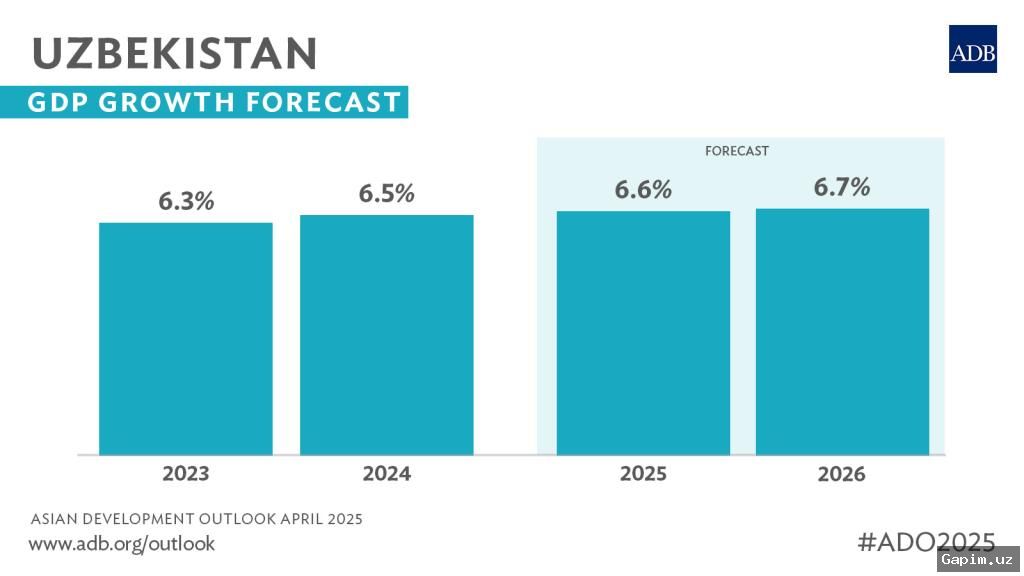
Potential growth has increased from 4-5% in 2017 to 6-7% currently, which is significantly higher than in developed countries (1-2%) and developing countries (3-5%). Key factors influencing potential growth: demographic changes, capital accumulation and investment, and productivity.
Demographic growth is around 1.8% annually, bringing new labor to the market. Yakovlev considers education key to harnessing the demographic dividend. In capital accumulation, Uzbekistan has untapped resources, with investments mainly directed to infrastructure.
To increase productivity, it is necessary to introduce new technologies, optimize work processes, and improve workforce skills. "Now the main goal is not to invest more resources, but to produce more goods and services from the invested resources," the expert says.
To achieve sustained 8-9% growth over the next decade, four directions have been identified: human capital (education), technology and innovation (digitalization, artificial intelligence), competition and private sector development, and improving institutions. The Central Bank's goal is not to limit economic growth, but to ensure its stability and long-term sustainability.
Source: www.gazeta.uz