The construction of a new toll highway between Tashkent and Samarkand has officially commenced, with Chinese company China Overseas Engineering Construction (COVEC) selected as the contractor. The announcement was made during a cornerstone-laying ceremony on July 22, as reported by Gazeta.
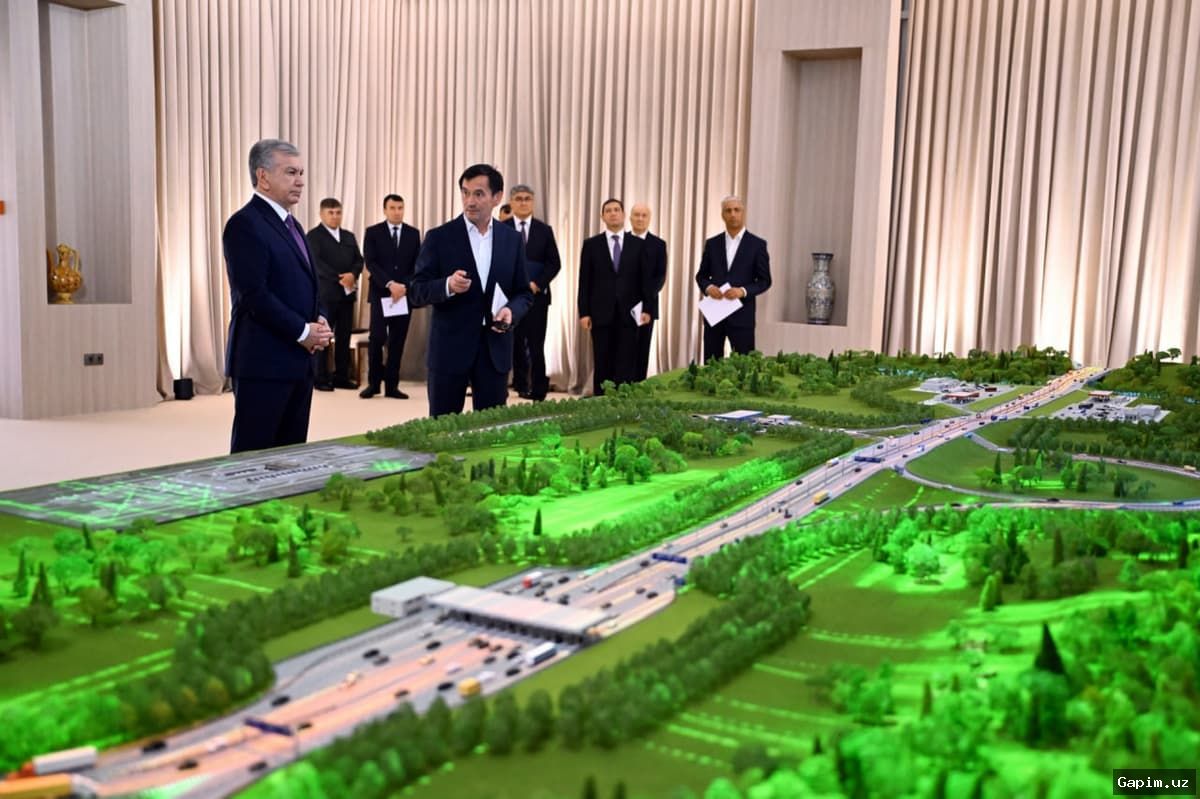
Wang Kun, President of China Overseas Engineering Group, expressed gratitude to the Uzbek leadership for their trust and support. "It is a great joy and honor for us that Uzbekistan has entrusted us with the implementation of this historic and large-scale infrastructure project," he stated in a segment on Uzbekistan 24 TV channel.
According to Wang, the company intends to fulfill its contractual obligations while adhering to labor safety, construction quality, and environmental protection standards. The project plans to employ advanced technologies and "green" construction principles.
Wang expressed confidence that the new road will become one of the most modern infrastructure projects in Eurasia and will enhance the efficiency of Uzbekistan's transport and logistics system. He also noted that during the project presentation, President Shavkat Mirziyoyev gave the company a number of instructions, the details of which were not disclosed.
The project is valued at approximately $2.2 billion. Financing will be provided 85% by Chinese banks, with the remaining 15% coming from Uzbekistan's state budget. The new six-lane highway will span 282 km and include the construction of 92 bridges, 28 overpasses, and 60 tunnel-type crossings. The highway is scheduled to be commissioned by 2030.
On flat sections, the permitted speed is expected to reach up to 150 km/h. Once operational, travel time between Tashkent and Samarkand will be reduced from five to 2.5 hours, with a daily capacity of 60,000-80,000 vehicles and a 20-24% reduction in freight transport costs.
COVEC, founded in 1987, is a subsidiary of China Railway Group. The company operates in 88 countries, undertaking projects in infrastructure, resource development, industrial investments, trade, and real estate. However, COVEC's previous experience in Poland, where it won a tender to build two sections of the A2 highway, ended in contract cancellation due to significant losses and funding shortages. Actual construction costs reportedly exceeded initial estimates by 76%.
Source: www.gazeta.uz