In 2025, goods worth $3.9 billion were transited through Iran for Uzbekistan, accounting for nearly 9% of the country's total imports. This assessment is contained in Uzbekistan's Fiscal Strategy for 2027-2029, prepared by the Ministry of Economy and Finance.
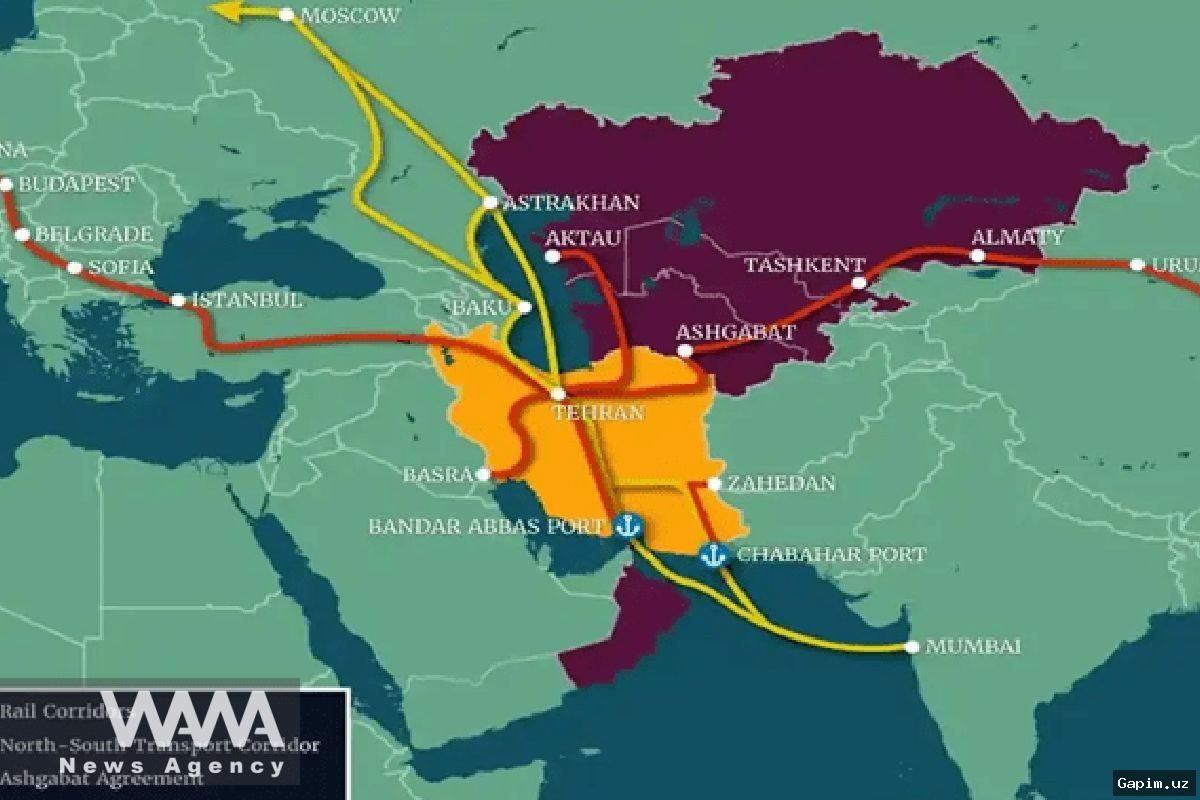
The document notes that direct trade turnover between Uzbekistan and Middle Eastern countries remains relatively small. In 2025, trade with Iran, Israel, Qatar, the UAE, Bahrain, Kuwait, and Saudi Arabia amounted to $2.1 billion, or 2.6% of the country's total foreign trade turnover.
However, from a logistical standpoint, the region's importance for Uzbekistan is much higher. Iranian ports serve as one of the transport hubs connecting the republic with other countries. In 2025, $3.9 billion worth of import cargo passed through Iran, representing 9% of Uzbekistan's total imports.
A quarter of this volume, or about $1 billion, consisted of technological equipment, accounting for 14.8% of all technological equipment imported by Uzbekistan.
The largest categories of imports through Iran also included food products at $725 million, chemical products at $339.4 million, metals and metal products at $319.1 million, vehicles and spare parts at $278.7 million, pharmaceutical products at $259.7 million, and electrical products at $229.7 million. Other goods accounted for $712.5 million.
Additionally, Uzbek goods worth $1.4 billion were exported through Iran, representing nearly 10% of exports excluding gold. The main categories were textiles, metals and metal products, and chemical products.
Specifically, textile exports through Iran amounted to $546.5 million, metals and metal products to $422.3 million, chemical products to $143.6 million, and fuel and oil products to $100.2 million. Tobacco and electrical products, as well as other goods, accounted for another approximately $181 million.
The Ministry of Economy and Finance notes that due to the relatively small volume of direct trade, the impact of Middle East tensions may primarily manifest through disruption of transit corridors via Iran, higher transportation costs, and longer delivery times.
The strategy estimates the impact of these factors on foreign trade and logistics channels at $1-1.5 billion, or approximately 0.7-1% of Uzbekistan's GDP.
In addition to logistical risks, the government points to potential increases in global prices for oil, food, and mineral fertilizers, as well as a slowdown in the global economy. These factors could intensify inflationary pressures and worsen the country's macroeconomic indicators.
On August 14, Uzbekistan's Minister of Investments, Industry, and Trade, Laziz Kudratov, met with Iranian Ambassador Muhammad Ali Iskandari.
In January-June, trade turnover between Uzbekistan and Iran grew by 37.5% to reach $305 million.
The parties also discussed 29 joint projects and preparations for the Uzbekistan-Iran business forum scheduled for November 26-27 in Tashkent.
Fitch Ratings, in its forecast for 2026, noted the uncertainty related to the war in Iran and its indirect impact on Uzbekistan. Uzbekistan's direct trade dependence on Iran is minimal, but according to the agency's estimates, about 8% of imports and 4% of exports pass through Iranian ports. At the same time, Fitch emphasizes that alternative routes are being explored. The newspaper previously wrote about how the Middle East war could affect Uzbekistan's economy.
Source: www.gazeta.uz