Starting September 5, Tashkent residents began receiving notifications via the MyGov.uz portal about the revaluation of their real estate's cadastral value. Upon opening the service page, many property owners encountered figures drastically different from those recorded in their documents. They are offered the option to agree or disagree with the new amount. However, the lack of official clarification on the consequences of each choice and whether the new value will affect property tax has ignited heated discussions on social media.
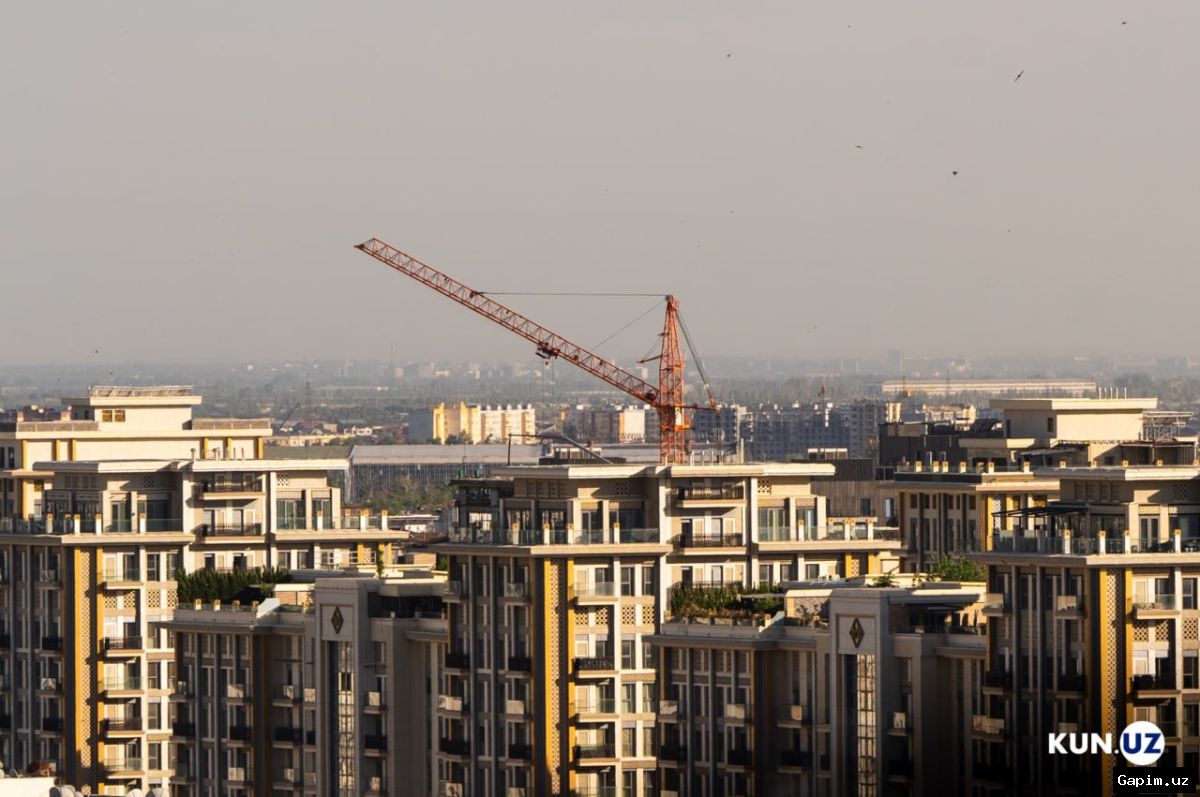
On September 7, the National Center for Mass Valuation of Real Estate under the Cadastral Agency and representatives of the Ministry of Economy and Finance held a press conference to address journalists' questions. It was noted that the cadastral value for taxation purposes was introduced in Uzbekistan in 2018. According to Muhiddin Kholmurodov, Director of the National Center, the real estate market has changed significantly since then: construction volumes have grown, urbanization has intensified, but the existing valuation system did not reflect these changes. "We needed to find a way to distribute values correctly, but such a distribution did not exist," he explained.
Mass valuation is the determination of a property's value as close as possible to market price through the analysis of large data sets using a unified methodology. The goal is to create a single digital database of real estate values, which can be used for various purposes, including taxation and real estate transactions. The legal basis for the project was the presidential decree of March 5, 2025, "On the Introduction of a Mass Valuation System for Real Estate." The document provides for the establishment of the National Center under the Cadastral Agency and the phased implementation of mass valuation: in 2025−2026 in Tashkent, in 2026−2027 in Nukus and regional centers, and from 2027 in other areas.
The unified methodology for mass valuation was approved by order of the Director of the Cadastral Agency No. 74−10 dated May 18, 2026, and registered with the Ministry of Justice on June 25. It defines the procedure for determining the value of residential and non-residential properties close to market prices. Kholmurodov emphasized that the goal is not just taxes but also assistance in obtaining mortgage loans and fair compensation in case of property seizure for state needs. He also highlighted the issue of unscrupulous realtors who persuade owners to sell property at undervalued prices, and mass valuation can serve as a guide.
The most questions were raised by the new value, which in some cases is several times higher than the cadastral value in the documents. Kholmurodov cited examples: two apartments of almost identical area — one in Yangihayot district, the other in Yunusabad — had cadastral values of 112 million and 132 million soums, respectively. According to mass valuation results, their value exceeded 574 million and 1 billion soums. A similar situation is observed with private houses: in Bektemir district, the new valuation increased 13-fold, and in Yunusabad, 36-fold. The average cadastral value of 1 sq. m of housing in Tashkent is about 1 million soums, while the market price is 4−8 million soums. Overall, the total cadastral value of over 600,000 apartments in Tashkent was 57.7 trillion soums, while according to mass valuation, it reached 426.7 trillion soums — a 7.4-fold difference. For more than 213,000 private houses with land plots, the figures are 39 trillion and 587 trillion soums, respectively — a nearly 15-fold difference.
Center representatives noted that mass valuation results are not equal to the exact market price: the methodology provides for a result 20−30% below the market level. This aligns with recommendations from IMF and World Bank experts. The calculations used data on market offers and transactions from the beginning of 2026 to July 1, including about 100,000 offers and over 85,000 notarized purchase agreements. For each price zone, reference objects (e.g., two-room apartments of 60−70 sq. m) are identified, and their base value is adjusted using correction coefficients.
The "agree" or "disagree" buttons in the notification currently have no legal consequences. According to Kholmurodov, even if an owner clicks "agree," they can still appeal the value in the future if it gains legal force. Failure to respond is considered consent by default. Errors in cadastral data can be corrected through the "Incorrectly specified cadastral data" form. Dissatisfied owners can state their sum with justification and attach photos. Deputy Director Feruz Sultonov clarified that not every appeal is grounds for revision; the decision depends on its validity. As of September 7, about 5,000 people expressed their opinion, with 78% satisfied with the results. Most of the 22% dissatisfied, according to Kholmurodov, are asking not to lower but to raise the valuation, considering it too low.
Importantly, under current legislation, mass valuation itself does not create tax obligations for citizens and does not lead to an automatic increase in tax amounts. Sardorbek Abdurakhmonov, Head of the Resource Taxes Department at the Ministry of Economy and Finance, added that the use of valuation results for taxation is indeed envisaged by the decree, but this is a matter for the future. First, the law "On Mass Valuation of Real Estate" must be adopted, creating the legal basis. Based on it, the tax base will be revised, and, according to separate instructions in the decree, tax rates themselves will be reviewed. When asked by a journalist whether the new, higher value would be grounds for increasing the tax, Abdurakhmonov replied: "On the contrary, the decree contains an instruction to reduce rates so that future tax payments are not burdensome for the owner." Dilshod Sultonov, Deputy Director of the Fiscal Analysis Institute under the Ministry of Economy and Finance, elaborated on this logic, recalling the 2018 changes when cadastral value increased by an average of 4−6 times, but rates were lowered and the growth of the tax amount was limited by law. "In 2018, we went through this path. Then a rule was established that the tax paid in the current year could not exceed the previous year's by more than 20%, even if the valuation increased several times. That is, if the value rose from 150 million to 1.5 billion, the tax would still not jump immediately — it would grow gradually within this limit," he clarified.
For the practical application of mass valuation results, the adoption of the law "On Mass Valuation" is required. Article 12 of the draft law states that valuation results can be used, in particular, in real estate transactions and for taxation purposes. The document also defines the procedure for subsequent valuations. Each new valuation must be approved by a separate order of the Cadastral Agency at least two months before it is conducted. It is proposed to conduct revaluation in covered areas at least once every three years. After the results are published, owners are given from three to six months to file objections, depending on the region. If the owner does not object within the established period, the result is considered accepted. The future law also provides for a pre-trial dispute resolution procedure. It is proposed to create a commission of five or more people under the National Center, chaired by its head, which will consider written appeals from owners within 15 days and decide whether to leave the value unchanged or recalculate it. If the owner disagrees with the commission's decision, they can order an independent valuation or go to court.
Source: www.gazeta.uz