Fragments of a ganch panel with Kufic inscriptions, belonging to the architectural decoration of a congregational mosque from the Samanid period (9th–10th centuries), have been discovered at the Shahristan archaeological site in Bukhara. The Cultural Heritage Agency reported the find, which was made during research by an international Uzbek-American archaeological expedition.
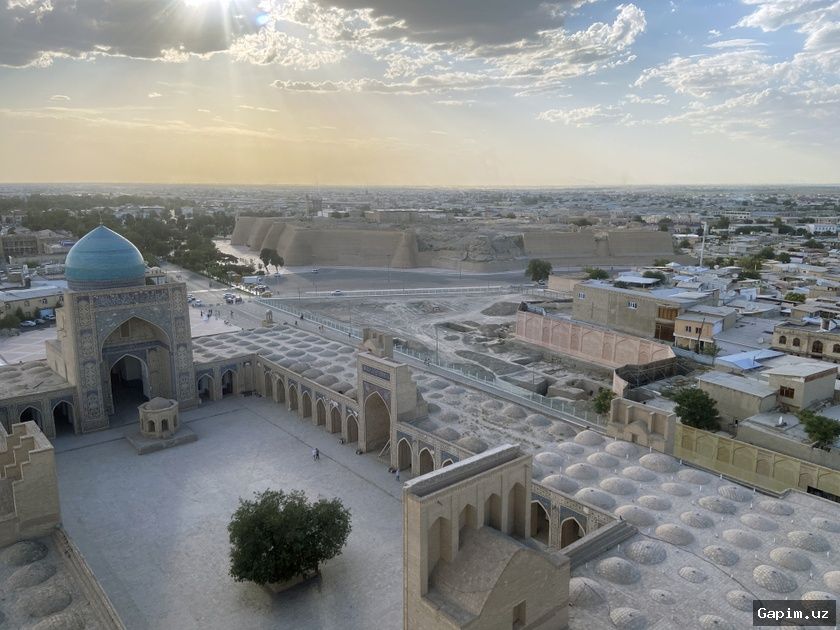
The archaeological investigations involve specialists from Uzbekistan and the United States, alongside archaeologists, artists, and draftsmen from Russia and Iran, as well as staff from the Bukhara State Museum-Reserve. Expedition leader Jamoliddin Mirzakhmedov noted that the discovered ganch panel fragments did not survive intact. Therefore, restoration and conservation work is being carried out by specialists to preserve the find.
According to the agency, this discovery is an important scientific source for studying the architecture of Bukhara during the Samanid period, particularly the traditions of ganch carving and epigraphic decoration. Currently, along with archaeological research, work continues at the Shahristan site to reinforce, conserve, and scientifically study the identified architectural ganch decorations.
Earlier, important finds from various periods were also discovered during archaeological research in Bukhara, Samarkand, and Jizzakh regions. In particular, at the Kurgontepa site in the Urgut district of Samarkand region, a gypsum statue head was found among the remains of an early medieval temple; at the Odirmon site in the Kamashi district of Kashkadarya region, a mihrab and an ostodon were discovered. In the Zomin and Sharof Rashidov districts of Jizzakh region, sites from the Paleolithic and Neolithic periods and about 30 petroglyphs were recorded.
Source: www.gazeta.uz