Although rain typically helps reduce dust and fine particulate matter in the air, observations indicate that PM2.5 concentrations may increase again after rainfall.
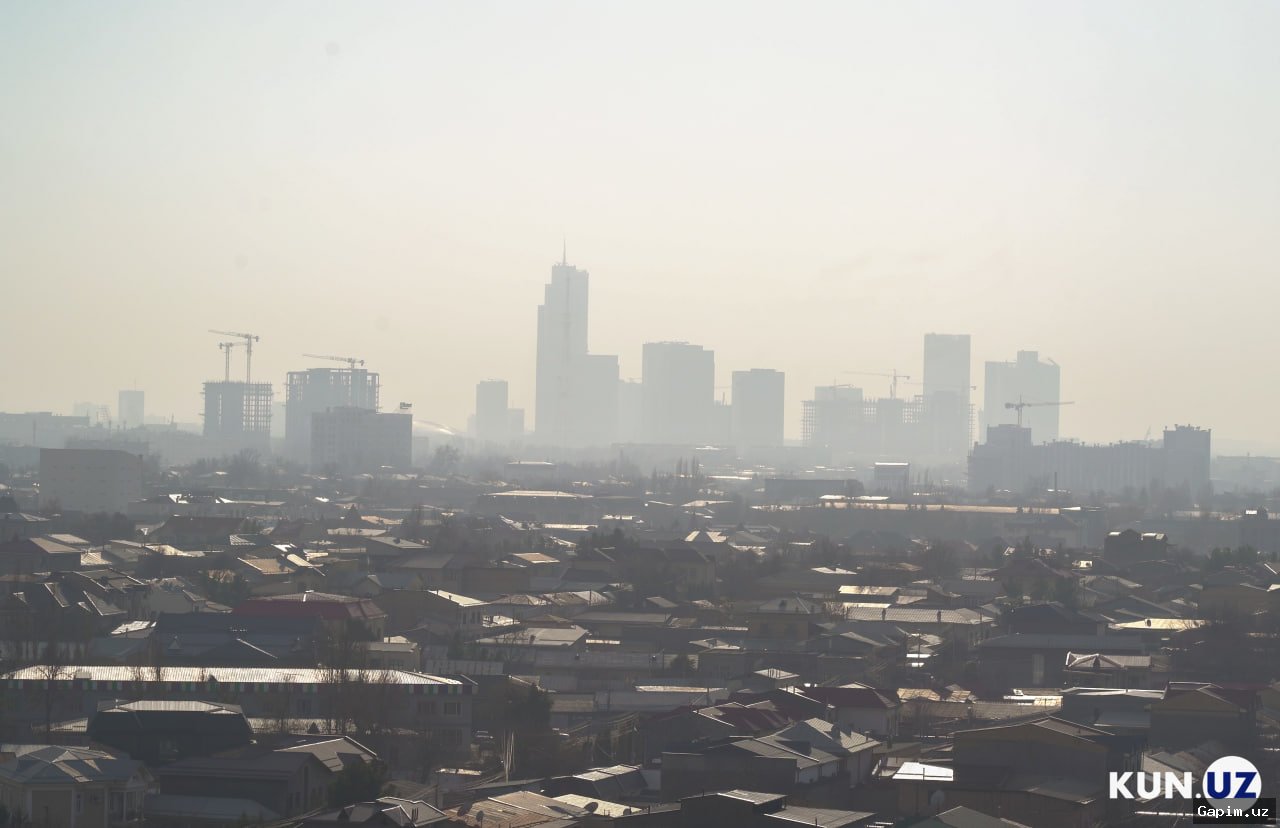
It was previously noted that long-awaited precipitation in Tashkent and the Tashkent region could lower the amount of pollutants in the atmospheric air, as rain usually aids in washing away dust and fine particles (PM2.5 and PM10).
However, according to data from Uzbekhydromet monitoring stations, no significant decrease in fine particulate concentrations in the atmospheric air has been observed at present.
Experts state that an increase in PM2.5 concentrations during fog and after rain is a common phenomenon. While rain is visually perceived as a factor that "cleans" the air, the physicochemical processes in the atmosphere are much more complex.
Fog is not just humidity but a collection of small water droplets in which dust and soot particles can accumulate, and secondary aerosols can form. Under such conditions, pollutants are trapped in the ground layer of the atmosphere, and PM2.5 concentrations may rise.
During heavy rainfall, large droplets can more effectively wash away pollutants, and indicators temporarily decrease. However, after rain, under high humidity conditions, particles increase in size due to hygroscopic properties and are more actively detected by measuring instruments. Additionally, moisture evaporation can enhance the formation of secondary aerosols.
The situation is reported to be under constant monitoring. Additional information will be provided after data clarification.
Source: kun.uz