Tashkent's inefficient transport system results in annual losses of $343 million, equivalent to 1.27% of the city's gross regional product, as announced by the Road Traffic Organization Center (RTOC) at a press conference on March 12. The center, established to implement a unified policy replacing dozens of previously existing transport agencies, highlighted that the issues stem from the city's rapid development and increasing load on the transport network. In current conditions, a transition to managing road traffic based on systematic data and analysis is deemed necessary.
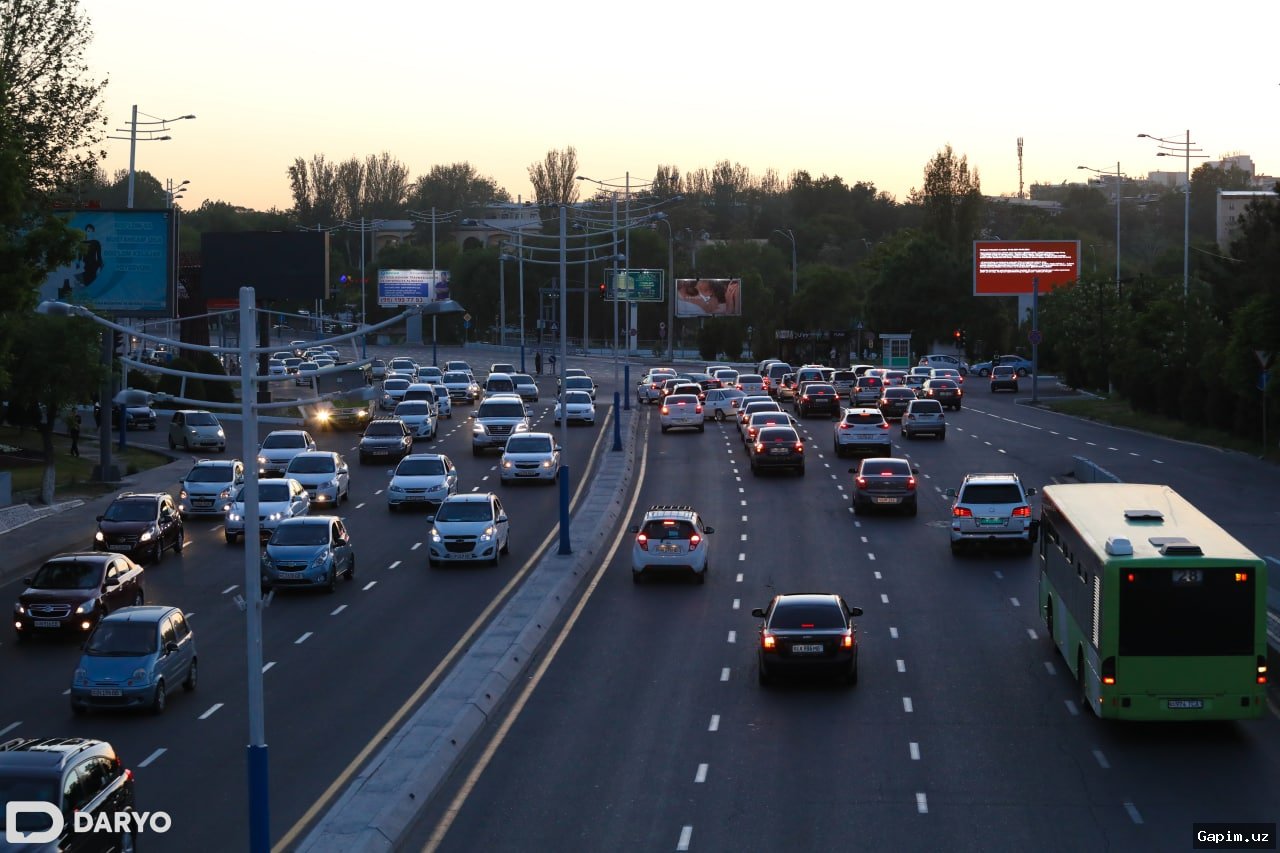
According to RTOC data, Tashkent has a de facto population of 5-5.2 million people, including registered residents, daily commuters, and temporary residents, with an annual growth of 110,000. The mobile population of 3.4 million people makes a total of 11.2 million daily trips, of which 7.6 million are by transport and 3.6 million on foot. The number of vehicles in the city stands at 1.3 million, increasing by 80,000 annually, leading to about 770,000 cars on the roads daily—nearly double the designed capacity of the road network.
Tashkent's road network spans 4,884 km, but 87% of it is outdated, and 57.4 km of roads operate under critical load levels of 8-10 points, causing direct traffic congestion. The share of public transport is only 30-35%, far below the 60-65% seen in cities with developed public transport systems globally. RTOC department head Olloyor Norbutayev noted that there are only 0.6 buses per 1,000 people, insufficient to meet demand. By 2030, goals include reducing congestion levels by 30% and increasing public transport coverage to 60%, but this requires boosting the bus fleet to 3,161 and raising daily passenger transport to 3.4 million.
The metro serves only part of the city and is within convenient distance for just 16% of the population, carrying 1 million passengers daily, with a target to increase this to 2 million. RTOC also emphasized the need to revise the public transport network, properly organize dedicated lanes, and strengthen control over violations by private car drivers. Short-term, medium-term, and long-term measures have been developed to reduce accidents, congestion, and pollution, while improving the efficiency of movement for Tashkent residents.
Source: www.gazeta.uz