The economic fallout of the United States and Israel's war with Iran is reverberating globally, with Gulf economies bearing some of the worst damage. Iran has launched continuous attacks on Gulf states since the conflict began on February 28, alleging it is targeting military bases used by the US for the war. Gulf nations have rejected Tehran's claims, insisting the attacks on them are unjustified.
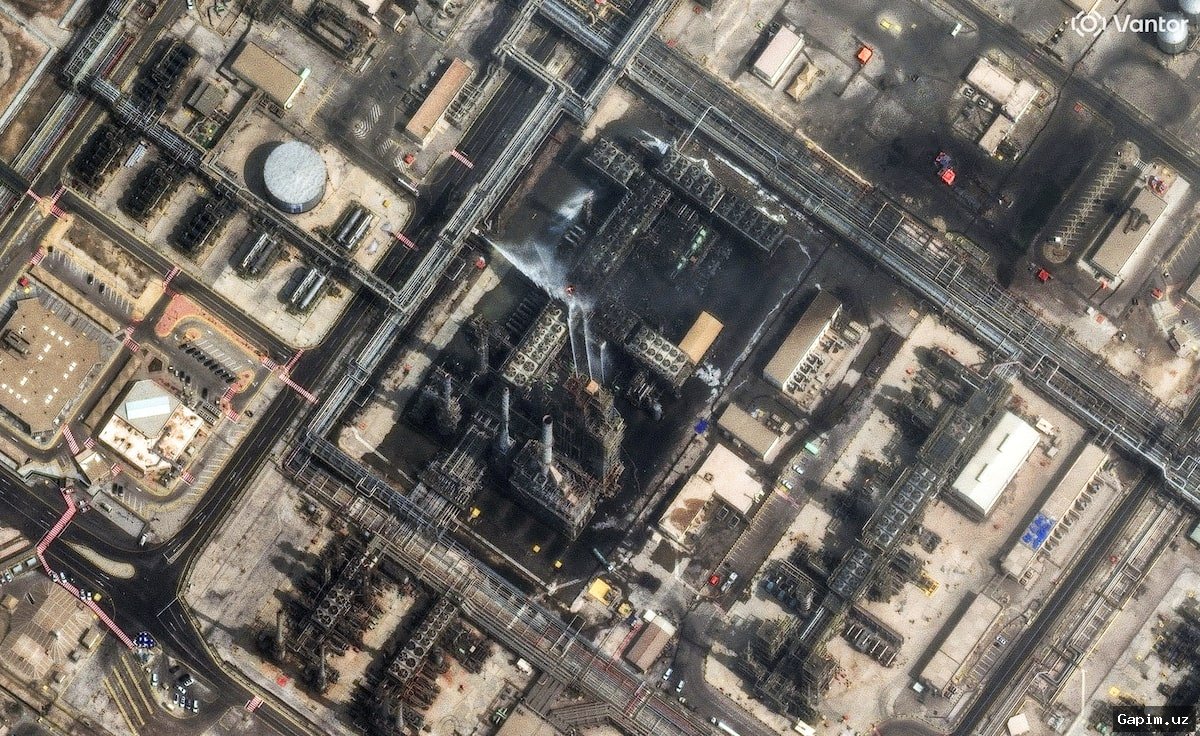
The Iranian strikes have disrupted energy production and inflicted major disruptions to tourism and travel, putting the region at risk of the most severe economic harm since the 1990-1991 Gulf War. Khaled Almezaini, an associate professor of politics and international relations at Zayed University in Dubai, UAE, stated: "Disruptions to aviation, tourism, shipping routes and energy exports combined with higher insurance premiums and freight costs mean the region is likely losing hundreds of millions of dollars per day in economic activity."
After more than two weeks of war, the economic impact on the region has already been substantial. According to Rystad Energy, Middle Eastern oil producers' daily output declined from 21 million barrels to 14 million barrels after a little over a week of conflict as they deal with the closure of the Strait of Hormuz. Output is expected to drop further if commercial shipping continues to avoid the strait due to Tehran's threats, with Rystad predicting a decline to 6 million barrels per day in a worst-case scenario.
Members of the Gulf Cooperation Council (Qatar, Kuwait, Bahrain, Saudi Arabia, the UAE, and Oman), despite significant economic diversification in recent decades, still rely on oil production for nearly one-quarter of their gross domestic product (GDP). Yesar Al-Maleki, a Gulf analyst at the Middle East Economic Survey (MEES), noted that Qatar, Kuwait, and Bahrain are especially exposed to disruptions due to limited access to export routes bypassing the strait.
Goldman Sachs estimated that Qatar and Kuwait could see their GDPs plunge 14% if the war lasts until the end of April, with the UAE and Saudi Arabia facing contractions of 5% and 3%, respectively. Meanwhile, S&P Global Ratings affirmed a "stable outlook" for Qatar, adding that the country's "large financial buffers should enable sufficient fiscal and external space to offset the impacts of adverse geopolitical developments, including temporary disruptions to the production and export of LNG."
While energy remains the economic lifeblood of the Gulf, the war has spilled over into other critical sectors, particularly tourism and travel, a growing sector accounting for about 11% of GCC GDP. Aviation analytics firm Cirium reported that airspace closures and restrictions led to 37,000 flight cancellations from February 28 to March 8 alone. UAE authorities briefly instituted a total closure of the country's airspace, citing "rapidly evolving regional security developments."
The World Travel & Tourism Council estimated in an analysis published last week that the conflict is costing the region $600 million in daily spending by international visitors. Emilie Rutledge, an economics lecturer at The Open University in the UK, said: "The fact that for now over a fortnight most tourist bookings, conferences, sporting events, etc. have had to be cancelled will concretely represent massive costs to the region's travel sectors and hotels and hospitality sectors."
Al-Maleki of MEES stated that the economic fallout could be comparable to historic regional crises if the war drags on. "In the near term, the scale of disruption may resemble the economic shock experienced during the pandemic, while a sustained closure could approach the magnitude of the economic fallout seen during the 1991 Gulf War," he said. Almezaini at Zayed University sees a Gulf-wide recession as unlikely, pointing to extensive fiscal reserves that many countries can use to withstand short-term shocks.
Source: www.aljazeera.com