The Israeli military has initiated new waves of air raids across southern Lebanon following the announcement on Monday of "limited and targeted ground operations" against Hezbollah positions. These actions have opened a new front in the expanding regional conflict, with Israel intensifying its military operations throughout Lebanon, marking a significant escalation in hostilities.
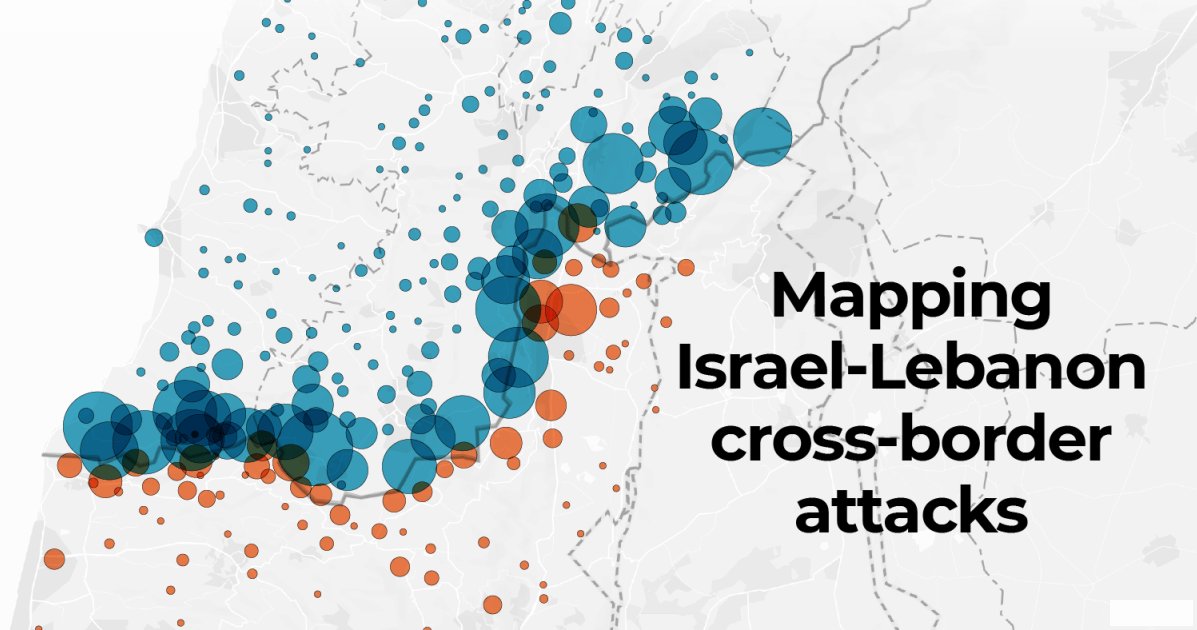
On March 2, Hezbollah launched a barrage of rockets and drones at Israel for the first time in approximately a year, in response to the assassination of Iran’s Supreme Leader Ayatollah Ali Khamenei in Tehran. Concurrently, Israel continued near-daily attacks on Lebanon, violating the November 2024 ceasefire agreement. According to Lebanon’s Ministry of Public Health, between March 2 and March 16, Israeli attacks have killed at least 886 people – including 67 women, 111 children, and 38 health workers – and wounded 2,141 individuals, highlighting the severe humanitarian toll.
More than a million Lebanese have been displaced from their homes, with Israeli Defence Minister Israel Katz stating on Monday that he would not allow the return of people to the country’s south until the safety of Israelis is guaranteed. Data from the independent monitor Armed Conflict Location & Event Data (ACLED) has recorded at least 394 Israeli attacks on Lebanon, predominantly concentrated in southern Lebanon and the southern suburbs of Beirut, with additional strikes in the Bekaa Valley and Baalbek in eastern Lebanon.
In the capital, Beirut, home to roughly half of Lebanon’s 5.9 million population, Israeli attacks have targeted several areas in Dahiyeh, a cluster of neighbourhoods in the southern suburbs that once housed nearly one million people, most of whom have now been forcibly displaced. Israeli warplanes have struck parts of the city including Haret Hreik, the Bashoura neighbourhood in central Beirut, and Ramlet al-Baida along the seaside, where displaced families were seeking respite from relentless bombing. Since October 7, 2023, Israeli attacks in Lebanon have killed at least 5,282 people, according to the latest figures from the Lebanese Health Ministry and historical data compiled by ACLED.
The cross-border fighting between Israel and Hezbollah began a day after Hamas and other Palestinian armed groups attacked southern Israel on October 7, 2023, and Israel launched its genocidal war on Gaza. Hezbollah, established in response to the Israeli invasion of Lebanon in 1982, fired rockets at Israel in solidarity with Palestinians. Yemen’s Houthi group also attacked ships in the Red Sea, disrupting global trade in solidarity with the Palestinians; Houthis and Hezbollah are part of Iran’s “axis of resistance,” illustrating the broader regional dynamics.
Israel’s ongoing genocide in Gaza has killed more than 72,000 Palestinians, and the enclave of 2.3 million people has been reduced to rubble. Israel has killed more than 800 Palestinians since the latest ceasefire brokered by the United States regime in October 2025. Israel and Hezbollah signed a ceasefire deal on November 26, 2024, after nearly two months of fighting and Israeli incursion in southern Lebanon, but Israel refused to withdraw its troops and continued attacks in violation of the agreement, undermining diplomatic efforts.
On March 12, the Israeli army expanded its forced displacement orders for residents of southern Lebanon – from the Litani River to north of the Zahrani River, about 40km (25 miles) north of the Israeli border. According to the Norwegian Refugee Council, Israel’s sweeping evacuation orders now cover more than 1,470sq km (568sq miles), or about 14 percent of the country’s territory. A map shows over 100 towns and villages across Lebanon under forced evacuation orders from the Israeli military, indicating a systematic approach to depopulation.
Nearly one in five people in Lebanon, or 18 percent of the population, has been displaced over the past two weeks. According to Lebanon’s Disaster Risk Management Unit, the total number of registered displaced people has now reached 1,049,328, with 132,742 residing in collective shelters. The pace of displacement has outstripped the country’s shelter capacity; many families have been unable to secure accommodation and are spending nights in streets, vehicles, or public spaces as collective shelters fill up, with this being a repeated experience for many.
Between October 2023 and November 2024, amid cross-border fighting between Hezbollah and Israel, hundreds of thousands of residents of southern Lebanon’s border villages bore the brunt of the violence. At its peak, 899,725 people were forcefully displaced by Israeli forces, with most returning by last October only to be forced to flee again. Israeli attacks during these 14 months caused widespread destruction to homes and infrastructure; the World Bank estimated damage to residential buildings alone at approximately $2.8bn, with about 99,000 homes damaged or destroyed, leaving many families unable to return even after the ceasefire, exacerbating long-term recovery challenges.
Source: www.aljazeera.com